


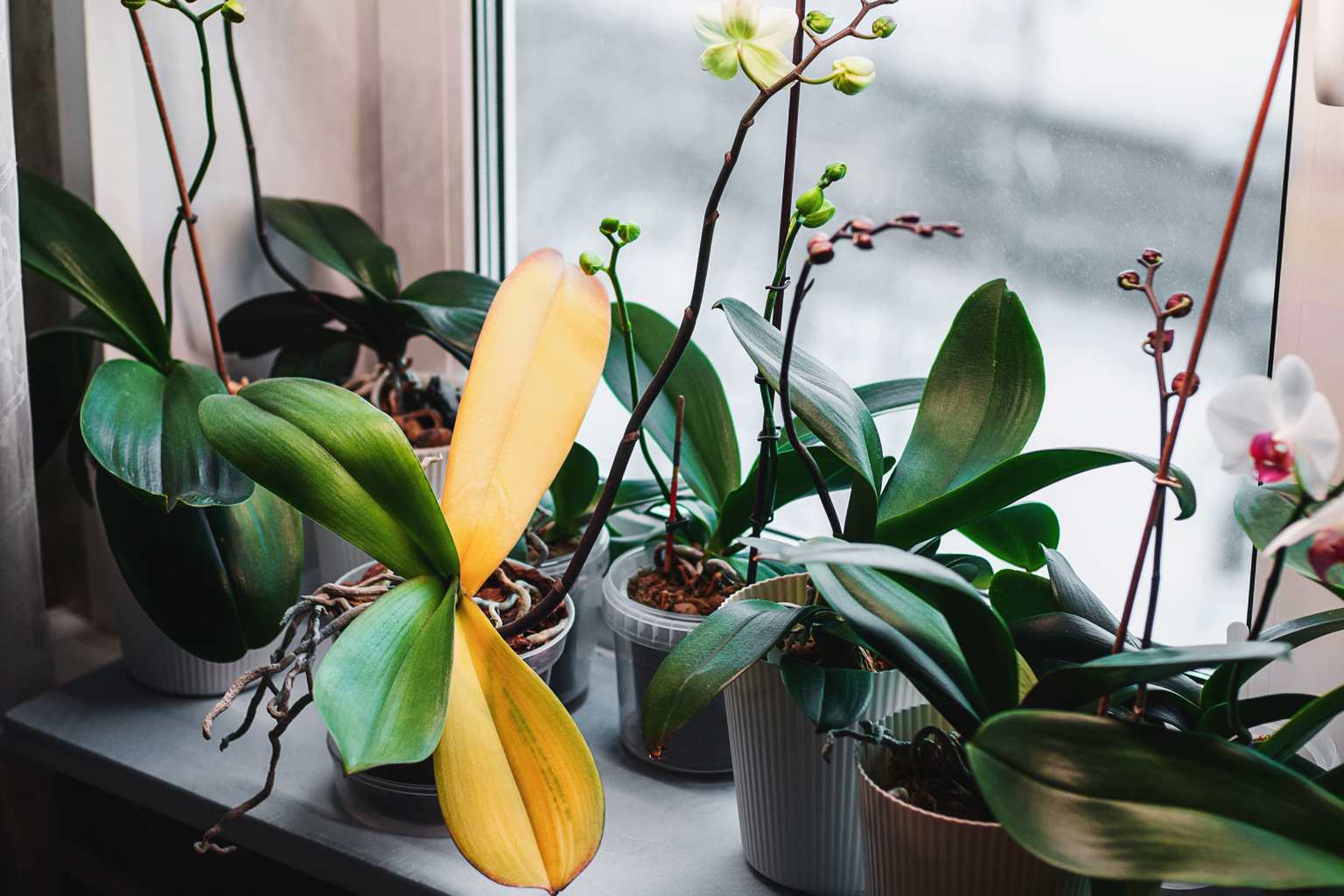
Yellow leaves are one of the most common problems that anyone who grows orchids indoors will eventually face. It’s frustrating to watch your vibrant, elegant plant start losing its lush green charm. But don’t worry—understanding why your orchid’s leaves turn yellow and how to fix it is surprisingly simple.
Let’s dive into the main reasons behind yellow or brown leaves on your orchid and discover easy ways to bring your plant back to life.
Natural leaf aging is part of the orchid’s cycle
Most of the time, yellowing orchid leaves are a natural process, part of the plant’s life cycle. Orchids often sacrifice their lowest leaves to focus energy on new growth, such as fresh leaves or flower stems.
Here’s a quick analogy: think of your orchid as a busy person prioritizing resources. When it needs to develop new leaves or a flower spike, it redirects energy away from the oldest leaves. The roots stop supplying water to those bottom leaves, causing them to dry up, die off, and eventually fall by themselves.
Resist the temptation to pull off those yellow leaves too soon. If you cut them prematurely, you risk infections entering the plant. Only remove a leaf if it’s bone dry. The safest way is to gently split the leaf down the middle and pull the two halves away from the base, so you don’t damage the plant.
Light conditions should mimic orchid’s natural habitat
Orchids are tropical plants originally growing under tree canopies, receiving indirect sunlight. If exposed to too much direct sun inside your home, their leaves can start to yellow and show signs of sunburn with brown, scorched tips.
Choosing the right spot for your orchid is crucial. In summer, north-facing windows tend to offer gentler light and fewer direct rays, which suits orchids well. During winter, a south-facing window is better, as the sun is weaker and provides more hours of warm, indirect light.
If your orchid seems to be taking in too much sun, try putting up a thin, sheer curtain or moving it a few feet away from the window. This simple adjustment prevents stress on those sensitive leaves.
Temperature stress affects orchid health greatly
Orchids prefer temperatures between 59°F and 77°F, a comfortable range for most homes. But whenever your plant is exposed to extreme heat or cold, such as drafty windows in winter or blast heat from air conditioning or heaters, it can experience temperature stress.
This stress shows up as yellowing leaves or even leaf drop. In the worst cases, it can cause leaves to turn brown or lead to plant death.
The good news is this is one of the easiest problems to fix. Just move your orchid away from cold drafts or super hot air vents, and keep it in a stable, comfortable environment.
Overwatering is a leading cause of yellow leaves
Many orchid growers mistakenly drown their plants with water. Too much watering causes root rot, which prevents your orchid’s roots from absorbing nutrients properly. As a result, leaves start to yellow and the plant weakens.
The key is to allow the roots to dry out between watering. When the roots turn from green to greyish, that’s your signal to water again.
A great method is soaking the entire pot in water up to about three-quarters of its height. Let it sit for a few minutes, then drain well and place it back in its saucer. This technique prevents waterlogged soil and keeps roots healthy.
Stress from relocation can cause yellowing and leaf drop
Orchids are sensitive to changes in their environment. Bringing a plant home for the first time, or moving it from one spot to another, often shocks the plant and leads to yellow leaves or flower drop.
If you just bought your orchid and see yellowing leaves, don’t be alarmed. This period of adjustment is normal. Give your orchid a chance to acclimate to its new home with good light, temperature, and watering habits.
Proper fertilization keeps orchids thriving
While fertilizing is important, giving your orchid too much fertilizer can harm it. Excess nutrients can burn roots and lead to yellow leaves.
If you think you’ve over-fertilized, the only option is patience—wait for the plant to recover. Next time, dilute the fertilizer more and apply it only as needed, usually when new growth begins after flowers fall.
On the other hand, not fertilizing at all can cause nutrient deficiencies and yellowing too. Feeding your orchid gently every couple of weeks during growth seasons keeps it nourished and beautiful.
I remember when I first adopted my orchid, excitedly giving it plenty of fertilizer. Instead of thriving, it looked worse, and those yellow leaves began to multiply. That experience taught me that orchids need a gentle touch and careful attention to their specific needs.
What about you? Have your orchids shown yellow leaves? What tricks or routines helped you revive them? Drop your thoughts and stories in the comments—we love hearing how people nurture their orchids back to health!