


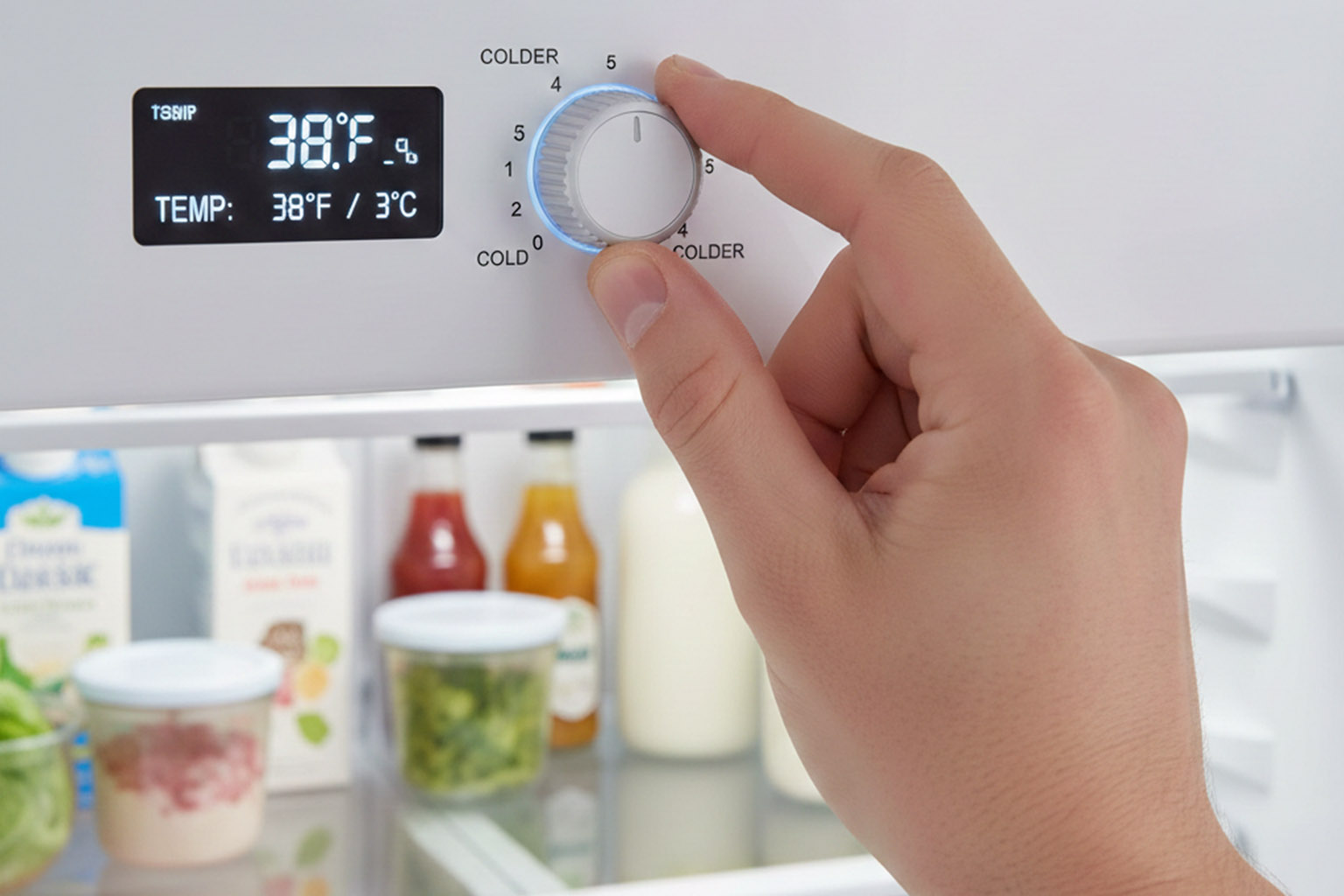
Many of us rely on our refrigerators daily without giving much thought to how they work or how to get the most out of them. But here’s a little secret: that dial inside your fridge? It doesn’t actually show the temperature. Understanding what it does indicate—and how to set it right—can save you money and keep your food fresher for longer.
The fridge dial mystery: what those numbers really mean
When you open your refrigerator, you might notice a small dial or wheel marked with numbers, usually ranging from 1 to 5 or sometimes up to 7. At first glance, it’s tempting to think these numbers directly correspond to degrees Fahrenheit or Celsius. But in reality, that’s not the case.
Most of these dials display relative cooling levels, not precise temperatures. A higher number prompts the compressor to work harder, cooling the refrigerator more aggressively. But that doesn’t guarantee a specific temperature—it varies depending on the fridge’s internal design and insulation quality.
A TikTok user recently highlighted how many people confuse these settings with exact temperatures, leading to costly mistakes. Ice buildup on the fridge walls is a classic sign of overcooling, often the result of a dial turned too high. This not only wastes energy but also can drive your electricity bills up significantly.
Adjust your fridge dial seasonally to save money
One overlooked tip is to change the dial setting based on the season. Just like we tweak our thermostat at home, your fridge needs adjustments throughout the year to stay efficient.
In summer, the setting should usually be around 2 (on a scale of 1–5), because warmer temperatures outside mean the fridge needs to work more to maintain its cool. In the fall, 2 to 4 is recommended, and during winter months, you can often dial it up around 5. This seasonal shift helps avoid overcooling or undercooling that could lead to energy waste or even equipment failure.
Manufacturer manuals from trusted brands like Samsung and LG support these recommendations. They point out that the misconception about the dial showing exact temperatures causes a lot of confusion. Since each fridge model’s construction affects cooling performance differently, the same dial setting can mean different internal temperatures across brands or models.
Why understanding thermostat basics matters
Think of your fridge’s dial like a space thermostat, not a direct temperature gauge. The setting adjusts how often and how intensively the compressor kicks in, responding to the current ambient temperature around the fridge. This is why you might need a higher setting when your kitchen is hot and a lower setting when it’s chilly.
Failing to understand this can lead users to set the dial too high, causing excessive cooling and ice buildup, or too low, which risks food spoilage. The goal is to maintain a consistent temperature, around 37°F (3°C), to keep your food fresh without wasting energy.
The importance of proper food placement inside your fridge
Another often ignored aspect is how you place your groceries inside the fridge. Research by the University of Nebraska in 2020 found that temperature isn’t uniform throughout a refrigerator. The bottom shelves tend to be the coldest, while the door and top shelves are slightly warmer.
This means that sensitive items like dairy and meats should be stored on the lower shelves, while condiments and items that can handle fluctuating temps go in the door. Putting food in the right spot reduces the risk of spoilage and keeps your fridge running efficiently, as it won’t have to cool uneven temperatures.
Measure to manage: using a fridge thermometer
If you really want to get a handle on your fridge’s internal world, consider buying a fridge thermometer. These affordable tools provide an accurate readout of the actual temperature inside your refrigerator, allowing you to adjust the dial more precisely.
Among home appliances, a fridge thermometer is a simple yet powerful device. It can alert you to unnoticed issues like temperature swings or malfunctioning compressors. Experts, including those at the U.S. Department of Energy, emphasize that regular temperature monitoring is crucial for energy savings and food safety.
“Maintaining your refrigerator temperature between 35°F and 38°F ensures food safety and reduces electricity consumption,” says the Department of Energy.
Understanding these details about your refrigerator isn’t just for appliance geeks—it helps everyone save money, reduce waste, and keep food safe. So next time you reach for that dial, remember: it’s about balance, not numbers.
If you’ve noticed your fridge behaving oddly or want to share tips you’ve learned about fridge settings and food storage, jump into the comments below. Let’s swap stories and keep the conversation cool!