


Keeping your indoor plants healthy goes beyond just watering them. Ever noticed a dull film or dusty buildup on their leaves? That layer of grime doesn’t just look unattractive—it actually blocks sunlight, hampering your plant’s ability to photosynthesize and thrive. The good news? Cleaning indoor plant leaves is straightforward and rewarding, offering a simple way to help your green friends flourish.
Why cleaning indoor plant leaves matters
Even in the cleanest homes, dust and microscopic particles are constantly floating in the air. Over time, they settle on the leaf surfaces of your houseplants, forming a layer of dirt that you won’t always notice at first glance. This buildup can block sunlight, interfering with the plant’s ability to perform photosynthesis, the vital process plants use to convert light into energy for growth.
When the leaves are covered with dust, your plant’s health can suffer beyond just looking less vibrant. Dust-covered leaves reduce airflow, limiting the plant’s ability to breathe and making it more prone to diseases and pests. Keeping leaves clean means your plants can absorb more light, stay healthy, and become more resistant to common problems. It’s a little routine effort that pays big dividends.
How to tell when your plant needs cleaning
The simplest way to know if your indoor plant needs a leaf cleaning is to gently run your fingers across the leaf surface. If you can feel or see a noticeable layer of dust, it’s time to clean. Different kinds of plants gather dust differently: large, flat leaves tend to accumulate more grime, while plants with many small or fuzzy leaves might need more careful approaches.
By paying attention to your plant’s leaf texture and dust levels, you can decide how often and which cleaning method will suit it best.
Easy spray cleaning method for dusty leaves
One of the easiest ways to clean indoor plants is with a light spray solution. Mix half a gallon of warm water with a few drops of mild dish soap—it doesn’t take much, just about a teaspoon or less. Spray this mixture gently over the leaves, then follow by rinsing them lightly with clean water.
This approach is especially effective if your plants have stubborn dust or sticky residue. Just be sure not to soak the soil during spraying, as overly wet roots can lead to problems. Using gentle soap helps lift dirt safely without harming your plant’s delicate leaf surfaces.
Wiping leaves with a soft cloth
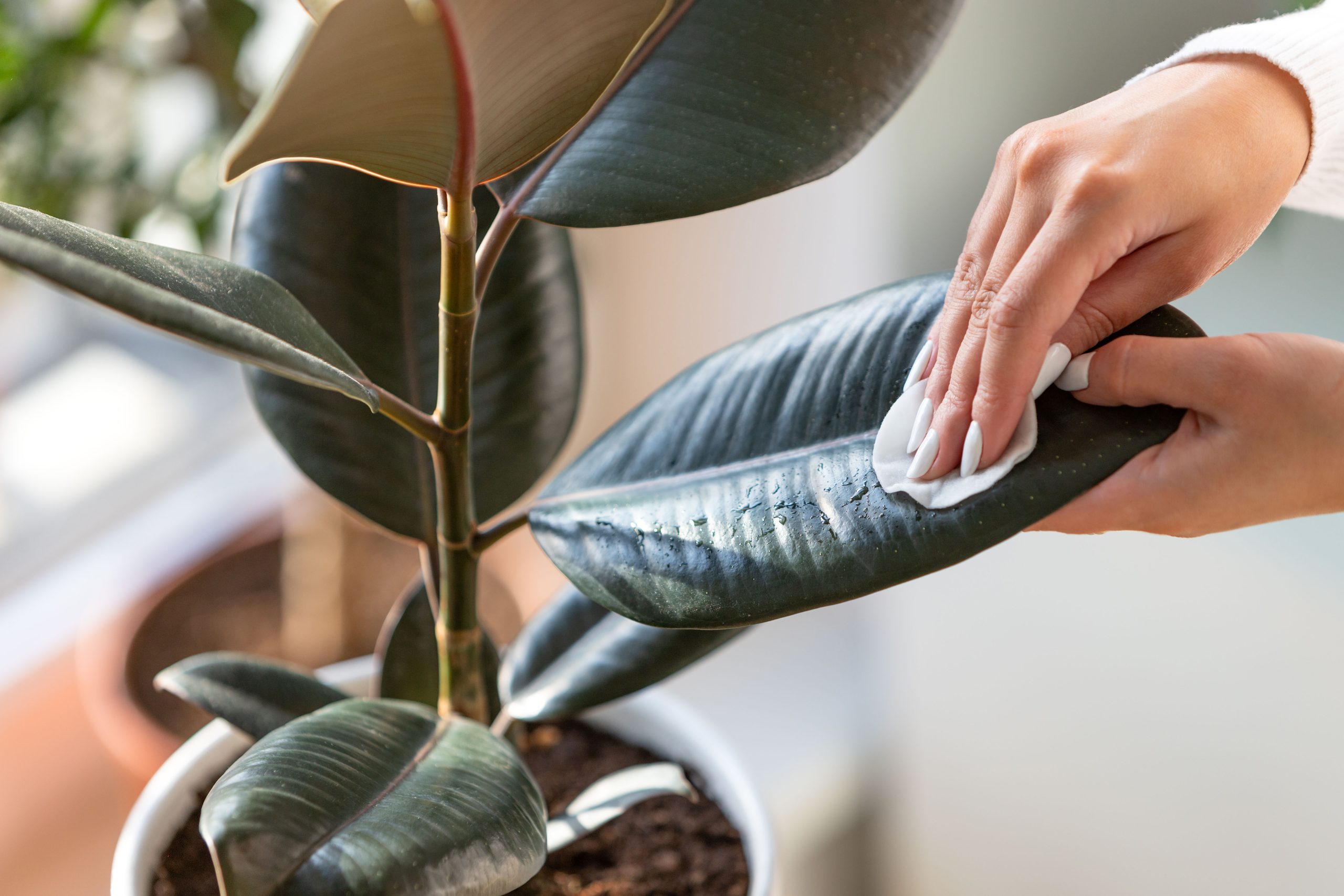
For plants with large, broad leaves, wiping them clean with a damp cloth often works best. I remember the first time I cleaned my rubber plant’s leaves this way—it felt calming, almost like pampering the plant. Moving the soft cloth slowly across each leaf, you not only remove dust but also get to admire the beauty of those glossy green surfaces.
Use a soft microfiber or cotton cloth moistened with warm water. Hold the leaf firmly yet gently to prevent breaking the stem while you wipe both the top and underside of the leaf. For extra care, dry the leaves with a second soft cloth to prevent water spotting.
This method is a bit more time-consuming, but your plants will thank you with a brighter, healthier appearance.
Using a duster for light maintenance
If your plants don’t have heavy dust but could use some freshening up, a feather duster works well. Ostrich feather dusters are particularly effective because the feathers trap dust gently without damaging the leaves.
I like to keep one nearby not only for my plants but for delicate household items too. Just run the duster softly over each leaf to lift away loose dust. Avoid pressing too hard, since leaves can be fragile and may tear off from their stems.
A light dusting won’t get rid of all dirt but will prevent thick buildup and make deep cleaning less frequent. It’s perfect for quick upkeep between more thorough washes.
Extra tips for keeping your plant leaves shiny
Consistent care keeps your indoor garden thriving, and cleaning leaves is a key part of that. Here are some helpful pointers I’ve learned through experience:
– Clean regularly—a dusting or wipe every couple of weeks keeps dirt from piling up.
– Be gentle—plants can be sensitive, so steady your leaves while cleaning to avoid damage.
– Use mild cleansers—harsh chemicals can harm leaves; stick to natural soaps or plain water.
– Look for pests—cleaning time is also a perfect opportunity to check your plants for insects or diseases.
– Maintain humidity—some tropical plants love occasional misting, which naturally keeps leaves dust-free.
Looking after plants goes beyond basic care; it’s about building a little ritual of connection. Once you start regularly cleaning your plants’ leaves, you notice how their colors deepen and how lively your indoor environment feels.
Do you have favorite techniques or stories about caring for your leafy pals? How do you keep your indoor plants healthy and bright? Please join the conversation by sharing your tips and experiences below—we love hearing what works for you!