


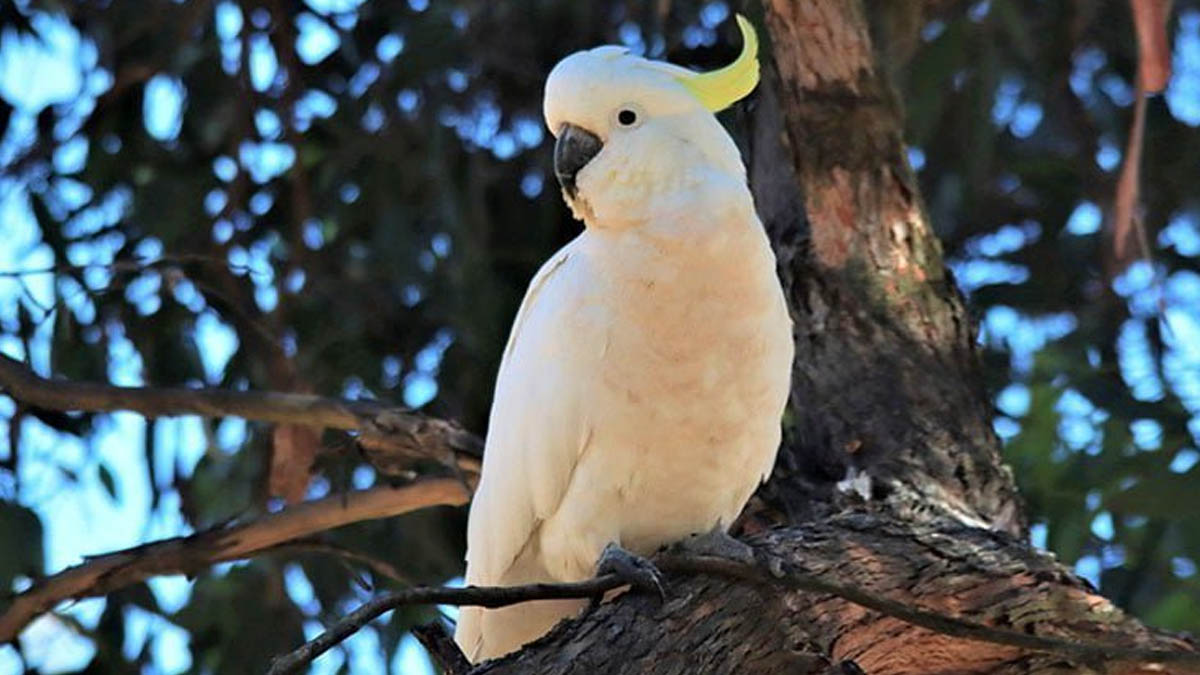
Sydney’s wild parrots are turning heads with an unexpected display of intelligence and teamwork right in the heart of the city. These Sulphur-crested cockatoos aren’t just charming locals with their colorful feathers—they’re solving puzzles, forming new traditions, and demonstrating remarkable cultural learning that challenges how we see urban wildlife.
Urban Innovation in Action
In Western Sydney, a unique and coordinated behavior has emerged among the native Sulphur-crested cockatoos (Cacatua galerita), affectionately nicknamed “trash parrots” for their clever knack at opening garbage bins. Since 2018, researchers began to notice something even more impressive: these birds were regularly gathering at public water fountains, manipulating the complex twist handles with both feet and their body weight to keep fresh water flowing.
Dr. Lucy Aplin, a cognitive ecologist at the Australian National University and co-author of a study published in Biology Letters on June 4, 2024, shares, “This isn’t accidental behavior. It requires precise motor control and clear understanding.” The team installed motion-triggered cameras around fountains and uncovered that about half of all cockatoo attempts to drink using the fountains succeed — a strikingly high success rate considering the technical challenge involved.
This behavior doesn’t just appear randomly. It’s being socially learned, with younger or less experienced birds watching and mimicking those who have mastered the technique, highlighting an active process of cultural transmission within the population.
From Problem Solvers to Cultural Creators
Sydney’s urban cockatoos are widely known for pushing boundaries and interacting with their environment in ways that continually surprise scientists. Their reputation as “trash parrots” stems from their ongoing ability to outsmart humans by opening rubbish bins, an evolutionary “innovation arms race” happening right in the city streets.
Dr. Alice Auersperg, a cognitive biologist at the University of Veterinary Medicine Vienna, explains, “Cockatoos have a playful curiosity and persistence that encourages them to manipulate objects with intention and focus.” Their abilities rival some of the most cognitively flexible bird species, with documented use of tools and intelligent problem-solving.
This stunning display of skill adds Sydney cockatoos to the growing list of animals demonstrating real-time cultural adaptation—learning from each other and passing along behaviors, much like humans do.
The Science Behind the Behavior
The discovery that cockatoos have developed a new local drinking tradition raises interesting questions about animal cognition in urban spaces. Why go through the complex act of twisting a fountain handle when simpler water sources exist nearby? Researchers suggest two compelling reasons: first, the birds might prefer the clean taste of fountain water, and second, drinking from open, elevated fountains offers a safer vantage point where they can watch for predators more easily.
Berenika Mioduszewska, an animal cognition expert also involved in the research, notes, “Persistence pays off. Success rates improve when cockatoos focus intently and avoid distractions.” Her insight reminds us of the importance of focus and perseverance in mastering new skills—a lesson we can all relate to.
According to research published by the University of Vienna in 2023, urban animals that exhibit behavioral flexibility tend to thrive best in human-dominated landscapes, balancing risks and rewards skillfully in complex environments like cities. You can read more about urban wildlife adaptations in this Science Daily article.
Why This Matters
The cockatoos’ water fountain breakthrough is part of the Clever Cockie Project, a research initiative dedicated to understanding how cognition supports animal survival in cities. From opening bins to operating fountains, Sydney’s cockatoos showcase how wildlife continues to adapt to human spaces, often outsmarting expectations.
This research deepens our appreciation for urban biodiversity and emphasizes the need to consider animals as active participants in city ecosystems. Their growing “drinking tradition” is a vivid example of cultural transmission outside human society—something once thought to be uniquely human.
As Dr. Aplin states, “These birds remind us that urban wildlife is constantly observing, learning, and innovating. Our cities are shared spaces not just with animals, but with evolving cultures.”
If you’ve witnessed clever animals adapting around you or have thoughts on urban wildlife intelligence, let us know in the comments. Share this story to spread awareness of the unexpected ingenuity thriving in our city sidewalks.
What unexpected animal behaviors have amazed you? Join the conversation below!