


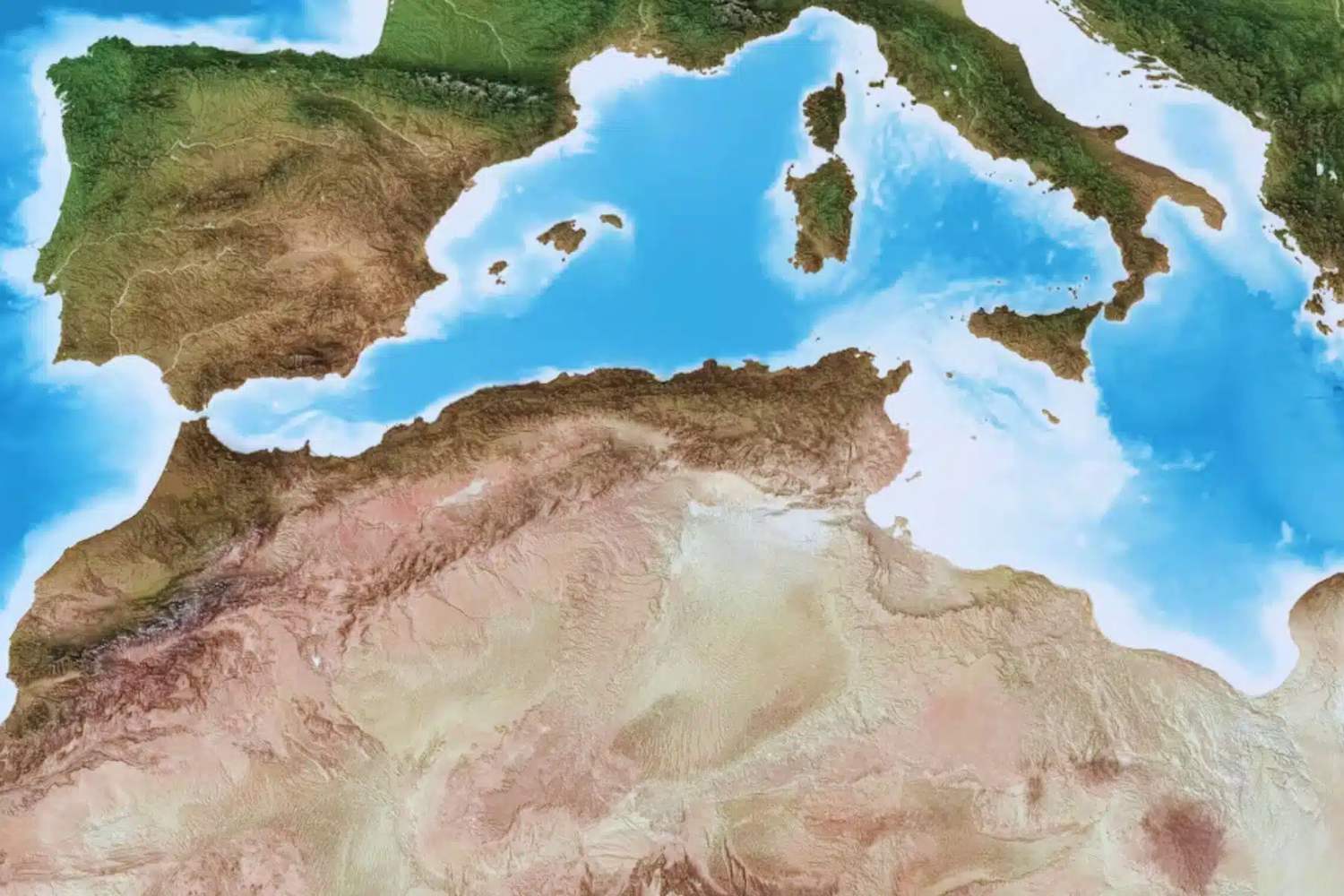
Seismic shifts beneath the earth and colossal water surges can rewrite the map of entire regions. Imagine a desert basin transformed into one of the world’s largest seas almost overnight. Over 5 million years ago, a cataclysmic event known as the Zanclean megaflood dramatically refilled the Mediterranean Sea—a story of geological upheaval and epic proportions.
The drying of the Mediterranean: The Messinian Salinity Crisis
For millions of years, the Mediterranean basin was a dynamic connection point between the Atlantic Ocean and surrounding continents. But between 5 and 6 million years ago, tectonic shifts caused the Mediterranean’s link to the Atlantic through the Strait of Gibraltar to close. This triggered the Messinian Salinity Crisis, a geological event during which the Mediterranean Sea largely dried up.
Vast salt deposits formed as water evaporated, piling up to several kilometers thick beneath the seafloor. Instead of a thriving sea, the region became a dry, salty basin dotted with shallow lakes. This extreme change is documented by researchers drilling into sediment layers, revealing clues about an astonishingly dry Mediterranean that starkly contrasts with today’s vibrant seas.
A sudden refill: the Zanclean megaflood
Then came the dramatic reversal. When the Atlantic Ocean finally burst through the Strait of Gibraltar around 5 million years ago, water rushed back into the Mediterranean basin with unstoppable force. The Zanclean megaflood, one of the largest floods in Earth’s history, saw seawater surge in at rates unimaginable for natural events.
A study led by Dr. Micallef and colleagues used geophysical and geological evidence to provide a clearer picture of this event. In 2009, data gathered in the region indicated an underwater trench carved by the sudden influx of water, pointing to the devastating scale of the flood.
According to their simulation, the floodwaters reached depths of up to 131 feet (40 meters) and speeds of up to 71 miles per hour. To put that in perspective, the volume flowing into the Mediterranean was about 13 million cubic meters per second, dwarfing the Amazon River’s average flow of 200,000 cubic meters per second. This suggests water surged with such immense power it reshaped the Mediterranean landscape virtually overnight.
https://www.youtube.com/watch?v=enlcKClZzD8
Source: BRIGHT SIDE on YouTube – A detailed visualization of the Zanclean megaflood event
Geological clues in Sicily and beyond
Southern Sicily reveals further evidence supporting this flood theory. The hills and coastal depressions there bear the unique marks of a cataclysmic flood. Researchers found boulder-sized rock debris strewn atop hills, transported by turbulent waters sweeping over the landscape. These rocks correspond to sediment and formations in lower regions, confirming a sudden, violent flow of water from the Atlantic into the Mediterranean basin.
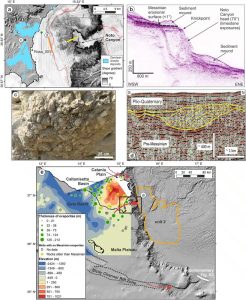
This geological signature resembles those created by enormous floods on Earth’s surface in more recent history, such as the ice age floods that sculpted areas of Washington State in the United States. This parallel strengthens the interpretation that a megaflood of epic proportions impacted Sicily’s terrain millions of years ago.
Unraveling the Mediterranean’s past through science
Understanding events like the Zanclean megaflood involves combining data from geology, geophysics, and computer modeling. The Mediterranean’s history is intricately tied to global tectonics and climate changes. Modern techniques allow scientists to reconstruct ancient floods with surprising accuracy, highlighting how a single event can dramatically shape natural landscapes.
A report published by the Scientific Reports journal in 2019 provides an in-depth analysis of the flood through ocean drilling and seismic imaging, underscoring the importance of interdisciplinary research to unlock Earth’s past.
This event not only refilled the basin but also restored essential marine ecosystems, shaping the Mediterranean we know today. Dr. Maria Sanchez, a geologist specializing in ancient marine environments, noted in a recent interview that “the Zanclean megaflood emphasizes the powerful role of natural forces in driving geological and ecological transformations on a global scale.”
The Mediterranean Sea’s dramatic history is a powerful reminder that Earth’s surface is alive with change. From drying basins to raging floods, our planet has a story etched deep in its rocks and oceans.
Interested in how such geological phenomena affect us today or have thoughts on Earth’s remarkable transformations? Share your insights and reactions below to join the conversation!