


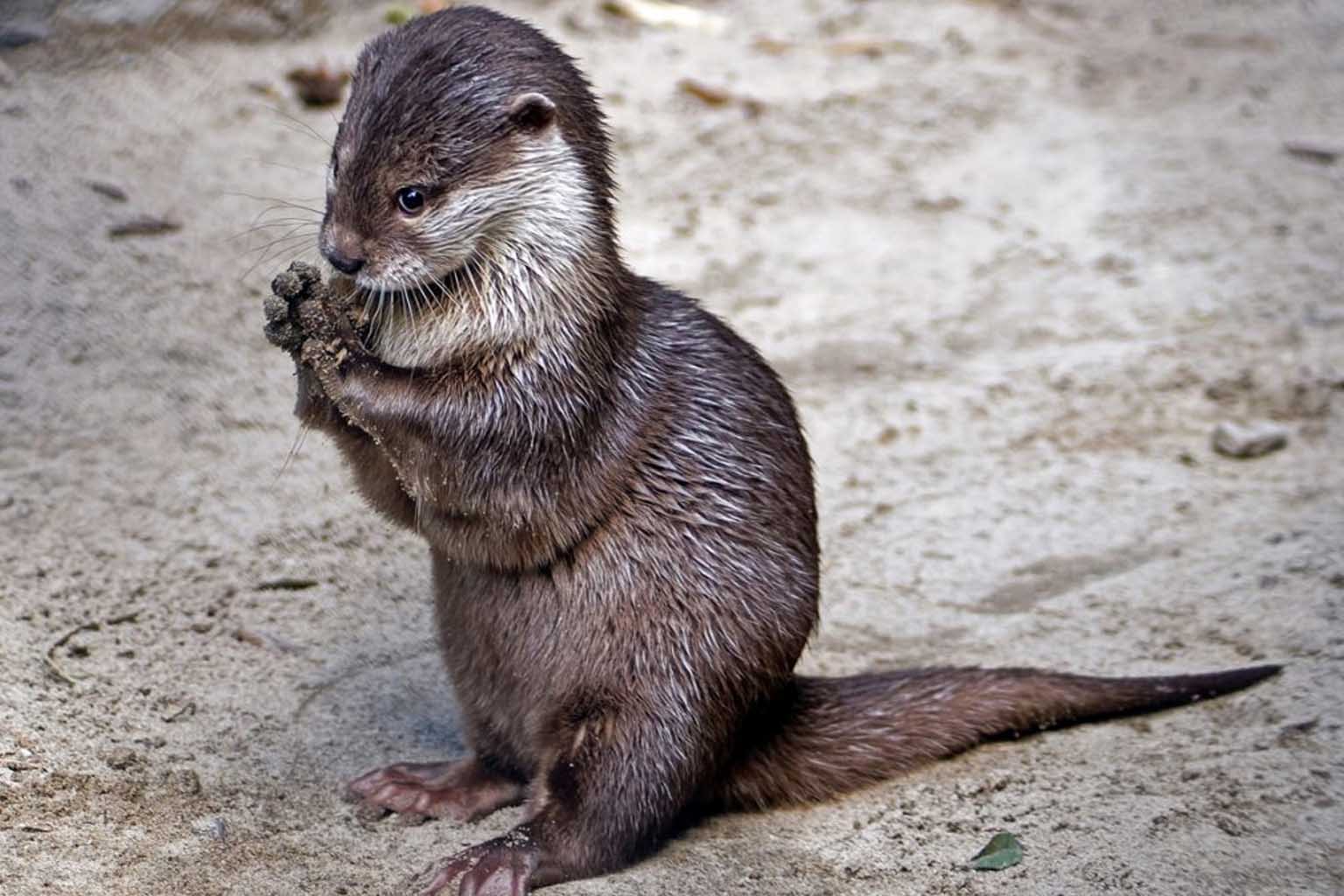
In a world where nature often surprises us with its resilience, something truly astonishing has happened. After nearly two centuries of uncertainty, the elusive Asian small-clawed otter has appeared in the wilds of Nepal, igniting a spark of hope for conservationists and environmentalists alike. It feels almost like a scene from an old legend — the rediscovery of a species long thought to have vanished from the Nepalese waterways. But it’s real, and it’s unfolding now.
An Incredible Rediscovery
For the first time in 185 years, the Asian small-clawed otter, the world’s smallest otter, has been officially recorded in Nepal. Long absent since 1839, it seemed as though it might have quietly faded away. Yet here we are. In November 2024, a juvenile otter made its unexpected return known in Nepal’s Dadeldhura District, offering the first concrete evidence of its presence. It has caused quite a stir among scientists and conservationists, promising fresh insights into both the species and the health of the country’s ecosystems.
The study verifying this discovery, published in the IUCN Otter Specialist Group Bulletin, was driven by Mohan Bikram Shrestha and his dedicated team of researchers. Their findings highlight the otter’s resilience and underscore an urgent priority: protecting Nepal’s fragile freshwater environments is more crucial than ever.
Long Feared Lost, Now Confirmed
Those tiny otters have always captured hearts. And honestly, it’s surprising—really surprising—how easily they could be overlooked for so long. Despite sporadic, unverified reports from eastern Nepal and the western plains of Kailali and Kapilvastu, they offered no undeniable proof. That is, of course, until forestry officials inadvertently rescued a distressed juvenile otter. Firmer confirmation came when this pup was nursed back to health and ultimately identified as the once-lost species. The enthusiasm is contagious; researchers rushed in to verify its presence across Nepal’s eastern Himalayas and river systems.
This rediscovery (and let’s face it, who doesn’t love a good comeback story?) brings immense significance. As Mohan Bikram Shrestha remarked, “After years of speculation about its presence in Nepal, we can finally confirm that the small-clawed otter lives on in the country.”
An Ecosystem’s Indicator
The Asian small-clawed otter isn’t just any rare species. It’s quite special as a barometer of freshwater ecosystem health. These otters depend on clean, unpolluted rivers where fish and invertebrates abound. Not surprisingly, their presence suggests something remarkable: some of Nepal’s aquatic environments retain their vibrancy amidst widespread degradation. But how long can they hold on?
Nepal’s rivers have borne the brunt of flooding, landslides, and industrial runoff, all exacerbated by climate change. According to Think Global Health, many water systems have become dumping grounds for urban waste, leading to a biodiversity crisis. Yet, the otter’s return signals that there are still pockets where nature thrives, though tenuous.
The Smithsonian Environmental Research Center reinforces this point. In their view, otters’ presence underscores that at least some river systems maintain enough ecological integrity to support them — though who knows for how long without immediate intervention.
Protecting the Otters’ Future
With the scientific confirmation in hand, there’s no time to rest on laurels. Conservation groups and government agencies in Nepal are—quite rightly—mobilizing for action. Together with global environmental advocates, Nepal has vowed to weave the Asian small-clawed otter into wildlife conservation policies and habitat protection schemes.
Yet, one of the biggest challenges looms large: combating river system degradation. For otters to flourish, they need access to clean water, plentiful prey, and safe breeding grounds. As Sanjan Thapa, deputy coordinator of the Otter Specialist Group’s Himalayan region, poignantly notes, “Now that we have concrete proof that the small-clawed otter is also found in Nepal, we need to incorporate it in our policies and programs.”
Current initiatives led by the World Wildlife Fund (WWF) in the Lower Karnali Watershed are tackling pollution, illegal fishing, and habitat restoration. They are vital first steps toward securing a future for this incredible species.
In the end, it’s a story of remarkable resilience and rediscovery, seasoned with a touch of urgency. These little otters have good news for Nepal and perhaps the world. But it’s up to us, people with a heart for conservaring our planet’s treasures, to ensure they thrive long into the future. If this tale has moved you, why not get involved or support local and global conservation efforts? Your contribution could make all the difference.