


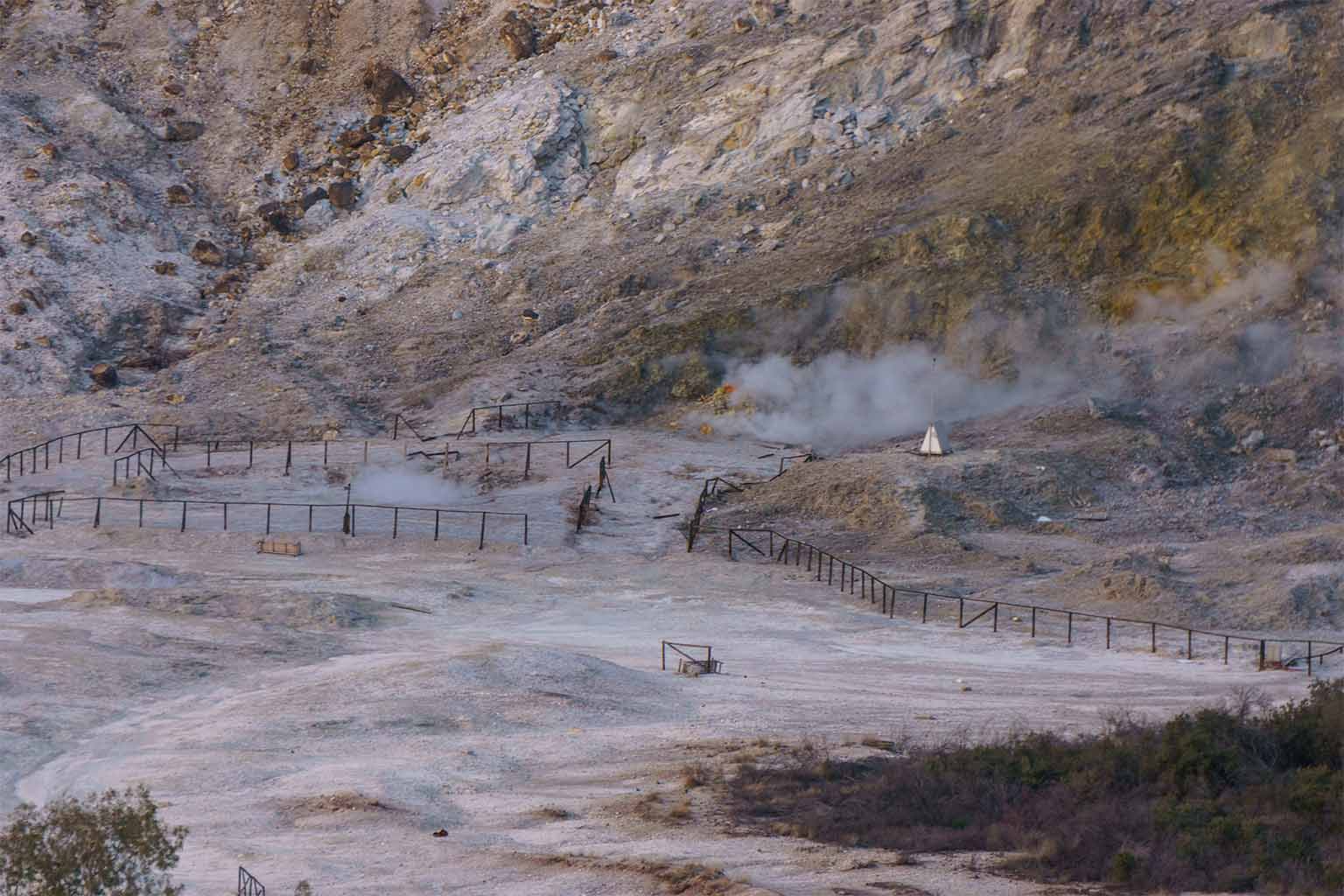
Nestled near the bustling city of Naples, Italy, the Campi Flegrei volcanic region commands attention not just for its ancient eruptions but for its ongoing volcanic activity and potential risks. This vast caldera has shaped the landscape and lives of roughly 400,000 residents—a delicate balance between awe-inspiring natural power and looming uncertainty.
A volcanic giant with a dramatic past
The Campi Flegrei caldera stretches nearly 9 miles (14.5 kilometers) wide, formed by one of Earth’s most explosive events around 40,000 years ago. This ancient eruption blanketed the surroundings in ash, leaving behind a geological imprint that fascinates scientists and poses complex questions about future behavior.
Its volcanic history is marked by even larger events, such as the Maddaloni/X-6 explosion approximately 109,000 years ago. This VEI 7 super-eruption was among the most violent in Earth’s history, surpassing the last known eruption in 1538, which was modest in comparison, with a VEI rating of 3. Campi Flegrei is anything but dormant, and its episodes of ground uplift over the past 75 years point to continuous subterranean unrest.
Reading the signs beneath the surface
What fuels this unrest? Recent seismic imaging techniques reveal a remarkably intricate internal structure. A fibrous caprock layer lies just beneath the surface, acting as a barrier. Below that is a pressurized reservoir saturated with water and steam—essentially the caldera’s lungs, slowly building pressure as fluids accumulate. The dense carbonate-rich basement below slopes inward toward the caldera’s center, stabilizing the overall structure but also influencing fluid flow.
Experts now believe that the current activity stems largely from this fluid buildup—rather than rising magma—causing pressure changes and small quakes. Dr. Maria Santoro, a volcanologist at the Italian National Institute of Geophysics and Volcanology (INGV), explains: “The presence of this gas and liquid mixture plays a crucial role in modulating the volcanic system’s stress, and it can trigger unrest even without fresh magma intrusion.”
“We’re witnessing a natural breathing cycle of the volcano, not necessarily its awakening.” – Dr. Maria Santoro, INGV
Monitoring one of Europe’s most dangerous volcanic regions
Putting science into action, a consortium of volcanologists and geologists has devoted years to monitoring Campi Flegrei’s seismic activity, gas emissions, and ground deformation. These efforts are critical given the proximity to dense urban centers and vital infrastructure.
According to recent updates in Discover Magazine, while signs of unrest persist, there is no immediate indication of a colossal eruption on the horizon. Instead, the focus is on understanding subtle shifts within the system to anticipate potential escalations and improve early warning capabilities.
One innovative research direction involves management of groundwater and reducing fluid influx to the volcanic reservoir. By controlling these subsurface waters, scientists hope to influence pressure levels and dampen seismic unrest. It’s a promising approach that combines geology, hydrology, and technology in a race against time.
Preparing for the future: science, safety, and community
Managing volcanic risk around Campi Flegrei is about more than monitoring—it’s about actively engaging with the communities that live in the volcano’s shadow. The Italian government and regional agencies continuously update emergency plans to protect lives and infrastructure.
Scientific advances enable a clearer picture of this complex caldera’s behavior. Mapping the subsurface in ever-greater detail helps experts pinpoint how fluids and gases move within the system—key data for anticipating future activity. As researchers emphasize, this is a vital step toward turning ancient volcanic power into manageable risk.
Experts from the European Volcanological Society remind us that volcanic unrest is a normal part of the life cycle of many calderas worldwide. It does not guarantee an eruption, but it demands vigilance and respect for nature’s forces.
For those curious to dive deeper, the INGV website offers continuous updates and detailed monitoring reports on Campi Flegrei, reflecting the latest scientific understanding.
This article was crafted with insights from leading volcanologists and geoscientists, aiming to provide readers with a trustworthy and comprehensive perspective on one of Europe’s most intriguing volcanic regions.
How do you feel knowing thousands live so close to such volatile ground? Share your thoughts, experiences, or questions about Campi Flegrei’s volcanic activity below, and help the conversation grow about staying safe and informed in volcanic zones.