


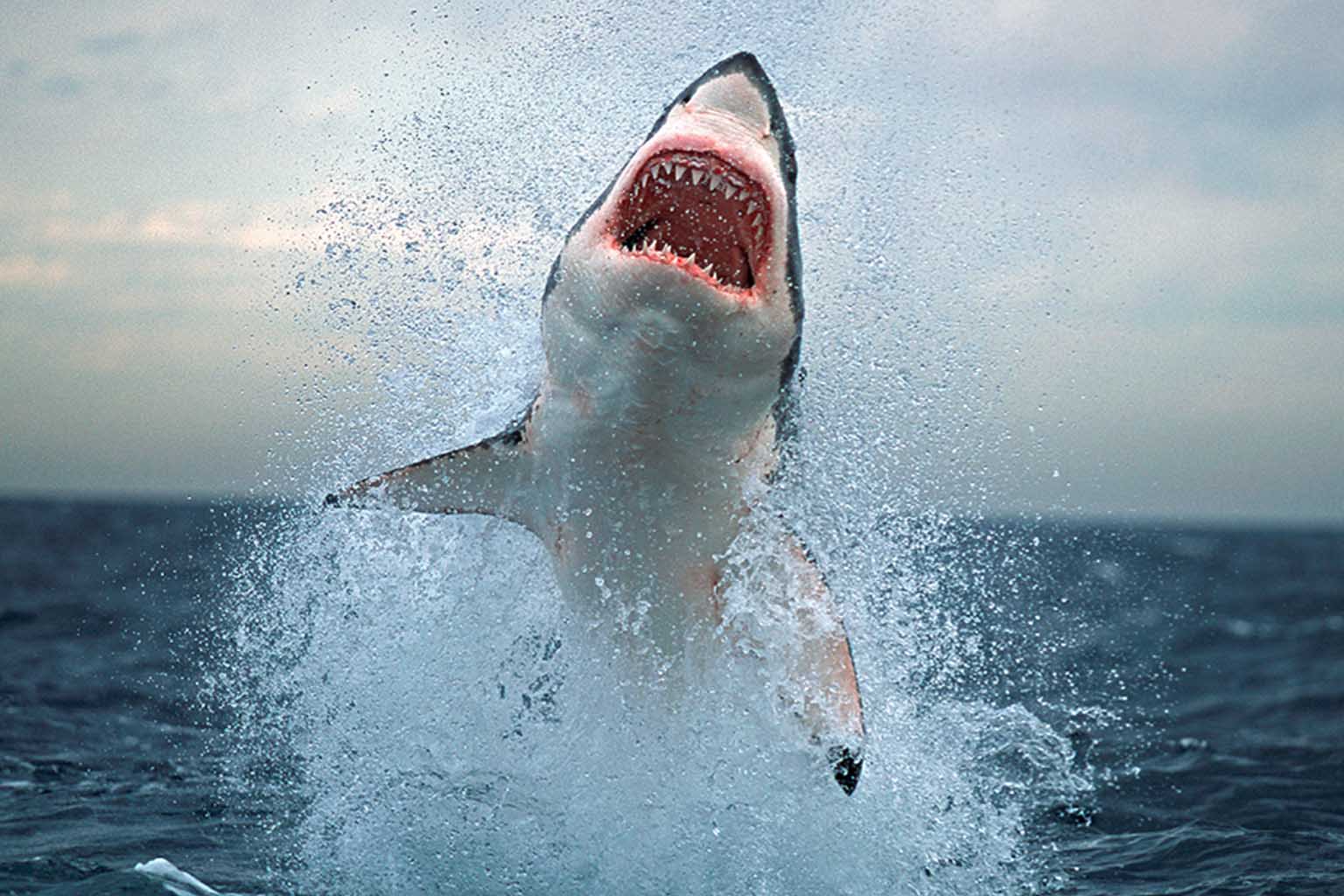
The ocean’s hierarchy has always seemed carved in stone. For millions of years, the great white shark reigned supreme, an apex predator whose very presence sent ripples of fear through marine ecosystems. Yet something extraordinary is happening in the waters off Australia’s coast that challenges everything we thought we knew about oceanic dominance.
In October 2023, a 4.7-meter great white shark washed ashore in Portland, Victoria, bearing the unmistakable signs of a calculated attack. Missing its liver, digestive organs, and reproductive system, the carcass told a story that marine scientists had long suspected but never definitively proven. This wasn’t the work of another shark or a random predator encounter. DNA analysis of the surgical wound revealed traces that confirmed what witnesses had observed days earlier: orcas had claimed another great white victim. As concerns about marine protection and shark encounters continue to evolve, this incident represents a dramatic shift in our understanding of oceanic predator dynamics.
This forensic evidence marks the first confirmed case of orcas hunting great white sharks in Australian waters, joining a growing body of observations from South Africa and other regions that suggest a fundamental shift in marine predator dynamics.
The Surgical Precision of Orca Hunting
What makes these attacks particularly striking isn’t just their occurrence, but their methodical nature. The orcas involved in the Australian incident, known as Bent Tip and Ripple, are well-documented individuals whose hunting patterns researchers have studied for years. Their approach to taking down great whites demonstrates a level of strategic thinking that borders on the clinical.
The targeted removal of specific organs, particularly the liver, reveals an understanding of anatomy that goes far beyond instinctual hunting. According to research from NOAA Fisheries, as apex predators, white sharks play crucial ecological roles in ocean ecosystems. Shark livers are extraordinarily rich in lipids, providing an energy-dense meal that can sustain orcas for extended periods. This selective harvesting suggests that orcas have learned to identify and exploit the most valuable parts of their prey with remarkable efficiency.
“As an apex predator, the white shark plays an important ecological role in the oceans, making these predation events particularly significant for marine ecosystem balance” – NOAA Fisheries research
The 50-centimeter wound found on the Australian great white showed the same precision observed in South African cases, where orcas consistently target the liver while leaving much of the shark’s body untouched. This consistency across different orca populations thousands of miles apart raises intriguing questions about whether this hunting technique is learned behavior spreading through orca communities.
The Psychological Warfare of the Deep
Beyond the immediate physical threat, orcas appear to be waging a form of psychological warfare against great whites. Evidence from South Africa shows that great white shark sightings have plummeted in areas where orcas regularly hunt, suggesting these apex predators are abandoning traditional territories to avoid their new nemesis.
This behavioral shift represents something unprecedented in marine ecosystems. Great whites, as apex predators, typically don’t alter their behavior based on the presence of other predators. The fact that they’re actively avoiding areas with orca activity indicates a fundamental recognition of their changed status in the food chain. Just as researchers have discovered unexpected findings in marine ecosystems like the Mediterranean’s deepest trenches, these predator interactions reveal hidden complexities in ocean dynamics.
The implications extend beyond individual survival instincts. When apex predators modify their territorial patterns, the effects cascade through entire ecosystems. Seal populations in former great white hunting grounds may experience different predation pressures, while fish communities that once faced regular shark presence must adapt to new dynamics.
Cooperative Intelligence Versus Solitary Power
The rise of orcas as great white hunters highlights a fascinating evolutionary battle between two distinct approaches to apex predation. Great whites represent the pinnacle of solitary hunting – perfectly evolved killing machines with incredible speed, power, and sensory capabilities. Orcas, conversely, embody the power of cooperative intelligence and social coordination.
This contrast becomes particularly evident when examining hunting strategies. A great white relies on surprise attacks, explosive speed, and individual prowess. Orcas coordinate complex group maneuvers, communicate throughout the hunt, and appear to assign specific roles to different pod members. The ability to plan, execute, and adapt hunting strategies in real-time gives orcas advantages that pure physical power cannot match. Studies published in Ecosphere have shown that white sharks provide an interesting model species to test the influence of internal and external factors on predator movement ecology.
“White sharks provide an interesting model species to test the influence of internal and external factors on predator behavior, highlighting the complexity of apex predator interactions” – Ecosphere journal research
Research indicates that orcas can learn and transmit hunting techniques within their pods, potentially explaining how specialized shark-hunting behaviors spread across different populations. This cultural transmission of knowledge represents a level of adaptation that could allow orcas to become increasingly effective great white hunters over time. Much like how ancient civilizations developed complex strategies for survival and dominance, orcas appear to be evolving sophisticated hunting techniques.
The Unforeseen Consequences for Marine Tourism and Conservation
The ecological implications of this predator shift extend into human domains in ways that researchers are only beginning to understand. Marine tourism industries built around great white shark encounters face potential disruption if shark populations decline or relocate to avoid orca territories. South Africa has already experienced this firsthand, with some shark diving operations reporting significant decreases in sightings.
Conservation efforts for great whites may need fundamental reassessment. Traditional protection strategies focus on human threats like fishing, pollution, and habitat destruction. The emergence of orcas as systematic great white predators introduces a natural variable that conservation models haven’t fully accounted for. Protected marine areas designed for great whites may become less effective if the sharks abandon these zones to avoid orcas. Similar to how environmental upheaval near South Georgia affects marine ecosystems, these predator dynamics create cascading effects throughout ocean food webs.
The situation also raises complex questions about intervention in natural processes. Should conservationists attempt to mitigate orca predation on great whites, or is this simply evolution in action? The answer depends partly on whether current orca hunting patterns represent a natural rebalancing of marine ecosystems or an anomalous response to other environmental changes.
As this dynamic continues to unfold across different ocean regions, it challenges our fundamental assumptions about marine ecosystem stability. The ocean’s food chain, long thought to be relatively fixed at the apex level, proves to be far more fluid than previously imagined. Whether this represents a temporary shift or a permanent evolution in marine predator relationships remains one of the most compelling questions facing marine biology today.