


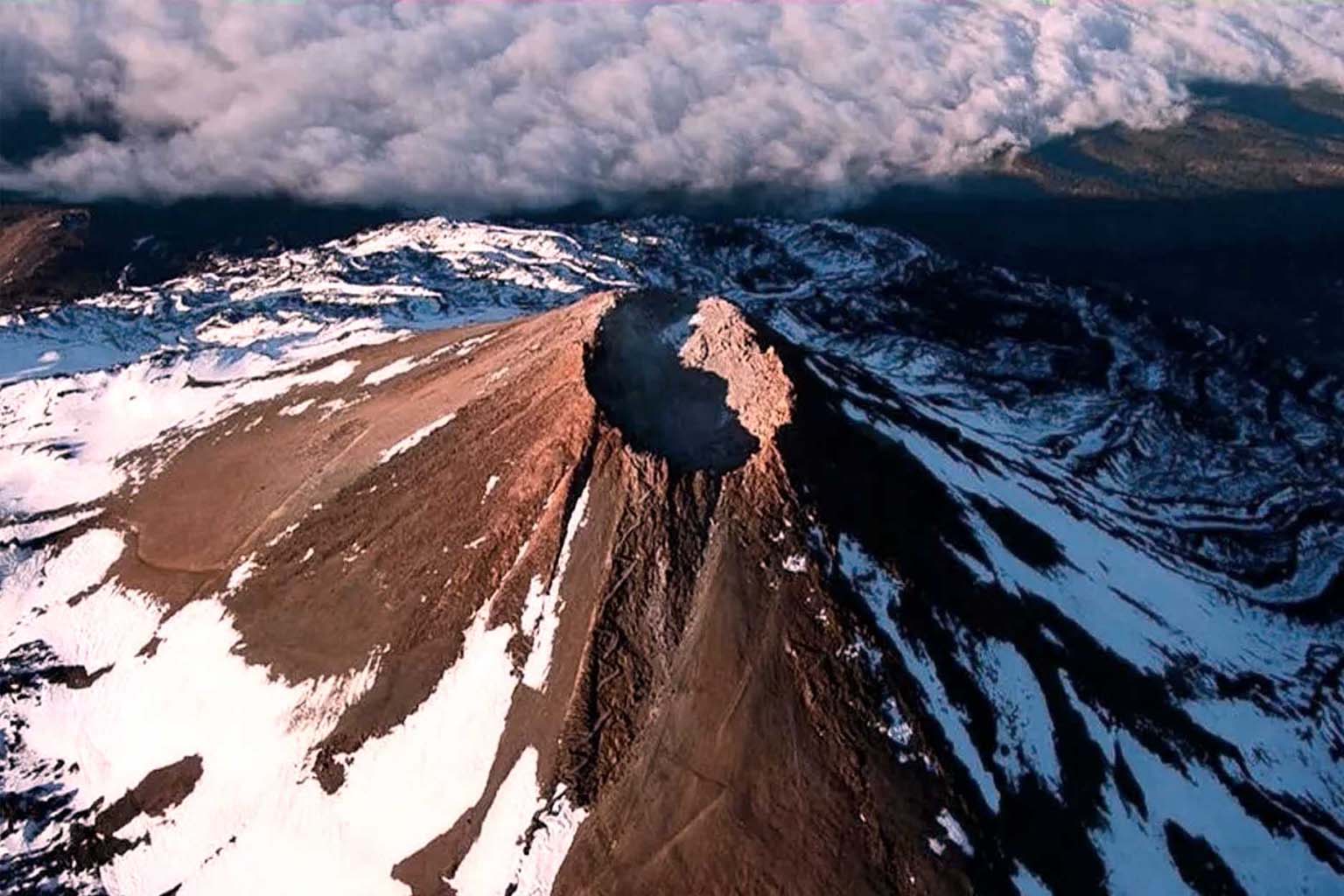
The ground beneath one of Europe’s most visited tourist destinations is moving in ways that make volcanologists deeply uncomfortable. Tenerife’s Mount Teide, towering over an island that welcomes ten million visitors each year, has been sending increasingly urgent signals that something fundamental is changing in its underground plumbing system. What started as subtle tremors in 2016 has evolved into a complex pattern of seismic activity, ground deformation, and gas emissions that scientists can no longer dismiss as routine volcanic breathing.
The island’s one million residents live their daily lives above a geological powder keg that last erupted in 1909, when tourism was barely a consideration and the population was a fraction of today’s size. The Scientific Committee for the Evaluation and Monitoring of Volcanic Phenomena now tracks multiple indicators suggesting that Teide’s long dormancy may be approaching its end. The question haunting experts isn’t whether an eruption will occur, but when and how devastating it might prove to be.
This volcanic awakening comes at a time when the Canary Islands have already demonstrated their explosive potential. The 2021 eruption of Cumbre Vieja on nearby La Palma destroyed over 1,600 buildings and provided a stark reminder of what volcanic fury can accomplish in a matter of weeks. Tenerife’s situation presents exponentially higher stakes given its population density and economic importance to both Spain and European tourism. While modern disasters capture headlines, human societies have been adapting to geological forces for millennia, as evidenced by discoveries like the 5,000-year-old fire altar that reveals how ancient civilizations developed ceremonial responses to natural phenomena.
Seismic Signatures of Underground Transformation
The earthquake swarms beneath Teide tell a story of mounting pressure and structural change deep within the volcano’s foundation. Since 2022, seismic activity has intensified dramatically, with the most concerning events recorded near Vilaflor in January 2024. These tremors, measuring between 0.6 and 1.5 in magnitude, occurred at depths ranging from three to thirteen kilometers, indicating that the disturbances originate from the volcano’s magma storage system.
February 2025 brought additional seismic events closer to Teide’s summit, a development that particularly concerns monitoring teams. The pattern suggests that whatever processes are driving this unrest are becoming more focused and potentially more dangerous. Research published in the Journal of Geophysical Research demonstrates that such earthquake clusters often precede major eruptions by months or years, serving as early warning signals of magma movement and pressure redistribution.
“Long-period seismic swarms provide critical insights into magma movement and pressure changes within volcanic systems, serving as key indicators for eruption forecasting” – Journal of Geophysical Research
The depth and frequency of these tremors provide crucial insights into the volcano’s internal mechanics. When magma begins moving through underground chambers and conduits, it fractures surrounding rock and creates the distinctive seismic signatures that scientists now observe beneath Tenerife.
Ground Deformation Reveals Hidden Pressures
Perhaps the most telling evidence of Teide’s awakening lies in measurements showing that Tenerife is rising by one centimeter across the entire island. This seemingly modest uplift represents enormous forces at work beneath the surface, as accumulating magma pushes upward against the overlying rock structure. Studies from ScienceDirect confirm that this deformation affects the entire island, indicating pressure increases on a scale that could fundamentally alter the volcanic system.
Ground deformation serves as one of the most reliable predictors of volcanic activity because it reflects real-time changes in underground magma storage. When volcanoes approach eruption, the injection of new magma into existing chambers creates measurable surface movements that sophisticated monitoring equipment can detect with millimeter precision.
The island-wide nature of this uplift suggests that the pressure source lies deep within Teide’s magmatic system, potentially affecting multiple potential eruption sites. This broad deformation pattern complicates eruption forecasting because it indicates that an eruption could occur anywhere across a relatively large area rather than from a single predictable location.
Chemical Signals from the Underground Laboratory
The gases escaping from Teide’s fumaroles provide a direct chemical window into the volcano’s underground processes. Recent monitoring has detected significant changes in gas composition, particularly increased sulfur-rich emissions from Las Cañadas, the massive crater surrounding the main volcanic peak. These chemical signatures indicate that rising magma is heating the hydrothermal system, driving more aggressive gas production and release.
Volcanic gas monitoring represents one of the most sophisticated tools in modern volcanology because different gases originate from different depths and processes. Increased sulfur emissions typically signal that fresh magma is interacting with groundwater systems, creating the chemical cocktail that often precedes major eruptions. Studies of volcanic gas composition have proven instrumental in eruption forecasting at volcanoes worldwide, much like how LiDAR technology has revolutionized our understanding of ancient defensive strategies.
The changes observed at Teide’s gas emission sites mirror patterns documented before eruptions at other major stratovolcanoes, lending additional weight to concerns about the volcano’s future behavior.
The Economic and Human Geography of Volcanic Risk
Teide’s potential eruption presents challenges that extend far beyond geological science into the realm of economic geography and disaster planning. The volcano sits at the heart of an island whose economy depends almost entirely on tourism, with ten million annual visitors generating the revenue that sustains local communities. An eruption would immediately transform this economic engine into a liability, potentially stranding tourists and devastating the service industries that employ much of the local population.
Computer simulations suggest that various eruption scenarios could impact major tourist zones through lava flows, pyroclastic clouds, and toxic gas dispersal. Santa Cruz de Tenerife and the popular southwestern resort areas face particular vulnerability to volcanic ash fallout, which could ground aircraft and shut down the tourism infrastructure that keeps the island’s economy functioning. The complexity of predicting such impacts mirrors the challenges archaeologists face when interpreting ancient sites, as seen in discoveries like 16,000-year-old tools that challenge our understanding of early human migration patterns.
The scale of potential disruption extends beyond Tenerife itself, as ash clouds could disrupt European air travel patterns similar to the 2010 Eyjafjallajökull eruption in Iceland. The economic interconnectedness of modern tourism means that a major Teide eruption would ripple through European travel markets and potentially affect global aviation schedules.
The Psychological Dimensions of Living with Volcanic Uncertainty
What conventional analyses rarely address is the profound psychological impact of living under the constant possibility of volcanic catastrophe. Tenerife’s residents must navigate the cognitive dissonance between daily normalcy and the scientific reality that their island could transform into an active volcanic zone with little warning. This psychological burden affects community planning, property investment decisions, and the fundamental question of whether to build long-term lives in a location with such uncertain geological stability.
The experience of La Palma residents during the 2021 Cumbre Vieja eruption provides insights into how volcanic disasters affect community psychology beyond the immediate physical damage. Families watched their homes disappear under lava flows while grappling with the realization that their familiar landscape had permanently changed. Research into disaster psychology suggests that the anticipatory stress of knowing an eruption could occur may be almost as challenging as the event itself. This relationship between humans and their changing environment echoes through history, as demonstrated by 20,000-year-old cave etchings that reveal how ancient peoples documented and responded to their shifting landscapes.
“Satellite observations provide high-resolution images of ground deformation allowing researchers to infer deformation sources and monitor volcanic activity with unprecedented precision” – Remote Sensing Research
Scientists like Itahiza Domínguez from the National Geographic Institute face the delicate task of maintaining public awareness without creating unnecessary panic, knowing that the timeline for potential eruption could span decades or compress into months. This uncertainty creates unique challenges for both authorities and residents in determining appropriate levels of preparedness and concern.
The awakening of Teide forces us to confront fundamental questions about how modern societies coexist with geological forces that operate on timescales far longer than human planning horizons. Whether the volcano’s current unrest leads to eruption in two years or fifty, the increasing signs of activity remind us that the earth beneath our feet remains an active, dynamic system that could reshape human geography with remarkable speed. The challenge now lies in balancing respect for these geological realities with the practical necessities of sustaining communities and economies in one of Europe’s most volcanically active regions.