


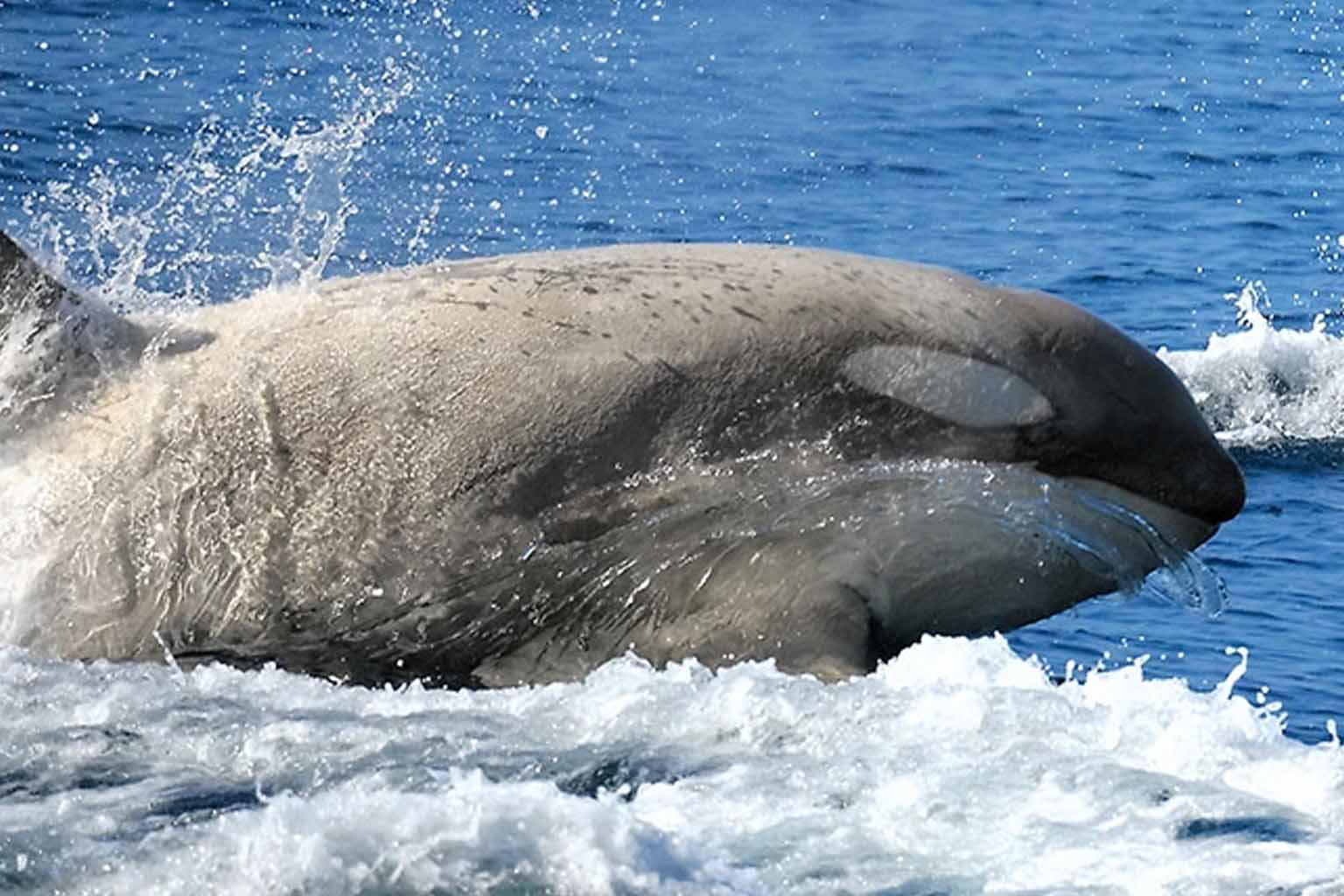
The ocean continues to reveal its secrets in ways that challenge our understanding of marine life. In the pristine waters off Hokkaido, Japan, wildlife photographer N. Hayakawa experienced what can only be described as a moment of pure wonder—encountering not one, but two completely white orcas swimming among their black-and-white counterparts. After fifteen years of documenting these intelligent apex predators, Hayakawa found themselves face-to-face with creatures so rare they initially questioned their own eyes.
This discovery has sent ripples through the marine biology community and captivated wildlife enthusiasts worldwide. The appearance of these leucistic orcas raises fascinating questions about genetic diversity in marine ecosystems and challenges our assumptions about how unusual coloration affects survival in the wild. These encounters represent more than just remarkable photographs—they offer a window into the complex genetic mechanisms that govern one of the ocean’s most formidable species. Such discoveries remind us that even in well-studied regions, marine ecosystems continue to surprise researchers with unexpected revelations.
A Career-Defining Moment in Japanese Waters
Hayakawa’s encounter began like countless others during their decade-and-a-half career photographing orcas in Rausu. The cold waters of Hokkaido have long been a reliable location for observing these marine mammals, but nothing in their extensive experience prepared them for what emerged from the depths that day.
The first white male orca appeared swimming confidently within the pod, its cream-colored body creating a stark contrast against the dark ocean and its traditionally pigmented family members. The photographer’s immediate physical reaction—trembling legs and disbelief—speaks to the profound rarity of such an encounter. Scientific literature suggests that leucistic marine mammals occur in perhaps one in ten thousand births, making Hayakawa’s sighting extraordinarily significant.
Days later, the ocean delivered another surprise. A white female orca surfaced in the same area, confirming that this wasn’t an isolated genetic anomaly but potentially evidence of a family line carrying these unusual traits. The photographer’s observation of the creature’s black eyes became crucial for understanding the specific condition affecting these animals.
Decoding the Genetics Behind Ghost Whales
The distinction between albinism and leucism becomes critical when examining these white orcas. While both conditions affect pigmentation, leucism represents a partial loss of melanin production rather than complete absence. This explains why Hayakawa observed dark eyes in the creatures rather than the pink or red eyes typically associated with true albinism. Interestingly, melanin production affects coloration across many species, from marine mammals to human hair pigmentation.
Marine biologists have documented similar cases across various cetacean species, but orcas present unique challenges for genetic analysis. Their complex social structures and vast migration patterns make long-term studies difficult. Research indicates that leucistic marine mammals often retain some pigment in critical areas like the eyes and internal organs, which may provide survival advantages that complete albinism would eliminate.
The fact that both orcas appeared healthy and fully integrated into their pod suggests that their condition hasn’t significantly impaired their ability to hunt, communicate, or navigate. This challenges traditional assumptions about how genetic mutations affecting appearance impact survival in apex predators. Environmental changes, such as those caused by marine ecosystem disruptions, can further complicate the survival challenges faced by genetically distinct individuals.
Social Acceptance in Orca Communities
The behavior of the pod toward these white individuals reveals fascinating insights into orca social dynamics. Rather than being ostracized or abandoned, both leucistic orcas appeared to move freely within their family groups, participating in normal pod activities and benefiting from the protection of the group.
Studies of orca social behavior demonstrate that these animals maintain incredibly strong family bonds, often spanning multiple generations. The acceptance of visually distinct individuals within the pod suggests that orca social recognition relies more heavily on vocal communication, echolocation signatures, and learned behaviors than visual appearance alone.
This social integration becomes particularly important when considering the potential vulnerabilities these white orcas might face. Their unusual coloration could theoretically make them more visible to prey species, potentially compromising hunting success. The pod’s continued acceptance indicates that any disadvantages are either minimal or effectively offset by group hunting strategies.
The Hidden Challenges of Genetic Distinctiveness
While these white orcas captured global attention for their beauty, their condition likely presents challenges that remain invisible to casual observers. Leucistic marine mammals often experience increased sensitivity to sunlight, potentially affecting their surfacing behaviors and preferred depths during different times of day.
The long-term health implications of leucism in orcas remain largely unexplored. Research on other marine species suggests that reduced pigmentation can correlate with increased susceptibility to skin damage from UV radiation and certain environmental toxins. Given that orcas can live for decades and travel vast distances across varying oceanic conditions, these factors could significantly impact the animals’ long-term wellbeing.
Reproductive implications also warrant consideration. While these orcas appear to function normally within their pods, questions remain about whether leucistic traits affect mating selection or offspring survival rates. The appearance of both male and female white orcas in the same area suggests the possibility of genetic lineage preservation, though tracking such patterns requires extensive long-term monitoring that few research programs can sustain. Understanding genetic diversity patterns in marine mammals becomes increasingly crucial as we learn more about how environmental pressures can affect species survival.
Hayakawa’s photographs have created a permanent record of what may prove to be a pivotal moment in understanding genetic diversity among one of the ocean’s most intelligent species. As climate change and human activities continue to pressure marine ecosystems, documenting and protecting such genetic variations becomes increasingly important. These ghostly figures swimming through Japanese waters remind us that the ocean still holds mysteries that can fundamentally shift our perspective on the natural world.