


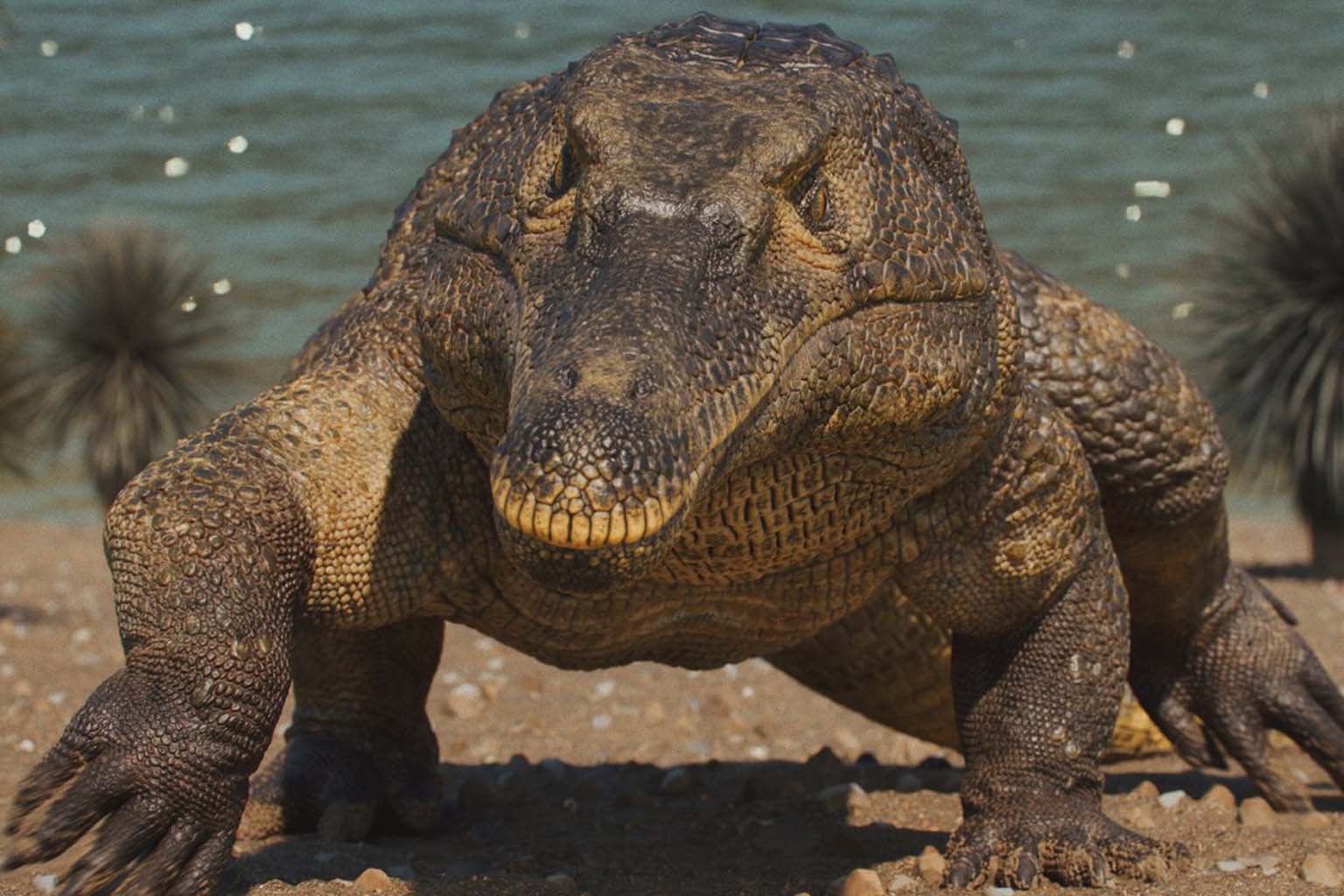
The discovery of ancient predators often captures our imagination, but few finds offer the clarity needed to truly understand prehistoric ecosystems. When paleontologists uncovered the remarkably preserved remains of Retymaijychampsa beckerorum in southern Brazil, they didn’t just find another fossil—they recovered a crucial piece of evolutionary history that had been missing for 237 million years.
This newly identified species belonged to the Proterochampsidae, a group of crocodile-like reptiles that dominated waterways during the Triassic period, long before dinosaurs reached their evolutionary peak. What makes this discovery particularly significant is its timing: it represents a transitional species that bridges the gap between Middle and Late Triassic proterochampsids, a period previously absent from the fossil record.
The implications extend beyond simple classification. Understanding how these early archosauriforms adapted and diversified helps explain the evolutionary pressures that shaped the reptilian lineages leading to modern crocodiles and birds. This single fossil reveals the complexity of prehistoric ecosystems where multiple predator species coexisted, each carving out specific ecological niches—much like how archaeologists studying ancient European societies have discovered evidence of sophisticated community structures in much more recent periods.
A Predator Built for Dual Environments
The fossil remains, discovered at the Linha Várzea 2 site within Brazil’s Santa Maria Formation, paint a picture of a remarkably adaptable predator. Unlike many of its proterochampsid relatives, Retymaijychampsa beckerorum possessed robust hindlimbs that suggest enhanced terrestrial capabilities alongside its aquatic adaptations.
This anatomical combination indicates a hunting strategy more diverse than that of modern crocodilians. While contemporary crocodiles primarily rely on ambush tactics in aquatic environments, this ancient predator appears capable of active pursuit both in water and on land. The elongated, flattened skull characteristic of proterochampsids was paired with powerful limbs that could support rapid movement across varied terrain.
The creature’s armored body provided protection while maintaining the flexibility needed for an active lifestyle. This balance between defense and mobility represents a successful evolutionary strategy that allowed proterochampsids to thrive for millions of years before environmental changes eventually led to their extinction.
Evolutionary Significance in the Triassic Timeline
According to research on archosauromorph evolution published in PMC, proterochampsids first appeared during the Ladinian period, with the youngest known specimens dating to the upper Carnian/lower Norian. This temporal distribution shows these reptiles successfully adapted to changing environmental conditions over approximately 20 million years, a remarkable span for any vertebrate group.
“The acquisition of traits within archosauromorph evolution demonstrates complex phylogenetic relationships that shaped Triassic ecosystems” – Archosauromorph phylogenetic research
The discovery of Retymaijychampsa beckerorum fills a critical temporal gap in this evolutionary sequence. Scientists can now trace the morphological changes that occurred as these early archosauriforms responded to shifting climates and ecosystems during the Middle to Late Triassic transition.
This species coexisted with Pinheirochampsa rodriguesi in the same geographic region, suggesting that multiple proterochampsid species developed specialized hunting strategies to reduce direct competition. Such ecological partitioning demonstrates the sophisticated community structures that existed in Triassic ecosystems, challenging assumptions about the simplicity of ancient food webs—similar to how discoveries like the 3,000-year-old fortress beneath Jerusalem reveal complex defensive strategies in ancient human settlements.
Insights Into Ancient Ecosystem Dynamics
The Santa Maria Formation has yielded numerous Triassic fossils, but the preservation quality of this particular specimen provides unprecedented detail about proterochampsid anatomy. The nearly complete and articulated hindlimb allows for precise biomechanical analysis, revealing locomotor capabilities that weren’t apparent in fragmentary remains from other sites.
Evidence suggests these predators occupied ecological roles similar to modern semi-aquatic carnivores, but with greater terrestrial proficiency. This adaptation strategy may have provided crucial advantages during periods of environmental stress, allowing populations to exploit diverse food sources when aquatic prey became scarce.
The fossil record from this site also indicates that proterochampsids shared their environment with early dinosaurs, creating complex predator-prey relationships that influenced the evolutionary trajectory of both groups. Understanding these interactions provides context for the eventual rise of dinosaurian dominance in later periods. The richness of this fossil site parallels other significant archaeological discoveries, such as the quarter million statuettes found near ancient Egyptian burial sites, demonstrating how exceptional preservation can revolutionize our understanding of past ecosystems.
The Overlooked Biomechanical Adaptations
While most analyses focus on the obvious crocodilian similarities, the limb structure of Retymaijychampsa beckerorum reveals sophisticated biomechanical solutions that differ significantly from modern analogues. The robust hindlimb architecture suggests these animals could generate powerful thrust both for swimming and terrestrial locomotion, a dual capability that modern crocodiles have largely abandoned.
The vertebral column and pelvic structure show adaptations for supporting body weight during extended terrestrial activity, indicating these weren’t simply aquatic ambush predators that occasionally ventured onto land. Instead, they represent a successful evolutionary experiment in amphibious predation that combined the stealth advantages of aquatic hunting with the pursuit capabilities of terrestrial carnivores.
This biomechanical flexibility may explain why proterochampsids successfully diversified across multiple environments during the Triassic. Their ability to exploit both aquatic and terrestrial prey resources provided resilience against environmental fluctuations that challenged more specialized contemporaries. This adaptability mirrors the remarkable recovery stories we see in modern conservation, such as the saiga antelope recovery from near extinction, demonstrating how flexible survival strategies can determine species persistence.
The discovery of Retymaijychampsa beckerorum raises intriguing questions about the factors that ultimately led to proterochampsid extinction despite their apparent adaptability. What environmental pressures eventually overwhelmed these successful predators, and how might their evolutionary strategies inform our understanding of modern ecosystem resilience in the face of rapid environmental change?