


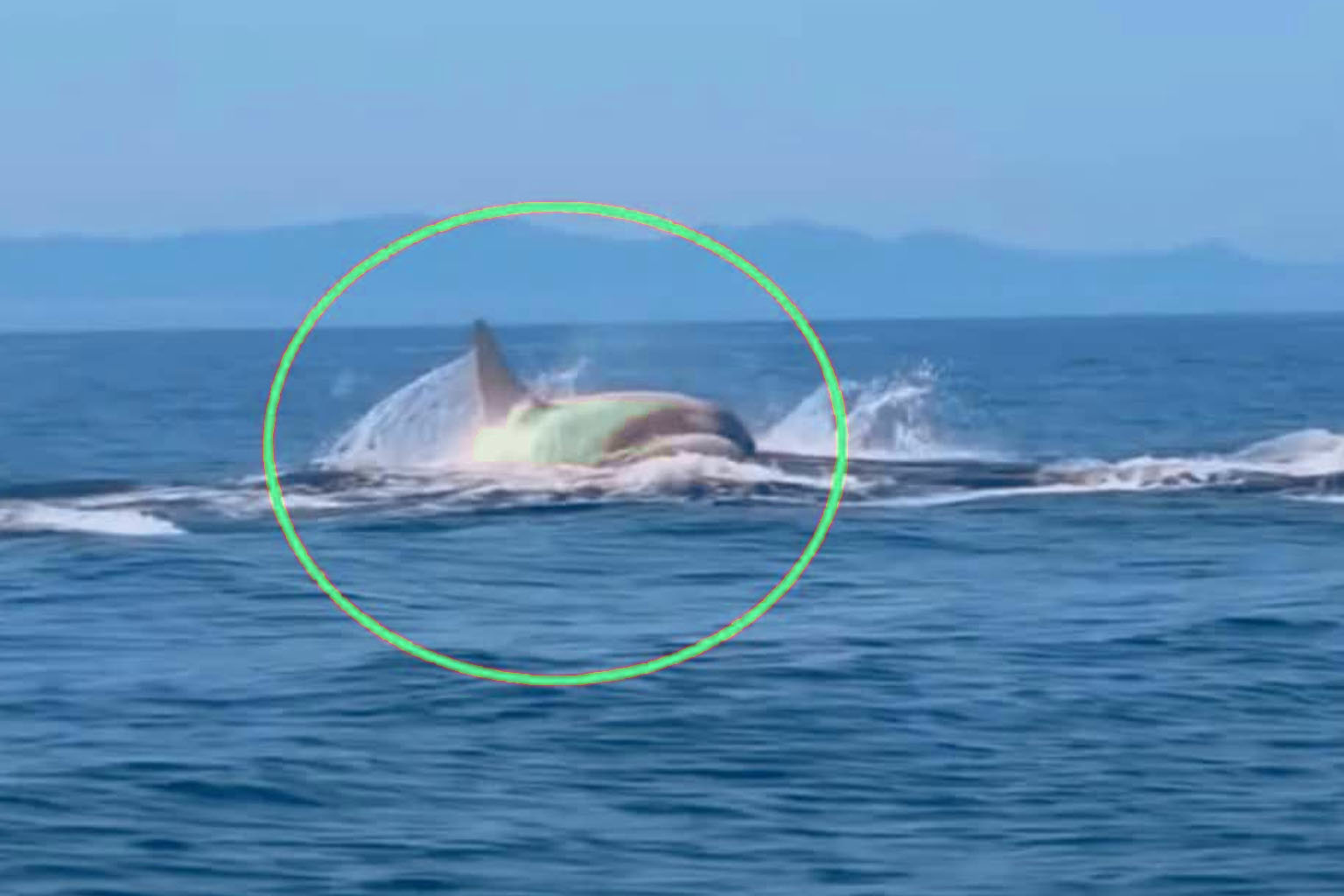
The ocean continues to surprise even the most experienced wildlife photographers. After fifteen years of documenting orcas in Japan’s waters, N. Hayakawa thought they had seen everything these magnificent creatures could offer. The routine had become familiar: navigating the cold waters of Hokkaido, positioning the camera, capturing the distinctive black and white patterns of killer whales as they moved through their natural habitat.
That routine shattered completely when a ghostly white figure emerged from the depths, swimming confidently alongside its traditionally colored pod members. The encounter left Hayakawa physically trembling, struggling to steady their camera while witnessing what many marine biologists consider one of nature’s rarest phenomena. The cream-colored giant moved with the same grace and power as any orca, yet its appearance was so extraordinary that the photographer initially questioned their own eyes. This unusual coloration represents a fascinating disruption in melanin production, similar to genetic variations that affect pigmentation across many species.
Days later, lightning struck twice. Returning to the same location near Rausu, Hokkaido, Hayakawa encountered a second white orca – this time a female. Two rare genetic anomalies in the same area within days of each other defied statistical probability and raised fascinating questions about what drives these unusual colorations in one of the ocean’s most intelligent predators.
A Photographer’s Dream Encounter Becomes Reality
Hayakawa’s initial reaction speaks to the profound impact of witnessing something genuinely unprecedented in nature. After documenting countless orcas across Japan’s coastal waters, the appearance of the first white male orca represented a career-defining moment that no amount of experience could have prepared them for.
The photographer’s description of the creature as appearing “golden-ish cream-colored” against the blue sea reveals how dramatically lighting and water conditions can affect our perception of these animals. Unlike the stark black and white contrast that defines typical orcas, this individual displayed subtle variations in tone that seemed to shift with the surrounding environment.
What makes Hayakawa’s documentation particularly valuable is their immediate recognition of the encounter’s significance. Rather than simply capturing a few quick shots, they persisted despite their physical reaction to the sight, ensuring that scientific evidence of this rare phenomenon would be preserved for researchers worldwide.
The Genetics Behind Nature’s Pale Giants
The scientific explanation behind these white orcas centers on leucism versus albinism – two distinct genetic conditions that produce dramatically different results. While albinism results in a complete absence of melanin production, leucism involves only partial loss of pigmentation, allowing some color-producing cells to function normally.
Hayakawa’s observation that the female orca’s “eyes appear black” provides crucial diagnostic information. True albino animals typically display pink or red eyes due to visible blood vessels, while leucistic animals retain darker eye coloration. This distinction matters significantly for understanding how these genetic variations affect the animals’ survival prospects and social integration.
Research indicates that leucistic marine mammals often retain better vision and overall health compared to their albino counterparts. The partial preservation of melanin in certain body areas can provide some protection against ultraviolet radiation damage, particularly important for animals that spend considerable time near the ocean’s surface. These findings echo discoveries about ancient marine life that show how genetic adaptations have shaped ocean-dwelling species throughout evolutionary history.
Social Dynamics and Survival in the Wild
Perhaps the most remarkable aspect of Hayakawa’s encounters involves observing how the pod accepted these unusual members. Orcas are highly social animals with complex family structures, and their willingness to maintain bonds with visually distinct individuals demonstrates the strength of their social organization.
The white orcas appeared fully integrated into normal pod behaviors, participating in group movements and maintaining proximity to other members. This acceptance proves crucial for their survival, as orcas rely heavily on cooperative hunting strategies and collective protection from potential threats.
Studies have shown that unusual coloration can make marine mammals more vulnerable to predation, but adult orcas face few natural predators. The greater risk lies in their visibility to human activities, including boat traffic and fishing operations, where their distinctive appearance might draw unwanted attention. This vulnerability parallels the challenges faced by other marine giants, such as the record-breaking presence of massive great whites that attract significant human attention due to their extraordinary size.
The Hidden Complexity of Marine Genetic Diversity
What conventional wildlife reporting often misses is how these rare genetic expressions reveal the underlying genomic diversity within orca populations. These white individuals represent successful carriers of recessive genetic traits that typically remain invisible within the gene pool.
The appearance of two leucistic orcas in the same geographic area within days suggests either remarkable coincidence or possible genetic clustering within this particular population. Some researchers theorize that certain orca families may carry higher frequencies of genes responsible for pigmentation disorders, though definitive evidence remains limited. Understanding these patterns becomes crucial when considering how genetic diversity affects long-term species survival, as reduced genetic variation can lead to population vulnerabilities.
Marine geneticists face significant challenges studying these phenomena due to the difficulty of collecting genetic samples from wild orcas. Unlike terrestrial mammals, where researchers can analyze shed fur or feathers, ocean-dwelling creatures require more invasive sampling techniques that many conservation groups oppose. This creates a knowledge gap around the true frequency and distribution of genetic variations in wild cetacean populations.
Hayakawa’s photographs now contribute to a growing database of documented cases worldwide, helping scientists track patterns and potentially predict where similar individuals might appear. Each sighting adds another piece to the puzzle of understanding how genetic diversity manifests in one of the ocean’s most cognitively complex species, reminding us that even familiar waters can harbor extraordinary surprises.