


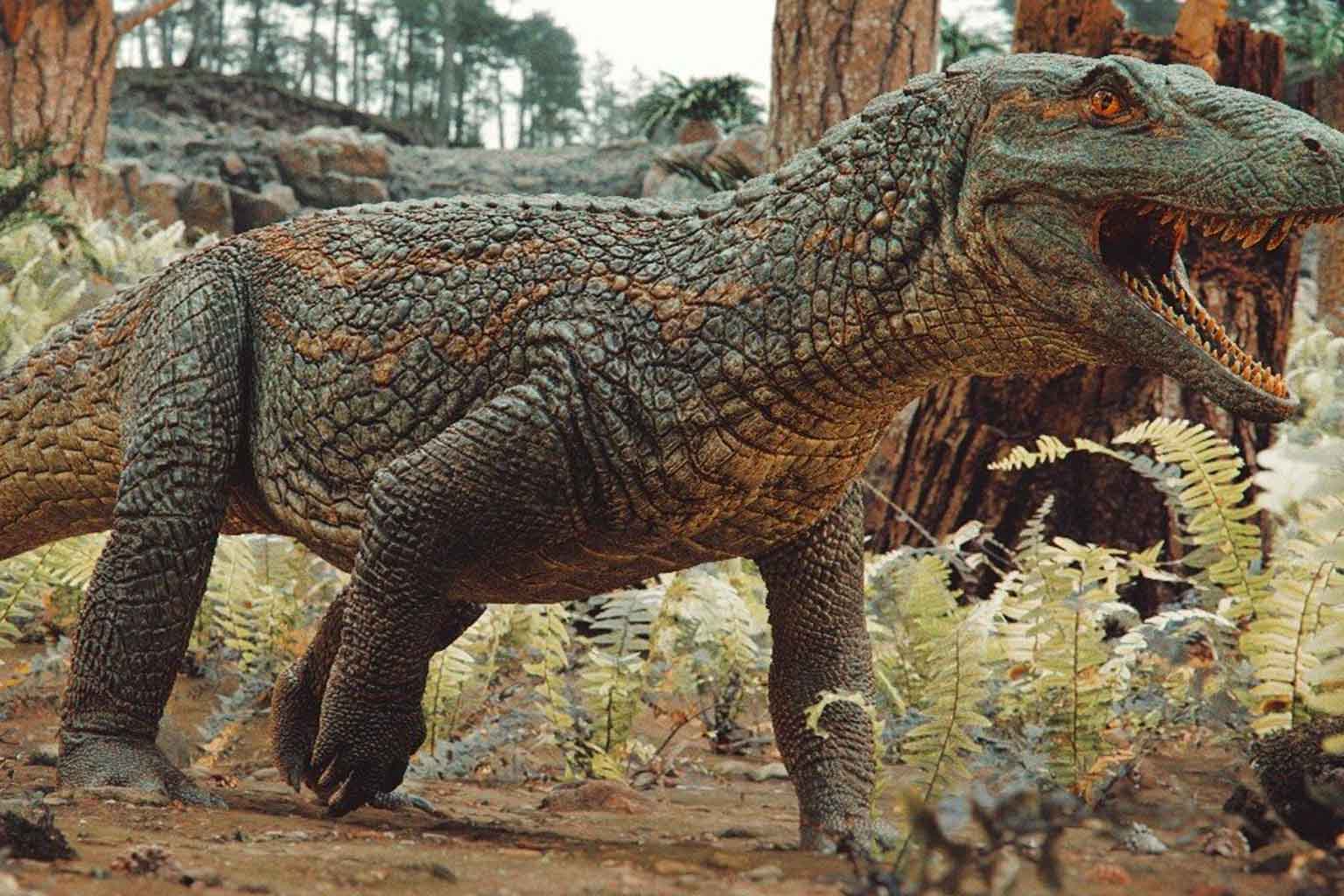
The discovery of ancient predators often captures our imagination, but few finds offer such a complete window into prehistoric ecosystems as the recent identification of Retymaijychampsa beckerorum in southern Brazil. This 237-million-year-old crocodile-like reptile emerged from the fossil record at a time when Earth’s landscapes were dominated not by dinosaurs, but by an entirely different cast of predators that ruled both land and water.
What makes this discovery particularly significant is its timing in Earth’s history. The Triassic period represents a pivotal moment when life was experimenting with new forms, testing evolutionary strategies that would either flourish or vanish forever. The proterochampsids, the family to which this newly identified species belonged, were among the most successful predators of their era, yet their story remained incomplete until now.
The fossil’s exceptional preservation at the Linha Várzea 2 site in Rio Grande do Sul offers paleontologists something rare: a nearly complete picture of how these ancient hunters lived, moved, and adapted to their environments. This isn’t just another addition to the fossil catalog—it’s a missing piece that helps explain how early reptiles navigated the competitive landscape that would eventually give rise to the age of dinosaurs. Similar to how archaeological discoveries like the 3,000-year-old village found beneath France provide insights into ancient human societies, this fossil illuminates the complex prehistoric world that existed long before human civilization.
The Evolutionary Gap Finally Bridged
For decades, paleontologists studying early archosauriform evolution faced a frustrating puzzle. The fossil record showed proterochampsids thriving in the early Triassic, then appearing again in later deposits, but the transitional forms between these periods remained elusive. Retymaijychampsa beckerorum fills this critical gap, providing evidence of how these predators evolved during the Middle to Late Triassic transition.
Research published in paleontological journals demonstrates that this species coexisted with other proterochampsids like Pinheirochampsa rodriguesi in the same South American region. This coexistence suggests a level of ecological sophistication that challenges our assumptions about prehistoric predator communities. Rather than simple competition for resources, these ancient hunters appear to have developed specialized niches that allowed multiple species to thrive simultaneously.
The anatomical analysis reveals that proterochampsids were far more diverse in their adaptations than previously understood. While they shared the characteristic elongated skulls and armored bodies that made them superficially similar to modern crocodiles, each species developed unique solutions to the challenges of their environment.
Beyond the Crocodile Comparison
While the crocodile comparison provides a useful reference point, Retymaijychampsa beckerorum was fundamentally different from any reptile alive today. Its hindlimb structure suggests capabilities that modern crocodiles lack—the ability to pursue prey actively across varied terrain rather than relying solely on ambush tactics from water.
This terrestrial proficiency would have made it a formidable predator in the diverse landscapes of Triassic Brazil. Evidence suggests these reptiles could hunt effectively in shallow waters, pursue prey across dry land, and potentially even climb or navigate rough terrain. Such versatility represents an evolutionary strategy that modern crocodilians, for all their success, have largely abandoned in favor of aquatic specialization.
The dermal armor patterns also differ significantly from modern crocodilians, indicating that these ancient predators faced different environmental pressures and threats. Their armor wasn’t just protection—it was likely an integral part of their thermoregulation strategy, helping them maintain optimal body temperature across the varied climates of the Triassic world.
Ecosystem Dynamics in the Pre-Dinosaur World
The Santa Maria Formation where this fossil was discovered represents one of South America’s most important windows into Triassic biodiversity. The presence of multiple proterochampsid species in this region reveals ecosystem dynamics that were surprisingly complex for their time. These weren’t simple food webs dominated by a few apex predators, but intricate networks of specialized hunters, each adapted to exploit different resources. Research from Columbia University indicates that the Triassic Period experienced exceptionally high CO2 levels and dramatic environmental changes that shaped these complex ecosystems.
“The Triassic Period kicked off the age of dinosaurs despite exceptionally high atmospheric CO2 levels, demonstrating remarkable ecosystem adaptability during this crucial evolutionary transition” – Columbia Climate Research
Studies of the geological context suggest that these predators lived through significant environmental changes, from fluctuating water levels to varying seasonal patterns. Their ability to adapt to these changes likely contributed to their success during the Triassic, but also foreshadowed the evolutionary pressures that would eventually favor the rise of dinosaurs. Just as archaeologists uncover evidence of ancient human adaptations, such as the 3,000-year-old fortress beneath Jerusalem’s streets that reveals defensive strategies, these fossil discoveries show how ancient reptiles developed survival mechanisms for their changing world.
The fossil evidence indicates that proterochampsids like Retymaijychampsa beckerorum were among the last major reptilian predators before dinosaurs began their ascent to dominance. Understanding how they lived and eventually declined offers crucial insights into one of evolution’s most significant transitions. The scale of their success can be compared to remarkable archaeological finds like the quarter million statuettes discovered near ancient Egyptian tombs, which demonstrate the complexity and sophistication of past civilizations.
The Rarely Explored Biomechanical Adaptations
What conventional analyses often overlook is the sophisticated biomechanical engineering represented by these ancient predators. The hindlimb structure of Retymaijychampsa beckerorum reveals adaptations that solved problems modern reptiles still struggle with—efficient locomotion both in water and on land without sacrificing effectiveness in either environment.
The joint articulation patterns suggest these reptiles could rapidly transition between swimming and terrestrial movement, a capability that would have provided significant advantages in the fluctuating environments of the Triassic. This biomechanical versatility required precise evolutionary fine-tuning of muscle attachment points, bone density, and joint flexibility.
Research into the muscular reconstruction possibilities indicates these predators possessed power-to-weight ratios that modern crocodilians cannot match on land. This suggests they occupied an ecological niche that no longer exists—that of a truly amphibious apex predator capable of pursuing prey with equal effectiveness in multiple environments. The loss of this adaptive strategy represents one of evolution’s more intriguing dead ends, a sophisticated solution that was abandoned as environmental conditions changed. Modern paleontological techniques, including discoveries like the hidden dinosaur muscle that rewrites our understanding of reptilian anatomy, continue to reveal the complexity of these ancient biomechanical systems.
The discovery of Retymaijychampsa beckerorum forces us to reconsider our understanding of prehistoric ecosystems and the evolutionary pathways that led to today’s biodiversity. These ancient predators achieved a level of environmental adaptability that few modern species can match, yet they ultimately gave way to the dinosaurs that would dominate the following era. Perhaps the question isn’t why they succeeded for so long, but what their eventual replacement tells us about the relentless creativity of evolutionary processes.