


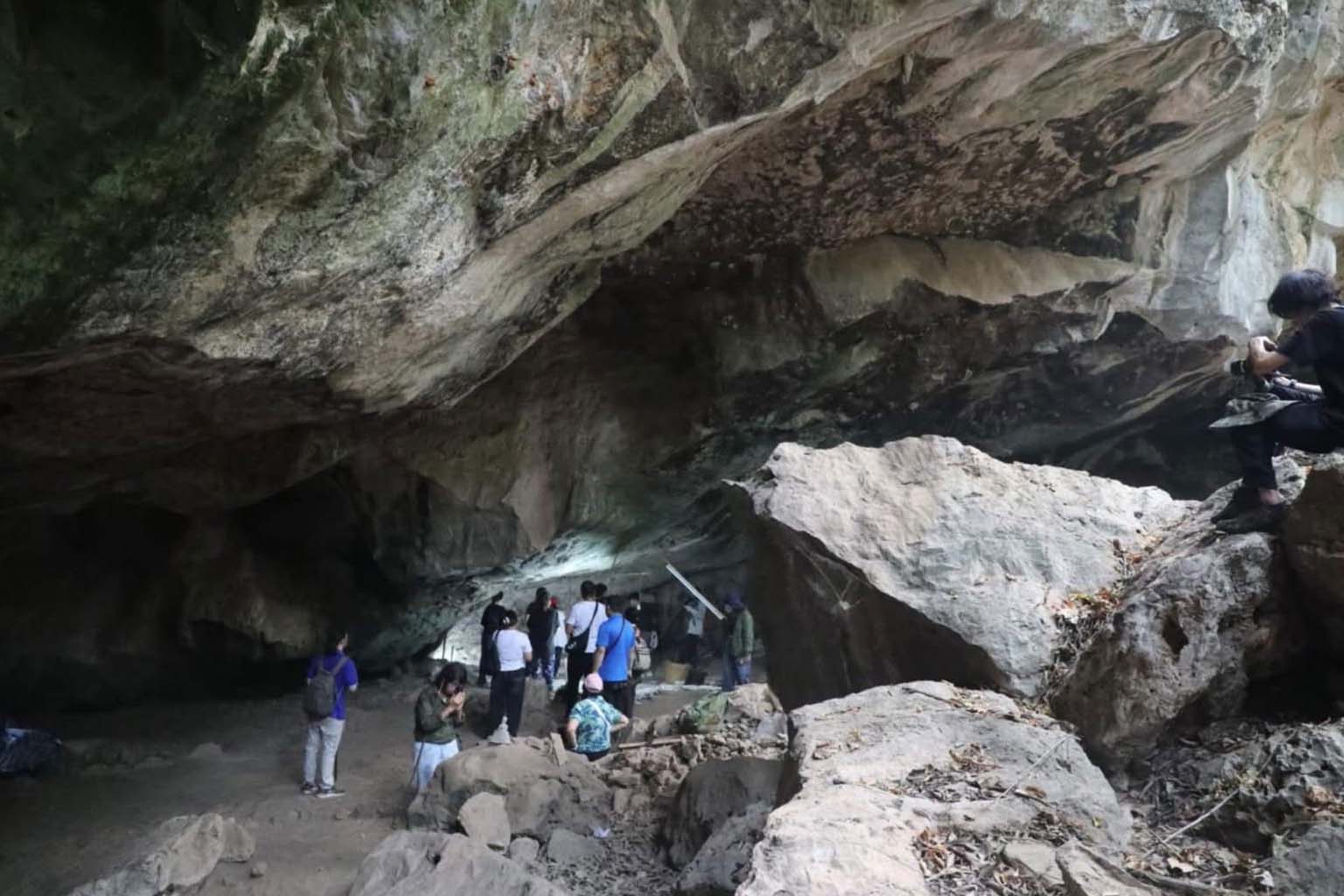
Deep within a limestone cave in Thailand, archaeologists have uncovered what may be one of the most significant prehistoric discoveries in Southeast Asia. The 29,000-year-old remains of a child, carefully positioned and surrounded by ritual artifacts, represent not just the oldest known human burial in Thailand, but a window into the sophisticated spiritual practices of our ancient ancestors.
The discovery at Tham Din Cave challenges long-held assumptions about the cognitive and cultural capabilities of Late Pleistocene hunter-gatherers. This wasn’t a hasty disposal of remains or a simple grave. The child, affectionately nicknamed “Pangpond” by researchers, was laid to rest with deliberate care that speaks to complex beliefs about death, the afterlife, and community bonds that existed nearly three millennia before agriculture transformed human society. Similar elaborate burial grounds like the Ħal Saflieni Hypogeum demonstrate how ancient peoples across different regions developed sophisticated approaches to honoring their dead.
What emerges from this ancient burial ground is a portrait of people who, despite lacking the technological advances we associate with civilization, possessed a rich inner world of ritual and meaning that guided their most solemn moments.
The Archaeological Context That Changes Everything
The excavation began in 2022 as part of a broader investigation into prehistoric cave paintings that adorned the walls of Tham Din Cave. These red ocher artworks depicted hunting scenes with remarkable detail – humans wielding bows and arrows in pursuit of deer and monkeys. The paintings alone suggested sophisticated symbolic thinking, but the burial discovery beneath layers of accumulated debris revealed something far more profound.
The child’s skeleton, estimated to have belonged to someone between 6 and 8 years old, was positioned with arms and legs drawn close to the body. This flexed burial position indicates the body was likely wrapped or bound before interment – a practice requiring both planning and cultural knowledge passed down through generations. The surrounding evidence tells an even richer story.
Charcoal and ash found within the grave suggest fires were built around the burial site. Research indicates this practice served multiple practical purposes: deterring scavengers, masking decomposition odors, and potentially fulfilling spiritual requirements that we can only begin to imagine. The presence of red ocher throughout the site adds another layer of meaning, as this mineral pigment has been associated with power, blood, and ritual significance across numerous ancient cultures worldwide.
Redefining Southeast Asian Prehistory
This burial predates previously known interments in Thailand by thousands of years, pushing back our understanding of when complex funeral practices emerged in the region. The Late Pleistocene period when Pangpond lived was dramatically different from today’s Southeast Asia. Sea levels stood much lower, exposing vast landmasses that connected present-day islands and peninsulas into a continent called Sundaland.
Evidence from the cave indicates continuous human occupation spanning from 29,000 to 11,000 years ago, with later farming communities eventually settling in the area during the Holocene. This timeline suggests that hunter-gatherer traditions persisted and evolved over millennia, developing sophisticated approaches to death and burial long before agricultural societies emerged.
The careful positioning of the child’s remains and the ritual elements surrounding the burial point to belief systems that valued individual lives and recognized death as a significant transition requiring community involvement. These weren’t merely practical decisions about body disposal, but expressions of grief, respect, and possibly beliefs about continuation beyond physical death.
The Symbolic Language of Ancient Rituals
The red ocher paintings found throughout Tham Din Cave weren’t random decorations but appear to be part of a coherent symbolic system that extended to burial practices. The mineral’s deep red color, reminiscent of blood, has been used by human cultures across the globe to represent life force, power, and transformation. Finding it both in the cave art and associated with the burial suggests these ancient people developed sophisticated ways of marking sacred spaces and significant events, much like the 20,000-year-old cave etchings discovered in France that reveal complex cultural narratives beyond mere topographical representation.
Studies have shown that the use of ocher in prehistoric contexts often correlates with advanced cognitive development and the ability to think symbolically. The Tham Din Cave findings support this connection, demonstrating that 29,000 years ago, humans in Southeast Asia possessed not only the technical skills to create lasting art but also the cultural frameworks to honor their dead with elaborate ceremonies.
The integration of fire into the burial ritual adds another dimension to understanding these ancient practices. Fire has held sacred significance in human cultures throughout history, serving as a bridge between the physical and spiritual worlds, a purifying force, and a protective barrier against malevolent influences. This sophisticated ritual behavior parallels discoveries at sites like the Tikal archaeological site, where ancient Mesoamerican peoples also developed complex ceremonial practices that reflected deep spiritual beliefs.
The Deeper Implications for Human Migration Patterns
What conventional archaeological narratives often overlook is how discoveries like Pangpond’s burial reshape our understanding of prehistoric migration routes and cultural exchange. The sophisticated burial practices found at Tham Din Cave didn’t emerge in isolation but likely represent part of a broader network of hunter-gatherer communities that shared knowledge, techniques, and possibly spiritual beliefs across the expanded Sundaland continent.
The cave’s strategic location and evidence of long-term occupation suggest it served as more than just shelter. These sites may have functioned as cultural centers where different groups gathered, exchanged information, and reinforced shared traditions. The elaborate burial of a child indicates that even young community members held significant value – a perspective that challenges assumptions about harsh survival conditions leading to purely pragmatic decision-making.
Research into similar sites across Southeast Asia reveals patterns suggesting these early humans developed region-specific adaptations while maintaining broader cultural connections. The Tham Din burial represents one data point in what was likely a rich tapestry of interconnected communities, each contributing to the evolution of human consciousness and cultural expression during this crucial period in our species’ development. Cave environments across the globe have preserved evidence of prehistoric life and ancient fauna, providing crucial insights into how early human communities adapted to diverse environments while maintaining complex cultural practices.
As excavations continue and new analytical techniques reveal additional details about Pangpond and the ancient inhabitants of Tham Din Cave, we’re left to wonder what other assumptions about prehistoric life might need revision. The careful attention these hunter-gatherers paid to death and remembrance suggests their daily existence was far richer and more meaningful than survival-focused narratives typically acknowledge. Perhaps the question isn’t how these ancient people found time for ritual amid the challenges of prehistoric life, but rather how ritual and meaning-making were integral to their very survival as distinctly human communities.