


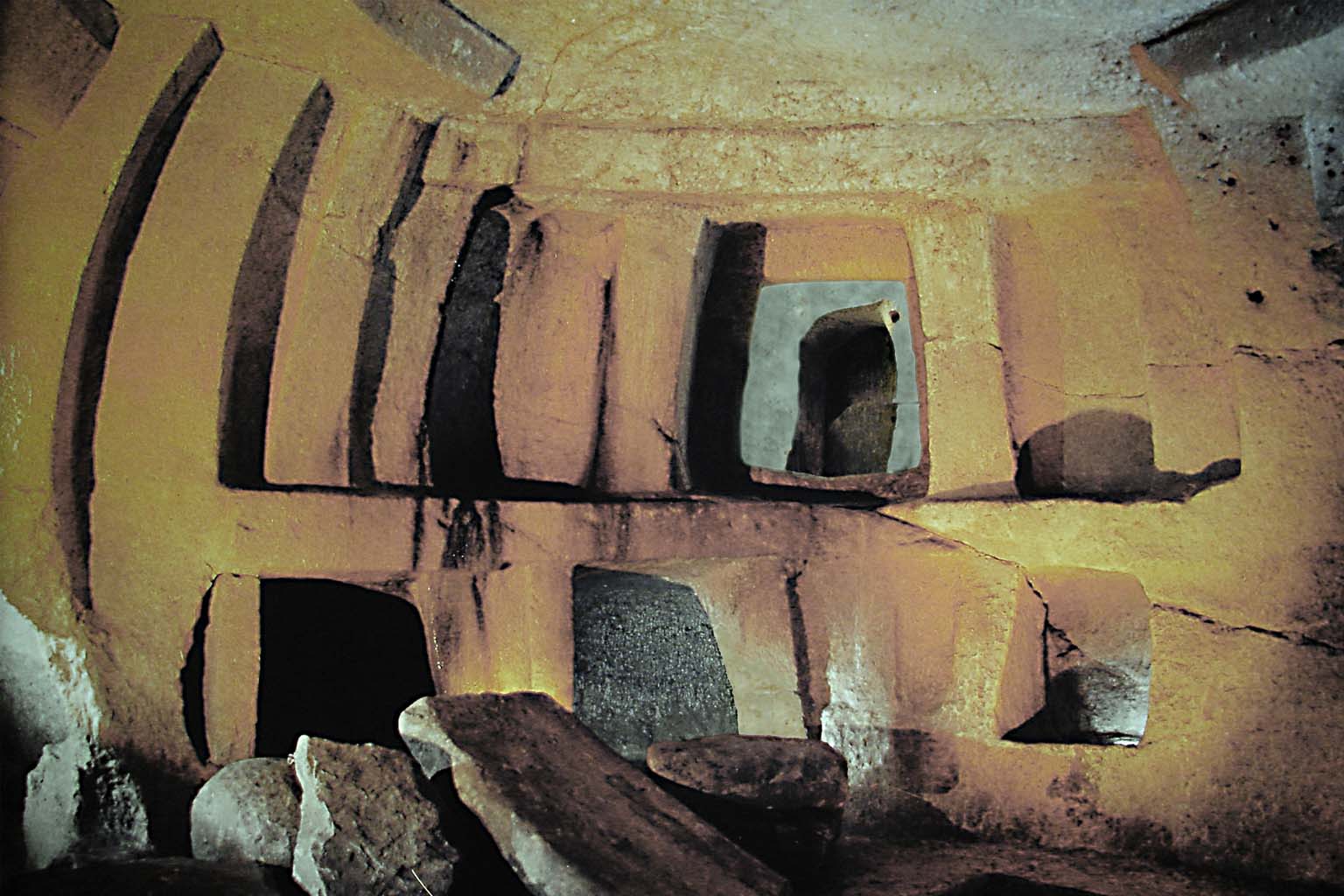
In the quiet town of Paola, deep below the bustling modern life of Malta, lies a hidden marvel that has fascinated archaeologists for generations. The Ħal Saflieni Hypogeum, an ancient underground labyrinth dating back over 6,000 years, was discovered quite by accident. Imagine a stonemason in 1902, chipping away at new construction, only to find the ceiling yield to reveal chambers untouched for millennia. This wasn’t just a small find—it was one of the most congested windows into prehistoric life, etched into Malta’s soft globigerina limestone.
Excavations carried out under the aegis of Heritage Malta unveiled a place unlike any other—a sanctuary turned burial ground. Over 7,000 skeletons were unearthed here. But it’s so much more than facts and figures. Take a walk, if only through words, down three levels, each floor unveiling progressively sophisticated architecture. Some say the chambers mimic the island’s megalithic temples above ground. Could there be a hidden reflection of those beliefs?
Whispers of a Mysterious Past
What was the Hypogeum? Was it once a spiritual temple or perhaps even a sound chamber that amplified sacred chants in a manner we can only guess today? Recent studies suggest its structural beauty might have been intentional, possibly enhancing acoustic rituals—imagine an ancient harmony echoing through limestone walls, designed to carry spiritual melodies. This skill in architecture compels us to ponder: Who were the minds behind this wonder? And what inspired them to conjoin sound and stone in such a unique space?
Interestingly, according to a report by Times of Malta, scientists have explored these acoustic properties, positing that these sound-enhancing chambers could have hosted ritual chanting, turning the Hypogeum into one of the world’s oldest known acoustic spaces.
Craftsmanship of Another Era
Step into the Hypogeum and you’re walking through a masterpiece of prehistoric engineering. Each descending level greets you with further complexity and craftsmanship. There’s the **Upper Level**—a tragically **damaged section**, half-forgotten beneath the drumming of modernity above it. Below, the **Middle Level** surprises with ornate carvings and circular pits, possibly parts of long-lost religious practices or ceremonies. And then there’s the **Lower Level**, with its mysterious dark spaces hinting at restricted rituals which, let’s face it, ramp the intrigue up to eleven.
The craftwork here is staggering, with chambers hewn from solid stone, revealing a deep understanding of structural engineering and aesthetics. The Hypogeum’s similarity to Malta’s megalithic temples is no coincidence—it’s an echo of an era that harmonized form with spirituality.
Enigmatic Artifacts Await Unraveling
Yet, amidst this grandeur lies a multitude of artifacts, whispering tales of ancient spirituality. **Pottery fragments, animal figurines,** and personal adornments capture it all: the rhythm, the culture, the spiritual undertones of the prehistoric Maltese. But pause at the small clay sculpture known ironically as the “Sleeping Lady.” Intricate, covered in red ochre, this figurine represents either Mother Nature, fertility, or even death itself, connecting these ancient people to their understanding of creation and the afterlife. Fascinating, isn’t it?
Adding mystique to this ancient tableau are the 7,000 skeletons, some possessing unusual elongated skulls. What a curiosity! Early studies speculated they belonged to a group with genetic quirks or perhaps they were intentionally deformed as part and parcel of foregone burial traditions.
Echoes of Purpose
So, why did the architects of Ħal Saflieni Hypogeum labor to create such a staggering underground marvel? As with all ancient mysteries, the answer ebbs and flows with the tides of discovery. Many place bets on it being a Religious Sanctuary—a place where sacred art formed part of life’s tapestry. Others lean towards the theory of a sound temple, with rituals and chants ringing through its chambers. And of course, there’s the tantalizing idea of it as a subterranean annex to Malta’s famed megalithic temples.
Whatever the ultimate truth, one thing is certain: the construction of such an intricate site speaks volumes about a society that was both organized and spiritually aware, perfectly synchronized with their environment.
For those captivated by the lost stories of ancient civilizations, Malta’s Hypogeum offers a connection—a chance to step back 6,000 years and wonder just what **our ancient ancestors dreamed up** in the dark, sacred embrace of stone.
It’s a tale that’s deep and winding, much like the Hypogeum itself. Why not dive into this ancient world yourself? Share your thoughts with us or, perhaps, embark on your own journey to visit this extraordinary piece of history. The echoes of the past are calling—will you listen?