


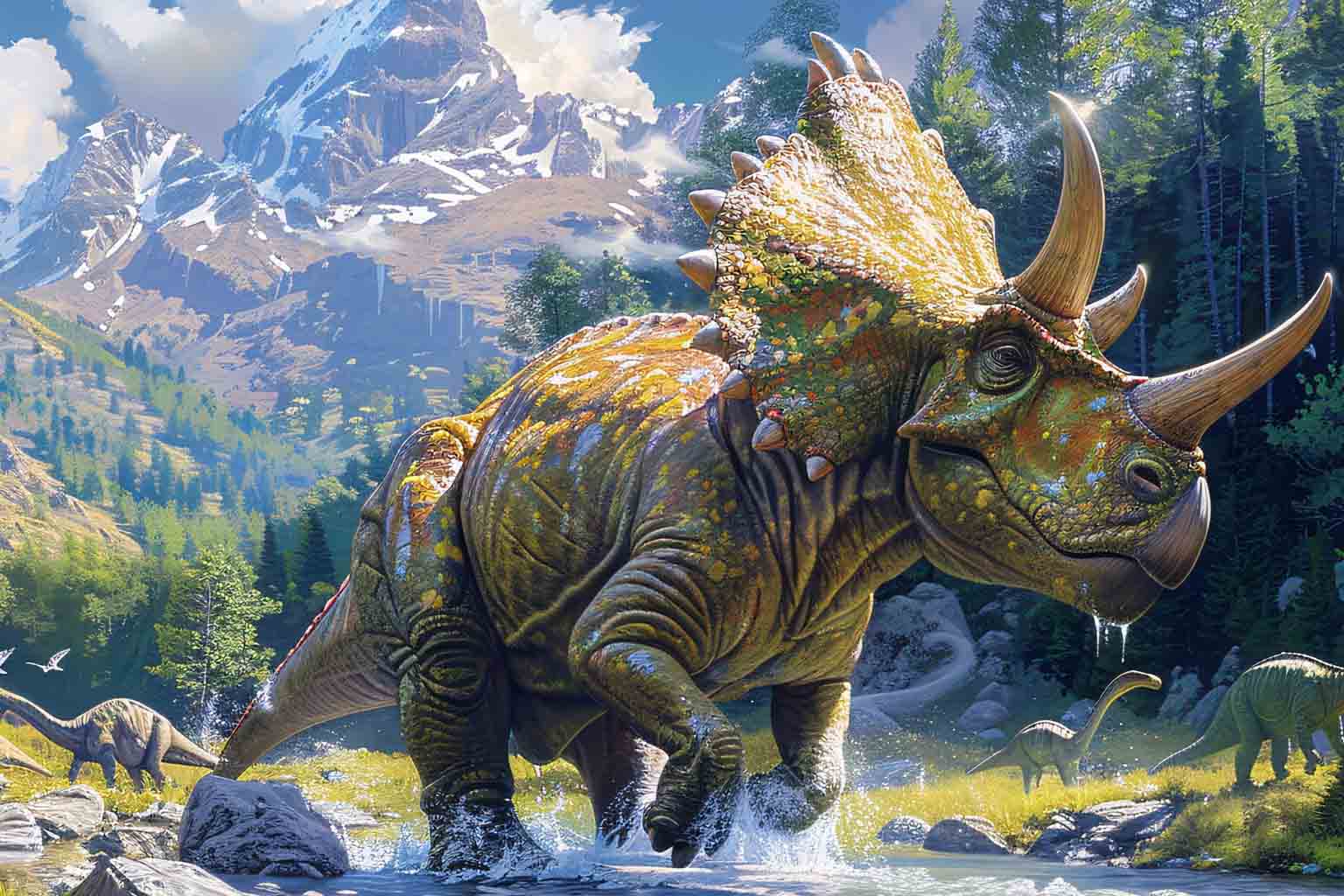
Every so often, a discovery emerges that radically reshapes our understanding of natural history. In the Middle Atlas Mountains of Morocco, a fossilized femur, unearthed by an international team of dedicated paleontologists, has done just that. With an astounding age of 168 million years, this relic from the past has offered a detailed window into the world of early cerapodans — a group of herbivorous, bird-hipped dinosaurs.
Unveiling a Cerapodan Mystery
When scientists from the renowned Natural History Museum, affiliated universities, and local experts joined forces, they likely hoped for intriguing finds. But did they imagine stumbling upon the oldest cerapodan ornithischian dinosaur fossil known to date? This discovery extends the timeline of these fascinating dinosaurs by a full two million years. The significance? It pushes back our understanding of the diversification of plant-eating dinosaurs, hinting at ecological roles long overlooked.
But wait — what makes this fossil so special? According to a study in Royal Society Open Science, the femur’s unique grooves and trademark head shape unmistakably identify it as cerapodan. No doubt, its age and features aren’t just numbers and facts. They tell a compelling story of an evolutionary triumph — the kind that sparks curiosity and thrills experts and enthusiasts alike.
Why Cerapodan Dinosaurs Matter
Cerapodans are a part of the ornithischian family, which as their name suggests, shared a bird-like hip structure. Think of them as the quirkiest hipsters of the dinosaur world, striding on two legs like featherless avian ancestors. These dinosaurs were relatively small, herbivorous, and played an understated yet crucial role during the plant-eating dinosaurs’ diversification in the Middle Jurassic. Often overshadowed by their colossal Jurassic cousins, their early existence was veiled in mystery due to a lack of fossils from the time.
The discovery from Morocco is a game-changer. Until now, snippets of their existence came from fossilized trackways — an exercise in educated guesswork about their behavior. But with this femur, the spotlight shines directly on them, showing us more than just footprints: it reveals anatomy, evolution, and perhaps even their unassuming dominance in a world dominated by giants.
A Glimpse into the Middle Jurassic
It’s fascinating to picture the landscape of Morocco 168 million years ago. The El Mers III Formation, where the dinosaur’s femur was discovered, is famous for its Bathonian rock deposits. Picture a world teeming with nascent life-forms slowly realizing their potential, with ancient tectonic forces crafting highlands and shores, setting the stage for evolutionary dramas.
But let’s not get too dreamy. The discovery competes with the world’s oldest ankylosaur fossil found in the same layer. Together, these finds suggest that the Middle Jurassic was a bustling period of thriving dinosaur species. Researchers, led by Prof Masato Sakai, identified the femur’s cerapodan origins by its distinctive anatomical shapes: grooved top, characteristic femur head — each hinting at evolutionary adaptability.
Piecing Together Early Dinosaur Evolution
The Middle Jurassic epoch (174 to 163 million years ago) was a transformative era: landscapes and life were in flux. Deciphering this period helps us understand how dinosaurs like cerapodans flourished. Imagine huddling over trackway fossils, and then — this femur pops up. It’s almost like finding a critical jigsaw piece after hours of searching.
The evidence from this femur shifts paradigms about herbivorous dinosaurs. Cerapodans weren’t just getting started but had their adaptations well in motion, as seen from their anatomical structure. Their ability to shuffle, perhaps not elegantly but effectively, on two legs, offered them significant adaptive advantages in living and feeding.
As researchers piece together this evolutionary story, the broader picture crystallizes: cerapodans were adapting and diversifying much earlier than we had imagined.
In conclusion, this discovery is more than mere scientific trivia. It’s a testament to the power of curiosity, the importance of scientific collaboration, and our endless quest to understand our planet’s history.
So, what’s next? As these revelations unfold, we’re left on the edge of our seats, eager for the next chapter in the ongoing legacy of discovery. Want to learn more? Dive into these studies, visit your local natural history museum, or simply let your curiosity guide you.
Can you feel the draw of this ancient world? Let’s keep exploring — who knows what other secrets await beneath our feet?