


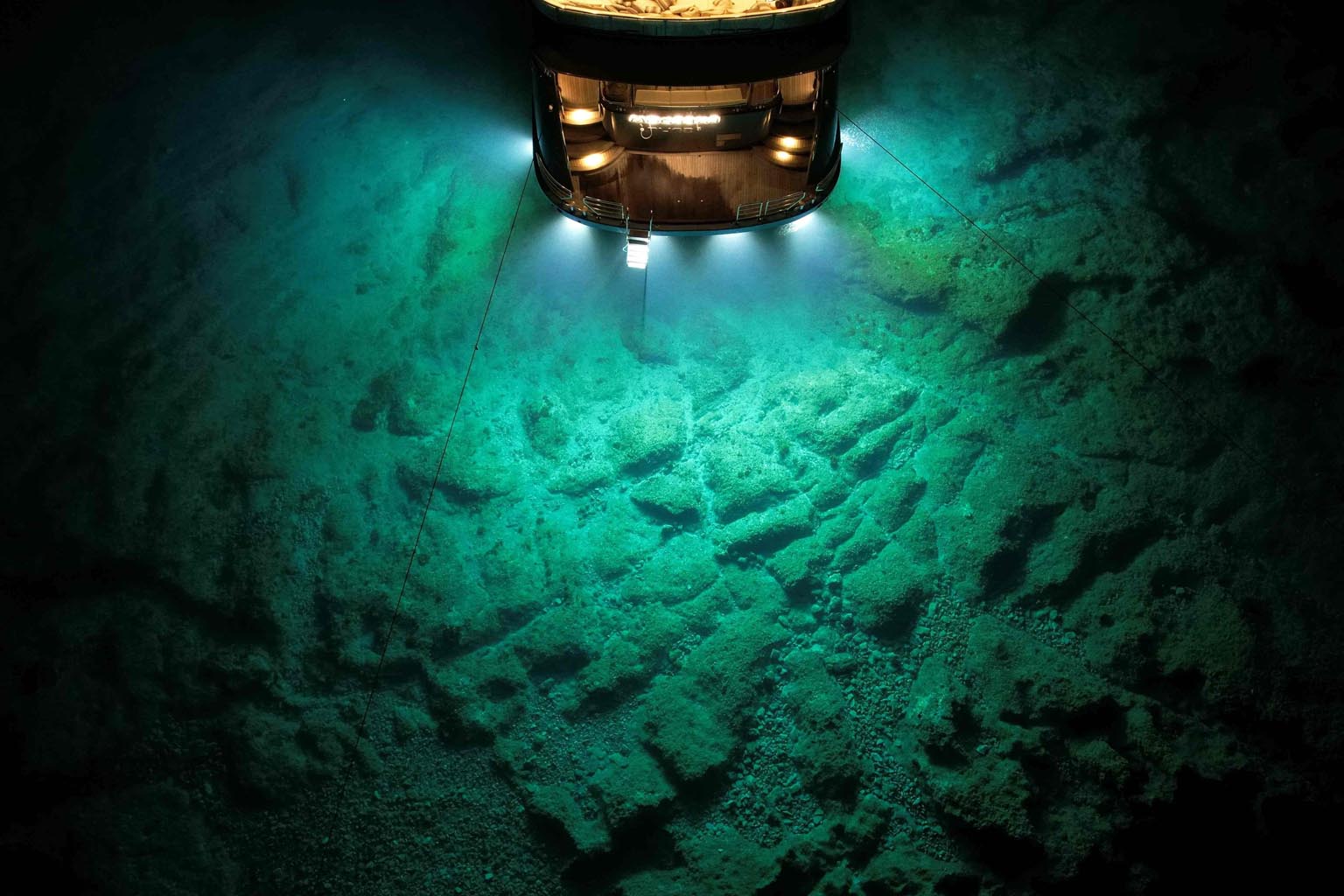
If there’s one thing that can surprise and captivate even the most seasoned scientists, it’s the unexpected revelations found deep beneath our oceans. Recently, a groundbreaking expedition into the heart of the Red Sea has led to the discovery of astonishing brine pools — and honestly, it’s surprising, really surprising, how much these findings could unravel about both Earth’s past and its galaxies beyond.
The Story Behind the Red Sea Brine Pools
These remarkable brine pools, discovered almost 4,000 feet below the surface in the Gulf of Aqaba, become all the more intriguing when you consider their location. This spot is not only a key geographic point but also a place deeply woven into the fabric of biblical narratives. You can almost picture the anticipation as researchers lowered their equipment into the briny abyss, hoping for a discovery that might just alter our understanding of the world. And boy, did they find something.
Nature as a Time Capsule
Think of these brine pools as **natural archives**, where time stands still. Due to their unique composition — they are highly saline and devoid of oxygen — these **pools defy typical biological** and geological processes. In simpler terms, where you’d expect sediment to get all jumbled up by marine life, here it remains almost eerily intact.
Imagine, for a moment, stumbling upon a **book that hasn’t been touched for centuries**. That’s what these pools represent — layers and layers of sediment meticulously preserved through millennia. Researchers, like Professor Sam Purkis, emphasize how these conditions allow for an uninterrupted look into Earth’s seismic activities, climate shifts, and even ancient floods and tsunamis.
But don’t just take my word for it. According to a study published in Nature, these watery time capsules hint at floods recurring every 25 years and tsunamis about once a century. Such insights are not just thrilling; they’re crucial for predicting future environmental phenomena.
A Portal to Life’s Origins
Venturing deeper into what these pools might reveal, one can’t help but ponder — could they hold clues to the origins of life itself? The parallels between the pools’ current conditions and those hypothesized for early Earth set the stage for a whole new **scientific exploration**. Imagine conditions so harsh that only the most resilient forms of life could endure. And yet, researchers found microbes, specifically extremophile bacteria, thriving in this salty paradise. Their survival under such pressure and salinity offers us a peek into conditions that may have given rise to life on our planet.
The excitement over these findings isn’t limited to Earthly matters, though. The brine pools’ characteristics resemble potential life-sustaining environments on moons like Europa and Enceladus, and even ancient **Martian seas**. It’s a bold question, isn’t it? — could these findings guide us in searching for extraterrestrial life?
Myth and Science Intertwined
One cannot talk about this **enigmatic discovery** without delving into the mythological and historical richness of the area. The Red Sea and its surrounding regions have long been subjects of fascination for theologians and historians, tied as they are to tales of biblical events like the parting of the seas during Exodus.
While **scientists remain cautious** about drawing direct connections to these ancient stories, the echoes of the past reverberate vividly in this landscape. The Gulf of Aqaba, hugging the borders of Egypt, Israel, Jordan, and Saudi Arabia, holds secrets that tempt both the spiritual and the scholarly among us. The presence of these extreme environments adds yet another layer to the already complex geological tapestry—a tapestry that speaks of a planet in constant flux.
By the way, if this piques your interest, take a moment to watch this fascinating exploration of the brine pools in the video below:
From ancient history to the far reaches of space, these **brine pools offer clues** that have us looking both forward and back. How they will shape future research is still unfolding, and you’re invited to witness it. Why not dive a little deeper into this watery mystery yourself? It’s not just about the science; it’s about curiosity driving discovery.
Now, what are you most curious about exploring next? Maybe, just maybe, it’s time to embrace the explorer within.