


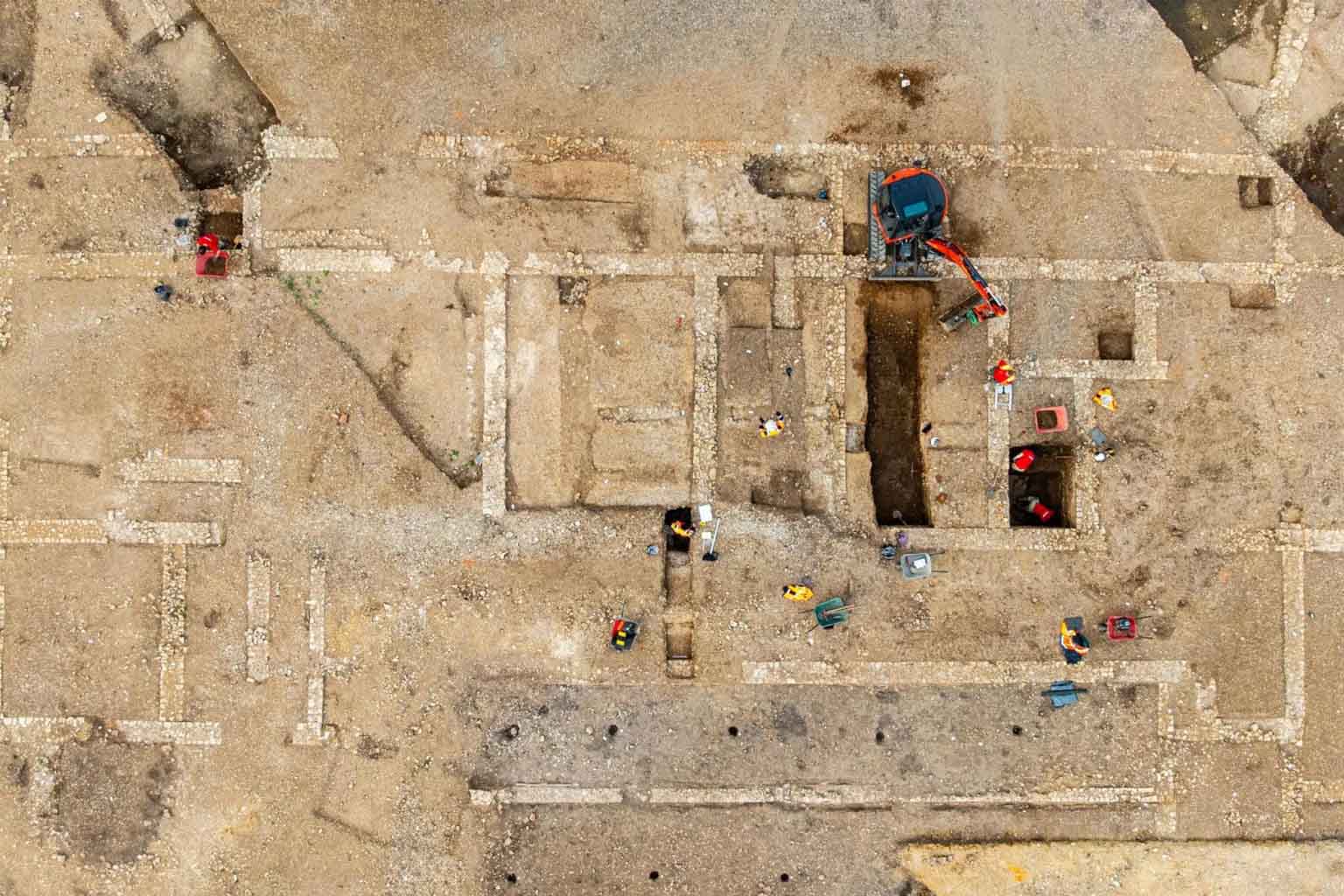
Buried for what feels like an eternity underneath a serene field in France, a discovery is sending ripples through the world of archaeology. A 3,000-year-old prehistoric village, tucked away under layers of earth, is compelling us to rethink what we know about ancient European societies. Who would have guessed that such a massive settlement, one that thrived long ago, would be unveiled in modern times?
A Prehistoric Hub Emerges From the Soil
Spanning more than 7.4 acres, the site in Hauts-de-France offers a remarkable snapshot of life long before our modern conveniences. It’s not just about what was uncovered; it’s what these finds signify. Over twenty buildings have been identified, with some rectangular dwellings stretching over 80 feet. Imagine the complexity and forethought involved in creating a layout that hints at a centralized and possibly hierarchical community.
The positioning and size of these structures suggest more than just day-to-day living. They may have functioned as a focal point for social and economic exchanges, even perhaps rituals. This discovery nudges us closer to understanding the interconnectedness of Bronze and Iron Age societies, with shared architecture and regional interactions painting a vivid tapestry of prehistoric life.
Evidence of Everyday Life and Community Industry
But that’s just the start. Among the various artifacts unearthed are tools and implements that speak volumes — or at least try to — about the ancient community’s daily life. Evidence of spinning, weaving, metalwork, and agriculture highlight a community bustling with activity. The spatial distribution of these items suggests not only domestic production but also trade, cementing the village’s dual character as both a residential and industrial hub.
One artifact that sparks particular interest among scholars is a wooden box, about 18 inches per side. It’s simple yet intriguing, with vertical planks and minimal metal parts. Its purpose remains a mystery, though it might have contained ritual objects or valuables. Who knows? Maybe future analyses will unravel the enigma that this box represents.
Heat, Fire, and Mystery: The Combustion Structures
Add to this mix several combustion features, structures revered in the art of high-heat processes. Some large circular pits, uncovered within the homes, contain materials once subjected to extreme temperatures. Could these have been used for culinary delights, crafting ceramics, or perhaps metallurgical endeavors? An intriguing detail, really.
The highlight here is a massive circular oven adapted into a silo, with robust, heat-resistant flooring. It emphasizes repeated high-temperature use — a strong indication of communal cooking, industrial activities, or even ceremonial purposes. Whatever their original function, these features hint at a society with notable thermal engineering prowess.
A Site of Regional Significance
The Onnaing discovery isn’t merely an archaeological trophy; it’s a narrative of regional relevance. The site, with its intensity and diversity of finds, might have been the heart of regional gatherings, a melting pot of seasonal meets, trades, or collective deliberations. This aligns seamlessly with larger frameworks of interconnected prehistoric communities spanning northern France and its neighbors. Here’s how fascinating it is: the Onnaing settlement enriches this woven tale of shared history and culture.
What Lies Ahead for the Onnaing Site
So, what’s next for this intriguing site? As archaeologists press on with their work, they’re filled with optimism. There’s a sense of anticipation — maybe even a bit of excitement — about the layers of understanding yet to be uncovered. By analyzing microscopic residues, wear patterns, and material sourcing, researchers could piece together the daily dances of life that occurred within these ancient walls.
This endeavor, after all, does more than close a historical chasm. It beckons us to revisit how communal living, resource sharing, and innovation wove the fabric of early societies, long before the comfort of written records. The preservation and study of the Onnaing site will hopefully enlighten us for years to come. It’s a fascinating world — yesterday’s mysteries unraveling in today’s discoveries.
And as we wait for more revelations, we invite you, the reader, to immerse yourself in the stories of our ancestors. Visit museum exhibits, read up on archaeological wonders, and let the past enrich your understanding of how far we’ve come.