


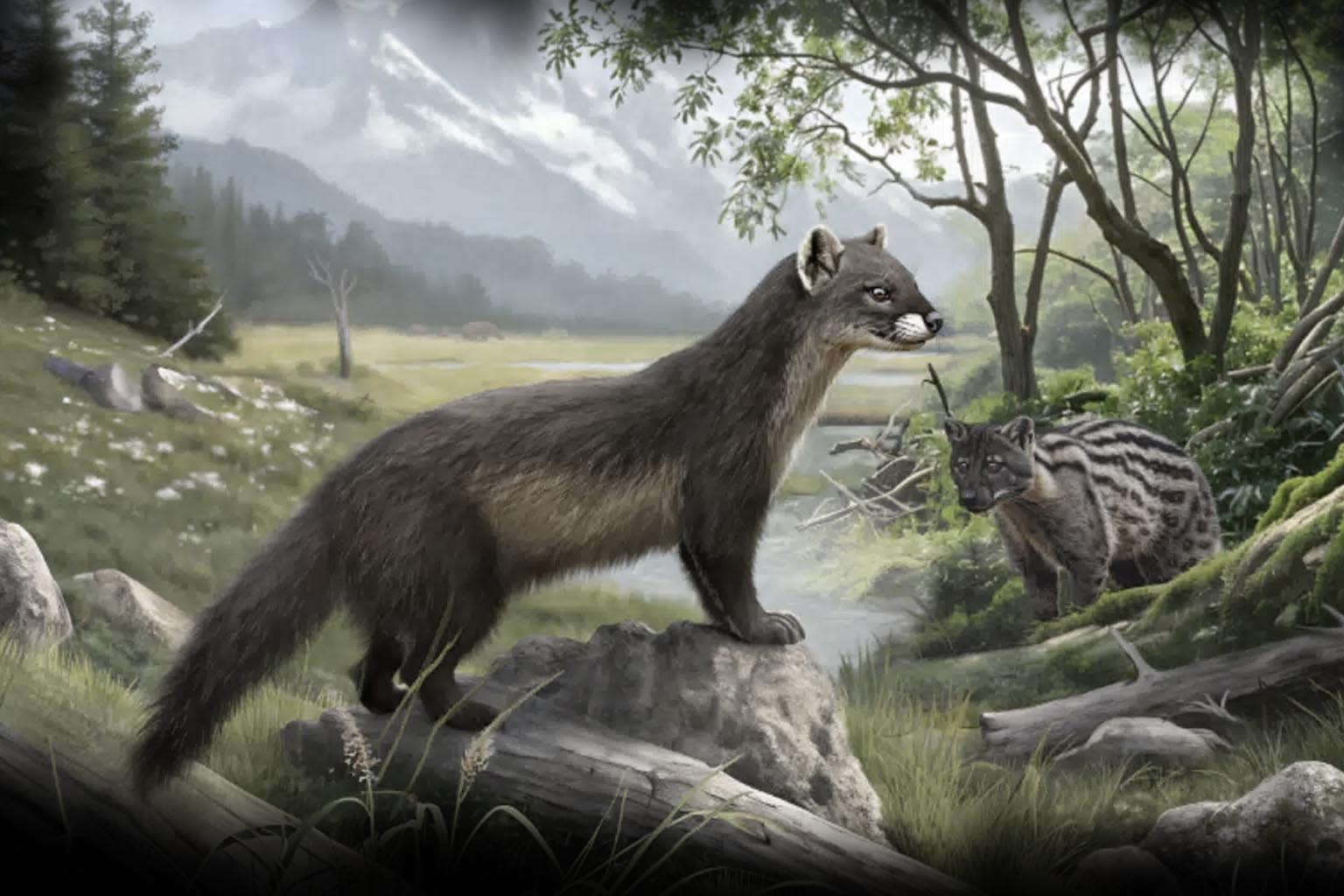
Imagine stumbling upon remnants of creatures that roamed our Earth millions of years ago, deep within the craggy terrain of the Himalayan foothills. Sounds like an opening to a historical mystery, doesn’t it? Well, that’s precisely what researchers have done, unearthing fossil treasures that offer revolutionary insights into the evolution of ancient carnivorous mammals. This isn’t just any find; it’s a peek into a world long vanished.
Unveiling a Lost World
A team of scientists, including Dr. Steven Jasinski from Harrisburg University of Science and Technology, has made a groundbreaking discovery in northern India’s Himalayan foothills. Their findings, published in the respected Journal of Mammalian Evolution, have brought to light new fossil specimens from the Siwalik Group. If you’ve never heard of this region, it’s a fossil hunter’s paradise, stretching through Pakistan, India, Nepal, and Bhutan, and housing a virtual who’s who of ancient mammalian species.
What makes these discoveries so captivating? These fossils date back between 4 and 10 million years ago. They’re shedding light on the evolution of carnivorous mammals and unraveling the mysteries of ancient ecosystems, which hosted species like artiodactyls (think deer and pigs), perissodactyls (rhinoceroses and horses), proboscideans (elephants), and a fascinating array of carnivorans including mustelids, viverrids, and felids.
The Stunning Discoveries
This treasure trove of fossils includes parts of skulls, jaws, and teeth, each with a tale to tell. Notably, the researchers discovered the first upper-jaw material of the rare mustelid, Martes lydekkeri, alongside a small, yet intriguing feline fossil. But that’s not all. Two new species have emerged from their rocky resting place: a mustelid and a viverrid — each with unique evolutionary stories.
Among these, Circamustela bhapralensis, a member of the mustelid family, stands out as the first of its kind described in India. Picture this: a tiny weasel-like creature that likely migrated from Europe over 5 million years ago, evolving to thrive amid the challenges of the Himalayan landscape.
Then there’s Vishnuictis plectilodous, a viverrid with a dental complexity hinting at a versatile diet. It’s not your average viverrid — potentially the size of a leopard, weighing over 220 pounds. Imagine encountering such a creature back then!
Unraveling Early Mammalian Evolution
“These new fossils are really giving us a better idea of what the ecosystems at the base of the Himalayas would have been like around 5 million years ago,” says Dr. Jasinski. They’re helping researchers discern the rich biodiversity and dynamic climatic shifts that shaped the era. The study hints at a significant connection between Europe and Asia during the Late Miocene, a time when smaller mammals likely made continental migrations.
Dr. Sayyed Ghyour Abbas from the University of Sialkot adds, “This hints at the presence of direct connections, potentially through migration of smaller mammals, between Europe and Asia during the Late Miocene (around 10 to 5 million years ago).” It’s an intriguing concept that reshapes our understanding of ancient ecosystems and their perpetual evolution in response to dramatic climate changes.
Looking Forward
The implications of these discoveries extend beyond academic curiosity. By delving into the lives of early carnivorous mammals, scientists aim to glean insights about how creatures adapt to environmental changes over millennia. As Dr. Jasinski noted, “Our study of the past is essential to being able to make predictions about our world’s future.” Such knowledge is crucial, especially in understanding how modern ecosystems might cope with current climate change.
This discovery accentuates the value of fossil records in piecing together life’s evolutionary puzzle on Earth. They are invaluable archives that inform our conservation strategies and potentially guide responses to future environmental shifts.
For those intrigued by the drama of the past, this is a reminder that our planet’s history is vast and full of surprises. Who knows what other fascinating creatures lie waiting to be discovered? If you’d like to dive deeper into this world of science and discovery, keep exploring. Each footprint might lead to another chapter in this ongoing story of life on Earth.