


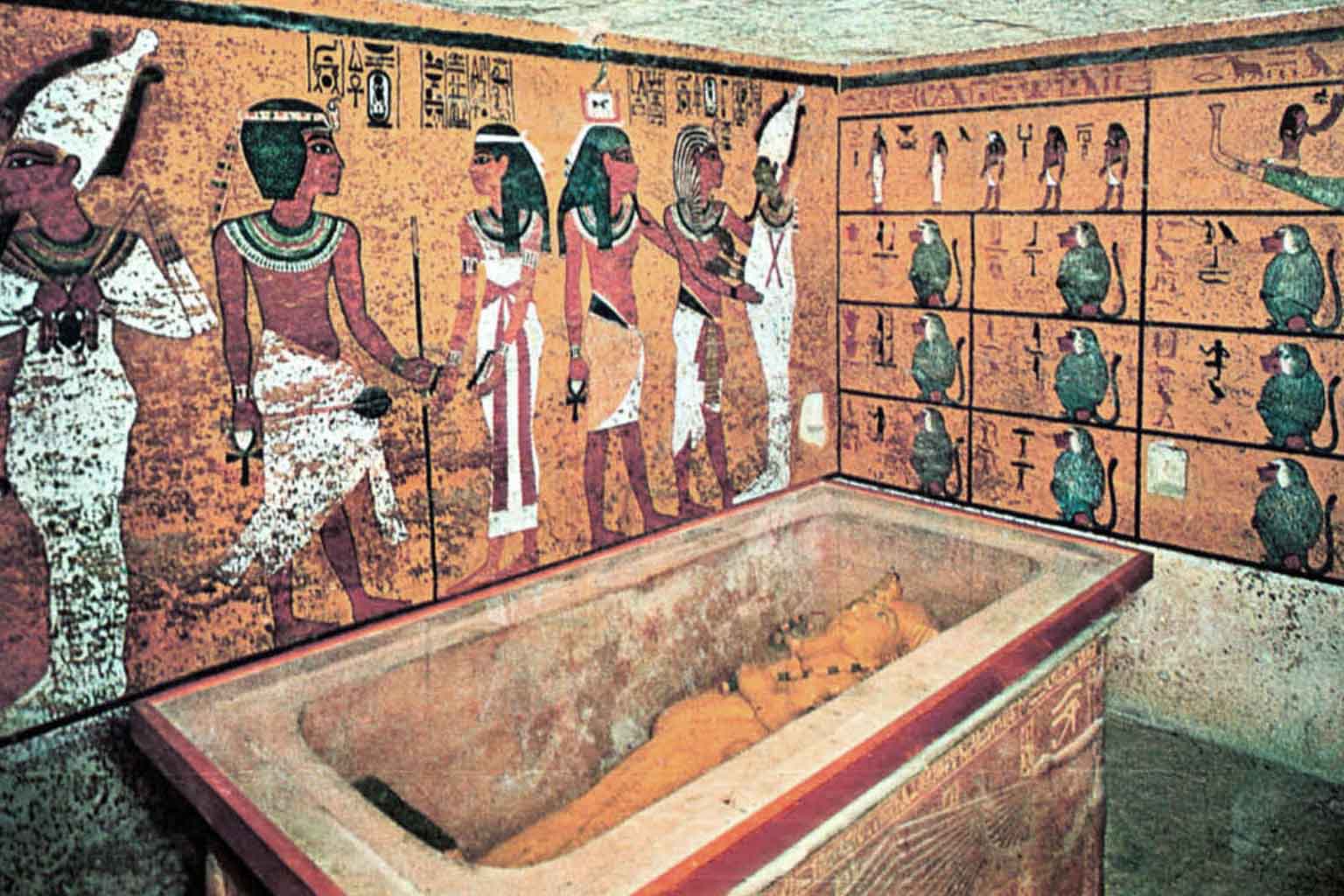
The glimmer of buried secrets and age-old mysteries never truly dims, and when it comes to King Tutankhamun, the fascination only deepens. Ancient Egypt, with its blend of grandeur and enigma, always seems to offer more beneath the sands. Recently, a new chapter has unfolded with the examination of some strangely overlooked artifacts in Tutankhamun’s tomb. Clay trays, seemingly mundane, might just be the key to a millennia-old ritual. Intrigued yet?
The Undiscovered Treasures
A century ago, Howard Carter’s discovery of Tutankhamun’s tomb sent waves of excitement across the globe. Golden chariots, ornate masks, and treasures beyond imagination were unearthed. Amidst the grandeur, Carter noted something less striking — four small clay trays, each about three inches long, unnoticed in a corner of the burial chamber. Initially, these were thought to support ceremonial staffs, but this theory is now being questioned.
Enter Nicholas Brown, an insightful mind in the realm of Egyptology. According to Brown’s analysis, as published in the Journal of Egyptian Archaeology, these trays tell a deeper story. Significantly, they are part of a grander narrative known as the Awakening of Osiris. It’s fascinating to imagine that these small, unassuming items could hold such weighty secrets.
The Mystery of Osiris
So, what’s the big deal with Osiris? This god isn’t just a name in the pantheon; he was the embodiment of creation and the afterlife itself. You might even say Osiris was the original comeback story — killed by his own brother, Seth, only to be resurrected by magical intervention from his son, Horus. It’s a legend that spells out the journey to eternal life and the essence of Egyptian burial practices.
Brown’s hypothesis suggests that Tutankhamun’s burial setup might have been an elaborate imitation of this myth. Picture this: golden staffs and clay troughs artfully positioned around Tut’s mummy, marking the cardinal directions. A cosmic dance to guide and protect the young pharaoh’s soul on its eternal journey. Could these artifacts represent Horus’ power or even the sacred waters poured to revive the spirit of the departed?
A Ritual Reawakening
This theory doesn’t just stop with the physical placement of objects. It resonates with the very core of Tutankhamun’s legacy. Despite his father Akhenaten’s brief rebellion against traditional gods, Tutankhamun restored their worship with Osiris as a focal point. Reflecting on this, the young king’s opulent tomb takes on new significance.
According to Brown’s interpretation, these objects didn’t serve just as burial accompaniments. Instead, they were part of a ceremonial reenactment of Osiris’s resurrection — a symbolic journey to align Tutankhamun’s soul with the cosmic rhythms of the heavens. “The whole chamber feels like a stage set for an Osirian resurrection,” Brown expressed during an interview with Live Science. It’s a theory that weaves a rich tapestry of symbolism and spirituality.
The Substance of Life
But what were these trays meant to hold? Ancient texts speak of libations — not merely water but sacred fluids that rejuvenated the soul. Maybe these were oils or ointments that played a part in ceremonial purification. Paula Veiga, an Egyptologist at Ludwig Maximilian University of Munich, further amplifies this idea. Although not involved in Brown’s study, she concurs that the trays might have contained such sacred substances, used to anoint and energize the deceased.
Thinking of these humble clay artifacts as more than just earthly elements opens up an entirely different perspective. They could be the silent custodians of ancient rituals that sparked the cycle of rebirth and immortality.
Now, as these revelations shed fresh light on Tutankhamun’s tomb, it’s hard not to wonder what else might be lying hidden, waiting for someone curious enough to dig a little deeper.
Isn’t it the potent blend of history and mystery that draws us all to stories like these? If you’re as intrigued as we are, keep exploring, questioning, and seeking. History always has more to reveal. And who knows — maybe the next big find is just around the corner, hidden in plain sight.