


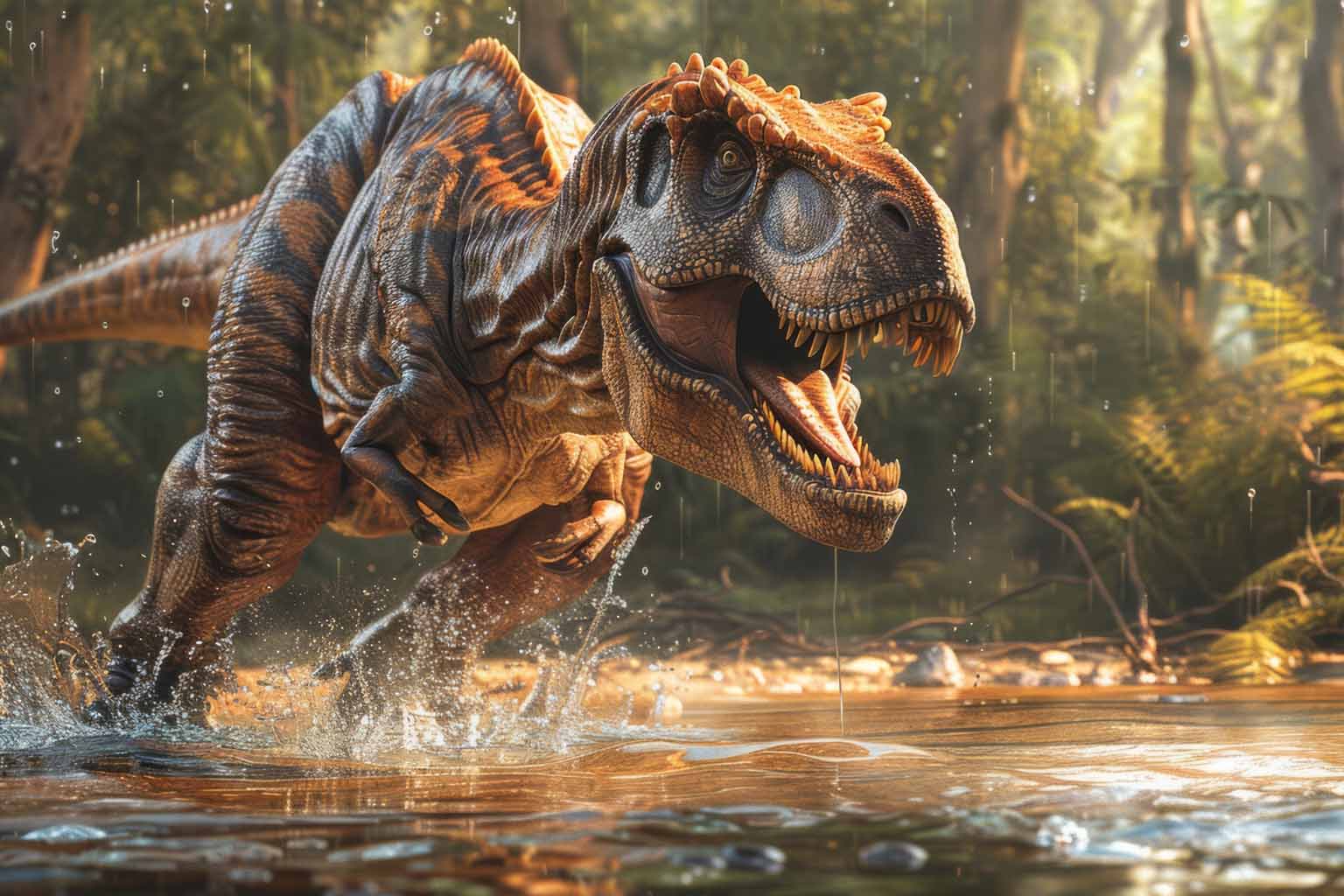
Have you ever wondered where your city might have been located millions of years ago, drifting across a prehistoric world? It’s a strangely captivating question — and one that a new digital map is here to answer. Imagine your current address, not where it sits today but maybe submerged beneath ancient seas or shadowed by towering dinosaurs. Through this lens, Earth’s dynamic history comes vividly alive.
The migration of continents
The saga of our planet is one of restless transformation. Over 750 million years, land masses haven’t stayed put. They’ve collided, merged, then tore apart, drifting across the oceans. Continents are like millions of years-old dancers, shifting from tropical warmth to icy polar grips — and back again. And now you can trace this grand choreography for yourself, thanks to an interactive map envisioned by Californian paleontologist Ian Webster.
This incredible map, part of Webster’s “Ancient Earth Globe” project, combines paleogeographic insights from the PALEOMAPS project spearheaded by geologist Christopher Scotese with tectonic motion reconstructions from the open-source platform GPlates. The outcome? A captivating visualization that lets us glimpse Earth at pivotal evolutionary milestones. It covers epochs from when life on Earth was nothing but bacteria and algae to the rise of animals roaming the land.
A trip back to the Triassic
By default, this virtual time machine opens at the Middle Triassic Period, roughly 240 million years ago — a time when the massive supercontinent Pangaea dominated the globe. Pangaea was an imposing landmass that had just begun to fracture, a process that would eventually give birth to the continents we recognize today. It was a key evolutionary moment when dinosaurs first began to rise alongside early mammals and birds, setting the stage for the explosion of life we now call the Mesozoic Era.
Users of Webster’s map can type their city’s name into the search bar and watch it trace a path through time and space. It shows not just where your town was but also if it was underwater, basking in equatorial sunlight, or shivering near the poles. These visual narratives help us grasp just how wildly dynamic Earth’s crust has been over millions of years.
Dinosaurs in your backyards
With knowledge of shifting continents, the map connects to the Dinosaur Pictures and Facts fossil database, revealing which ancient species may have called your region home. Did you know that the Paris of today was long ago the domain of megalosaurs, those fearsome carnivorous theropods? Or that in southern France, around present-day Marseille, herbivorous dinosaurs like Hypselosaurus and Rhabdodons once roamed? It paints a varied — and somewhat unexpected — picture of dinosaur life across Europe. But don’t expect to spot a Tyrannosaurus rex nearby; these kings of the dinosaur world were exclusive to North America, according to fossil records.
To truly understand the scope of this interactive globe, perhaps it helps to hear directly from an expert. According to paleontologist Ian Webster, “The map gives a vividly realistic glimpse of the past — an opportunity to link stories of ancient continents with the creatures that roamed them.”
Embracing Earth’s deep past
Despite being a personal project with a dash of imperfection, Ian Webster’s map offers a scientifically grounded tour of Earth’s ever-changing landscape. It melds geographic shifts with fossil discoveries which tether the scent of authenticity to the experience. And exploring where megasaurs, pliosaurs, and other prehistoric titans once lived may leave you pondering, just what’s beneath your feet right now?
You can access this prehistoric atlas and take a journey through deep time via Webster’s Ancient Earth Globe.
Interestingly, the idea of an ever-transforming Earth doesn’t just inform us of the past—it enriches our understanding of possible future shifts. For the curious, inquisitive minds who enjoy seeing history layered in the land around us, Webster’s map cultivates a fresh appreciation for the unfathomable timelines our homes rest upon.
So, whether your city was once pressed against a coast, entombed beneath ancient waves, or nestled gently in the heart of Pangaea, this tool offers a fresh perspective—a call to imagine the vast and dramatic changes right beneath our feet. Dive in, explore, and don’t forget to share the insight with others!