


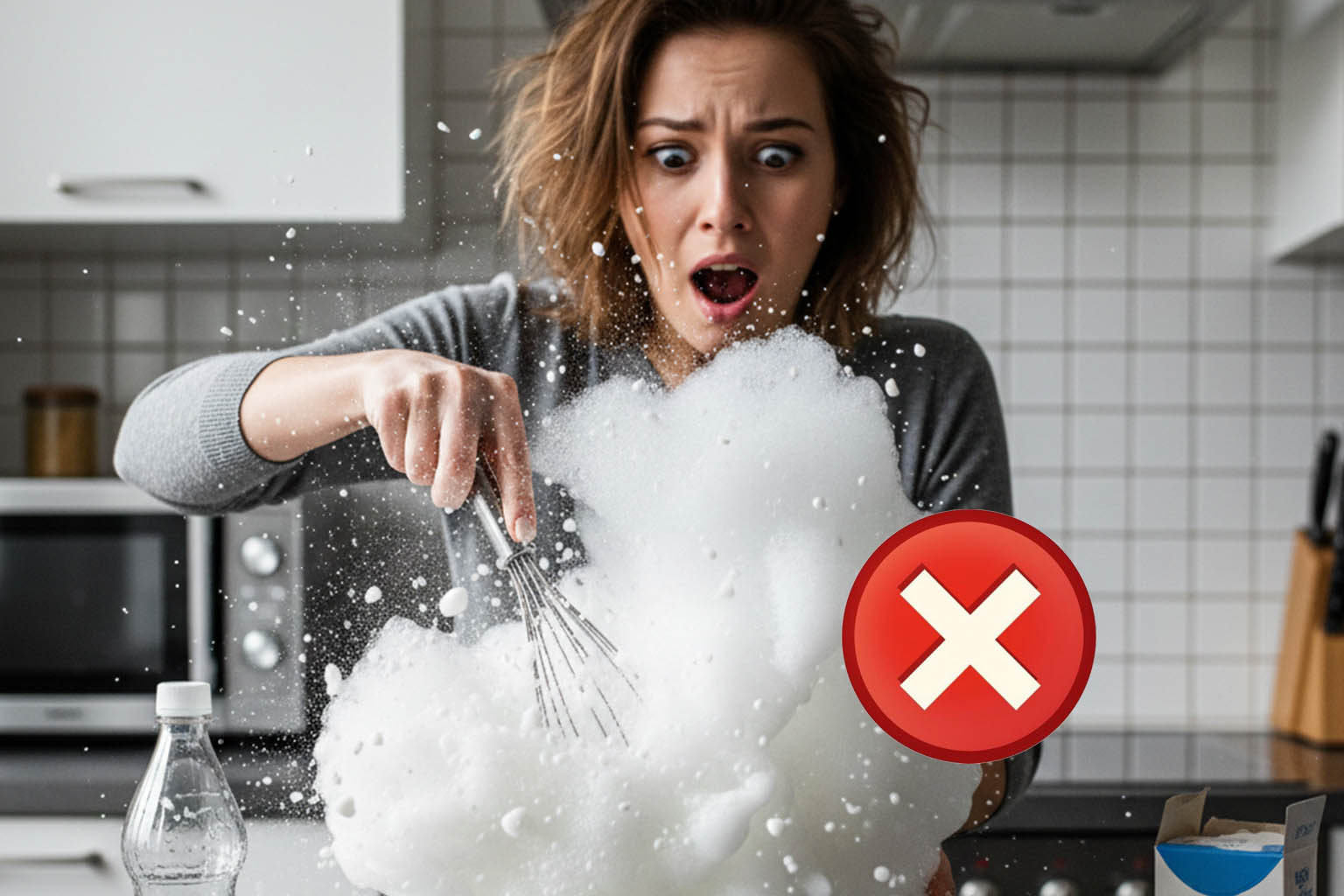
In the kitchen, a dash of vinegar and a sprinkle of baking soda might sound like a recipe for quick and easy cleaning magic. Picture it: the fizz, the bubbling energy—it’s as if your kitchen has turned into a mini science experiment. But behind the spectacle lies a truth that’s less glamorous. That dynamic duo, when mixed, can often slow down your cleaning routine. Really, it’s surprising how it simply wets the dirt and, at the wrong moment, might create more of a mess than you’d expect.
Let’s say you pour some vinegar into a cup and sprinkle baking soda over it. The fizz begins, bubbling like your favorite soda, and suddenly you’re caught up in the scene’s magic. But when you wipe and scrub, your surfaces still seem dull. We’ve all been there—where a supposed miracle trick turns into more show than substance. You’re left holding the bowl in confusion, realizing that somewhere, something went awry. Why, you ask, is this hailed as a miracle cleaner?
The Science Behind the Bubbles
The foam show is impressive, no doubt. However, when you mix vinegar—which is an acid—and baking soda, which has alkaline content, they neutralize each other. What you mostly end up with is water and a dash of sodium acetate. It’s less effective than using each separately. The fizz might briefly moisten the dirt but doesn’t really tackle grime where it counts: on the surface, with the right effect.
Take this real-life tale: a reader once told me she tried “saving” her clogged kitchen drain with vinegar and baking soda. It bubbled furiously and smelled sharp; the foam climbed a bit, yet the water didn’t budge. Later, she fished out clumpy powder residues, and her drain still wouldn’t flow. To put this chemically: a teaspoon of baking soda (about 5 grams, like in baking soda) releases more than a liter of carbon dioxide gas with acetic acid, leading to pressure, chaos, and hardly the desired cleaning result.
Logically speaking, the equation is simple: acid plus base equals salt, water, and gas. During cleaning, this neutralizes vinegar’s ability to dissolve limescale, and baking soda’s power to bind grease, leaving you with a moist and largely ineffective concoction. There’s another issue on sensitive surfaces: vinegar can etch natural stone, and baking soda particles can scratch glass or ceramics. Remember this piece of advice: steer clear of mixing vinegar and baking soda in a spray bottle—you’ll be left with an empty potion after the froth settles in mere minutes.
Cleaning Done Right: Separate, Not Together
The smarter method? It’s calm, precise, and almost uneventful. For ovens: make a paste of baking soda and a little water. Spread it like a facial mask, let it sit for 20-30 minutes, then wipe with a damp cloth. After that, introduce vinegar—a short spray or wipe to lift residues and neutralize the film. **Keep them working separately**. This way, you leverage each ingredient’s strength at the right moment.
When descaling a kettle, reverse the order: use vinegar or citric acid to tackle limescale, then rinse thoroughly with clear water, and optionally run a mild baking soda solution to bind odors. For glass-ceramic stoves, stick with a baking soda paste and a soft cloth—vinegar might stress gaskets or frames more than necessary. Let’s be honest, no one does this daily. Yet, a few intelligent moves can noticeably calm your kitchen. Less chaos, more control.
Avoiding Common Mistakes
Many errors, though, stem from good intentions. We’ve all heard of pouring both down the drain for a “boost,” sealing a bottle to let it “work,” or letting it sit on grout for an “extra punch.” Often, it ends in pressure, splashes, and dull spots.
“Foam is show, friction is work.”
A small note on the fridge could help:
– Never mix in closed containers—gas builds pressure.
– Use vinegar and baking soda one after the other, not at once.
– Test on an inconspicuous spot first, especially with natural stone.
– Wear gloves and remember to ventilate.
– For drains: go mechanical (plungers, coils), then hot water.
What Remains When the Foam Settles
Home remedies hold a comforting promise: they’re ready, they’re inexpensive, they kind of say “I can fix this myself.” It pays off to clear the view. Not every trend from reels and short videos is suitable for your own kitchen—especially not for regular use. Sometimes, less chemistry and more patience is the better choice. By using vinegar and baking soda separately, you can clean effectively and efficiently. Sure, it feels less spectacular. But your oven stays intact, drains clear, and your hands dry. Share with your next kitchen guest why there aren’t any foamy volcanoes anymore—and how cleaning can feel soothing.
If you’re curious to explore more about mastering DIY cleaning the right way, check out tips from experts at Good Housekeeping.
Are you guilty of trying the bubbling science experiment in your kitchen? Let’s swap stories and cleaning hacks—drop a comment or share this with someone who’ll find this enlightening!