


Have you ever stared at a grayish collection of forks and spoons in your drawer, wondering how they got so… drab? Your kitchen may sparkle, the counters squeaky clean, but those dull utensils just—how do you even deal with them? Surprisingly, you don’t need much: just a few minutes, some aluminum foil, boiling water, baking soda, and sugar. Watch as your knives, forks, and spoons reclaim their shine. Let me walk you through a nearly effortless method that seems almost magical, doing wonders without harsh chemicals or intense scrubbing.
Why Do Utensils Lose Their Shine?
In our daily hustle, our utensils endure quite a bit. Whether it’s hot dishes, acidic sauces, or coffee and tea, they face it all. Even after regular washes, sometimes by hand, sometimes by dishwasher, a layer of grease, minerals, and even tiny food particles starts to cling stubbornly to them. Hard water can exacerbate this, leaving a grayish layer and dull spots that don’t just vanish with a standard rinse. They hang on, especially on those tricky utensil curves, fork prongs, and spoon interiors.
The Clever Aluminum Foil Trick
The secret? A dance of simple elements—together in an ingenious way. The key players here are your metal utensils, aluminum foil, hot water, a bit of baking soda, and sugar. When combined, the reaction helps break down that drab gray layer overtaking your cutlery. Aluminum foil and this concoction, well, they ‘react’ as the heat speeds things up. Baking soda, your baking companion, turns into a gentle cleanser here. The sugar? It plays its part by nudging off those pesky little dirt particles clinging to the surface.
We let the chemistry unfold—our role just to boil some water and watch over the timing.
A Step-by-Step Shining Process
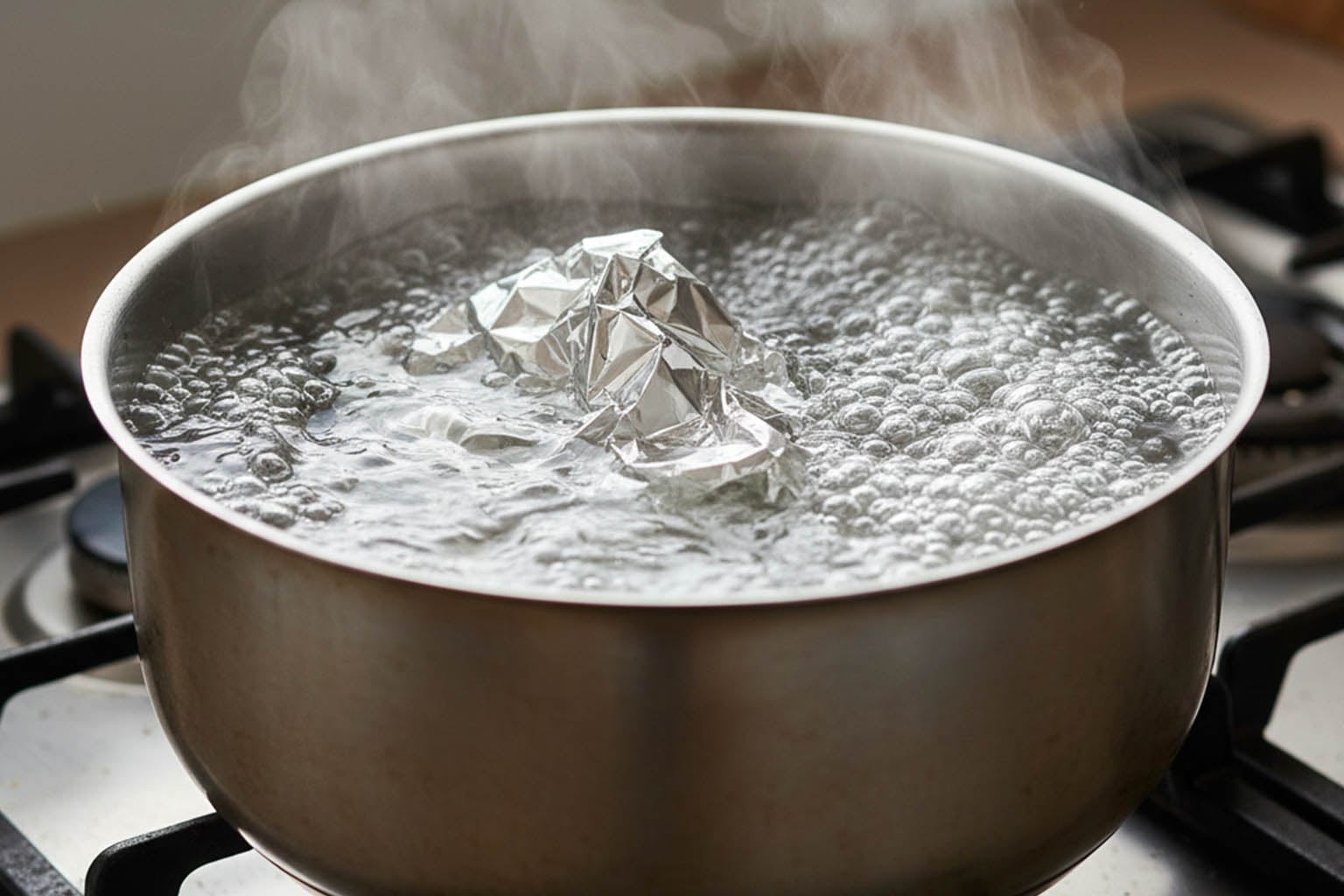
Follow these straightforward steps for remarkable results. First, select a pot that comfortably fits your utensils. Fill it with enough water to fully submerge them. Add two tablespoons of baking soda and the same amount of sugar to the water, blending until dissolved. Set the pot on your stove and bring it to a boil. Meanwhile, shape a sheet of aluminum foil into loose balls. Toss them into the boiling water first, followed by your clean yet dull utensils. Allow everything to simmer gentle for a a few more minutes. Carefully extract them, rinse with hot water, and wipe dry with a soft cloth. Watch in awe as their shine returns. It’s in the wiping moment that you truly see the transformation.
This isn’t just about cleaning—it’s a ritual that lets your kitchen drawer evolve from ‘ordinary’ to stunning. Honestly, there’s something gratifying about this home remedy that outshines many off-the-shelf miracle solutions.
Best Practices and Cautionary Notes
When’s the best time to try this? Well, it’s particularly effective on your everyday stainless steel utensils and simple cutlery sets. If some of your pieces have decorative wood or plastic handles, or materials of unknown composition, test this on a fork or spoon first. For older silverware, gentler, silver-specific products could be safer. Remember, ensure utensils are completely cleared of any food remnants before they take a dip; otherwise, bits of residue might just ’bake’ onto them.
Why not make this a mini kitchen ritual? While it doesn’t replace daily washing, it complements it nicely. It’s especially useful when setting the table for family dinners or when the drawer looks… sad. It won’t mend deep scratches or wear, but for mild discoloration and dull surfaces, prepare to be surprised. It’s like a small kitchen spell, restoring a bit of that long-lost luster and, as a result, giving your entire kitchen a touch of elegance.
This approach not only cleans but also enriches your kitchen experience, giving you that satisfying moment of—oh, why didn’t I try this sooner? So, next time your utensils look worn out, remember this little secret and watch your kitchen glow with renewed charm. Share this insight with a friend or test it during your next family gathering—it’s the kind of handy tip people often overlook… until they actually see the results.