


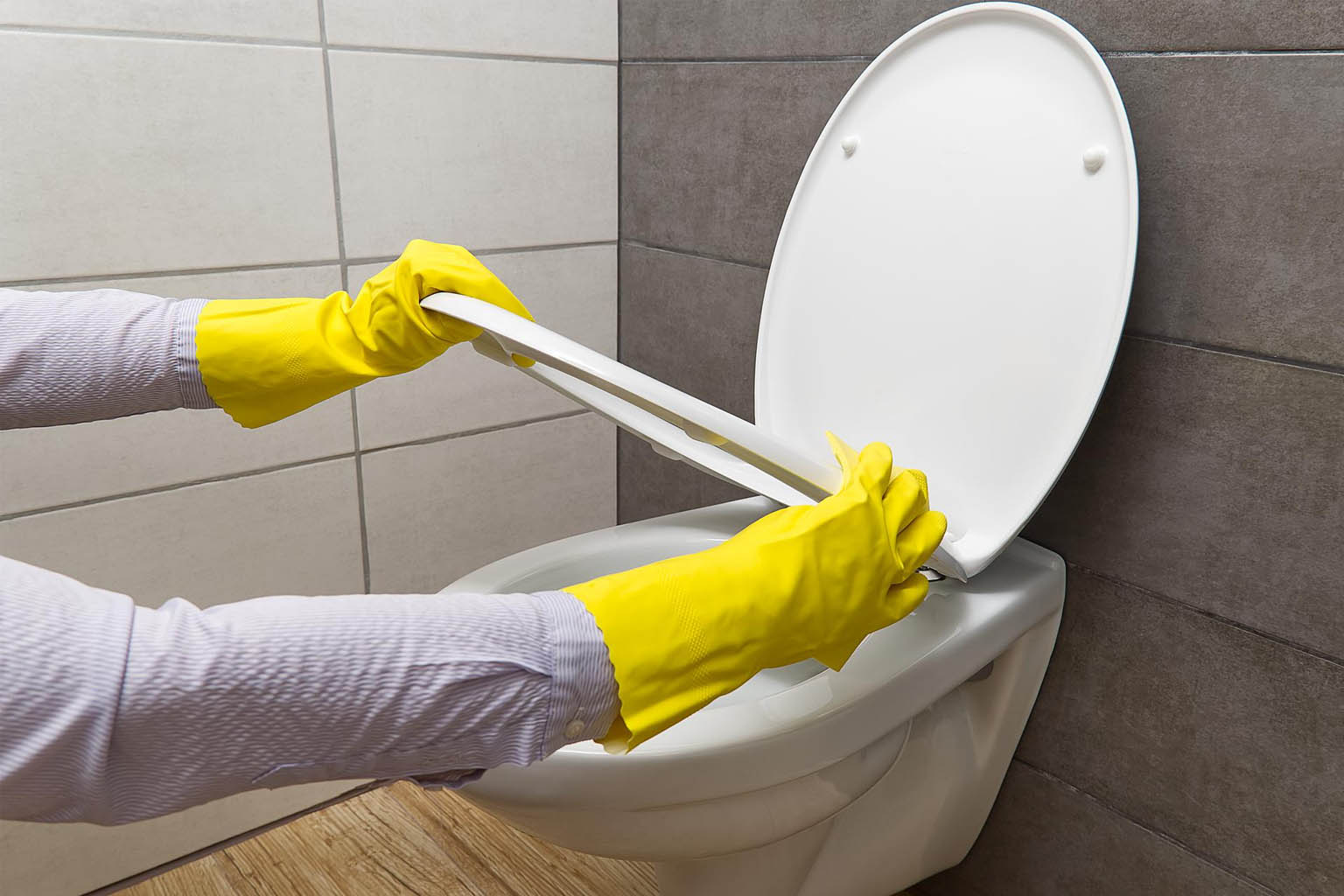
If you’ve ever found yourself staring at those stubborn chalky edges and grayish haze in your toilet bowl, you’re not alone. It seems like a relentless cleaning challenge. But what if a simple kitchen remedy could make your toilet shine again in just moments? Let’s dive in and uncover this hidden cleaning gem.
By mid-morning, while sipping your second coffee, you might glance into your bathroom and notice that annoying rim of limescale. It’s both stubborn and irritating. Maybe you’ve tried the usual scrubbing — paused, and thought… there might be an easier way. So, why not check your kitchen cupboard? Among the baking powder and tea bags, you might spot a packet of citric acid. It’s humble, slightly sticky from your last experiment with syrup, but worth a try. A spoonful, some warm water, and a little bit of hope — it’s worth a shot, right? As steam rises, you stir this concoction, watching time flow over the ceramic like small streams, waiting for that delightful moment to share at the next get-together.
Why Citric Acid Works Wonders
Citric acid, you see, dissolves those mineral signatures that hard water leaves behind. It’s the perfect solution for limescale and those organic residues — without any abrasive scrubbing. This silent advantage means your ceramic remains smooth, and the stains vanish. It even has a familiar, non-clinical scent that’s somewhat comforting.
We’ve all experienced that moment when, unexpectedly, guests are on their way, and the bathroom needs to look spotless — fast. A friend in Cologne once shared her party-prep secret. Just before an event, she sprinkles two tablespoons of citric acid powder in the toilet, pours in hot (not boiling) water from the kettle, and brews her coffee for twenty minutes. A single brush, a flush, and it’s ready for any gathering. A small statistic from household forums even backs this up: users report that citric acid visibly reduces deposits in 70-80% of cases after just one application.
Chemistry is on its side. Citric acid forms soluble compounds with calcium, making them rinse away effortlessly. Unlike bleach, which only removes coloring, citric acid also eliminates the substance itself. This saves energy and reduces the scratches you’d get from vigorous scrubbing. Those in hard-water areas often see even faster results since there’s more limescale for the acid to “capture.” In short: less muscle, more molecule.
Your Step-by-Step Toilet Cleaning Guide
Here’s your quick routine: gently push the water in the siphon “downward” using your brush, then sprinkle 1 to 2 tablespoons of citric acid powder evenly into the bowl. Add about a cup of warm water (50-60 degrees Fahrenheit). Let it sit for 15 to 30 minutes, give it a single, gentle brush, and flush. Got stubborn edges? Leave it overnight and re-activate with fresh hot water in the morning. The end result is that quiet click in your mind: “Oh, so cleaning can be this easy.”
Mistakes often come from haste. Too little time leads to streaks instead of shine. Pouring boiling water directly on cold ceramic can cause tension — lukewarm to hot is just fine. Some people pour everything in at once and wonder why it doesn’t “foam” like in commercials. It doesn’t need to foam; it needs to dissolve. A bit of patience trumps strenuous effort. Let’s be honest: nobody cleans the toilet daily, so this trick needs to be practical.
A gentle safety reminder: never mix acids with chlorine or bleach — this releases irritating gases. Gloves feel nice, and the scent remains pleasant. Regular use of citric acid helps reduce long-term deposits and saves on cleaning supplies.
The Swiss Army Knife of Bathroom Cleaning
“Citric acid is like the Swiss Army knife for bathrooms — limescale-loving, odor-neutral, and highly effective,” says Niels R., a building technician specializing in rental bathrooms in historic buildings.
– **Dosage:** 1–2 tablespoons of powder, up to 3 tablespoons for heavy limescale.
– **Water Temperature:** Warm to hot, not boiling.
– **Contact Time:** 20–30 minutes, longer if needed overnight.
– **Don’t Mix:** Avoid bleach and ammonia cleaner combinations.
The minutes with citric acid transform more than just the bowl’s shine. Less scrubbing means less surface scratching, leading to less limescale buildup down the line. That’s an upward spiral of hygiene without a stricter routine. Some add a tiny squirt of dish soap to combat biofilm — which is like a tailwind for the drain. Perhaps you’ll try it, share it, or simply place a tub of citric acid within sight of the bath. It’s astonishing how calming a clean, unassuming space can be.
Common Concerns and Questions
**Does citric acid remove urine scale under the rim?** Absolutely, if it reaches there. A tip: apply some powder to wet toilet paper strips, stick them under the rim, dampen again, let sit for 30–60 minutes, then scrub.
**Can citric acid be mixed with vinegar?** It can, but it doesn’t add much value. Both are acids; citric acid is usually stronger and more pleasant-smelling. Consistency with one is better.
**How often should it be used?** For hard water, weekly; otherwise, as needed. Those with few deposits manage well with biweekly use.
**Is it safe for ceramics or seals?** Ceramics handle citric acid well. Avoid soaking seals and metal — stick to recommended exposure times and rinse afterward.
**Isn’t cola just as effective?** Cola contains phosphoric acid, so it works lightly, but it’s sticky and sugary. Citric acid is more effective, cleaner, and leaves no residue.
Now, why not gather your supplies and *test this out yourself*? Cleaner bowls without the elbow grease — that’s a win!