


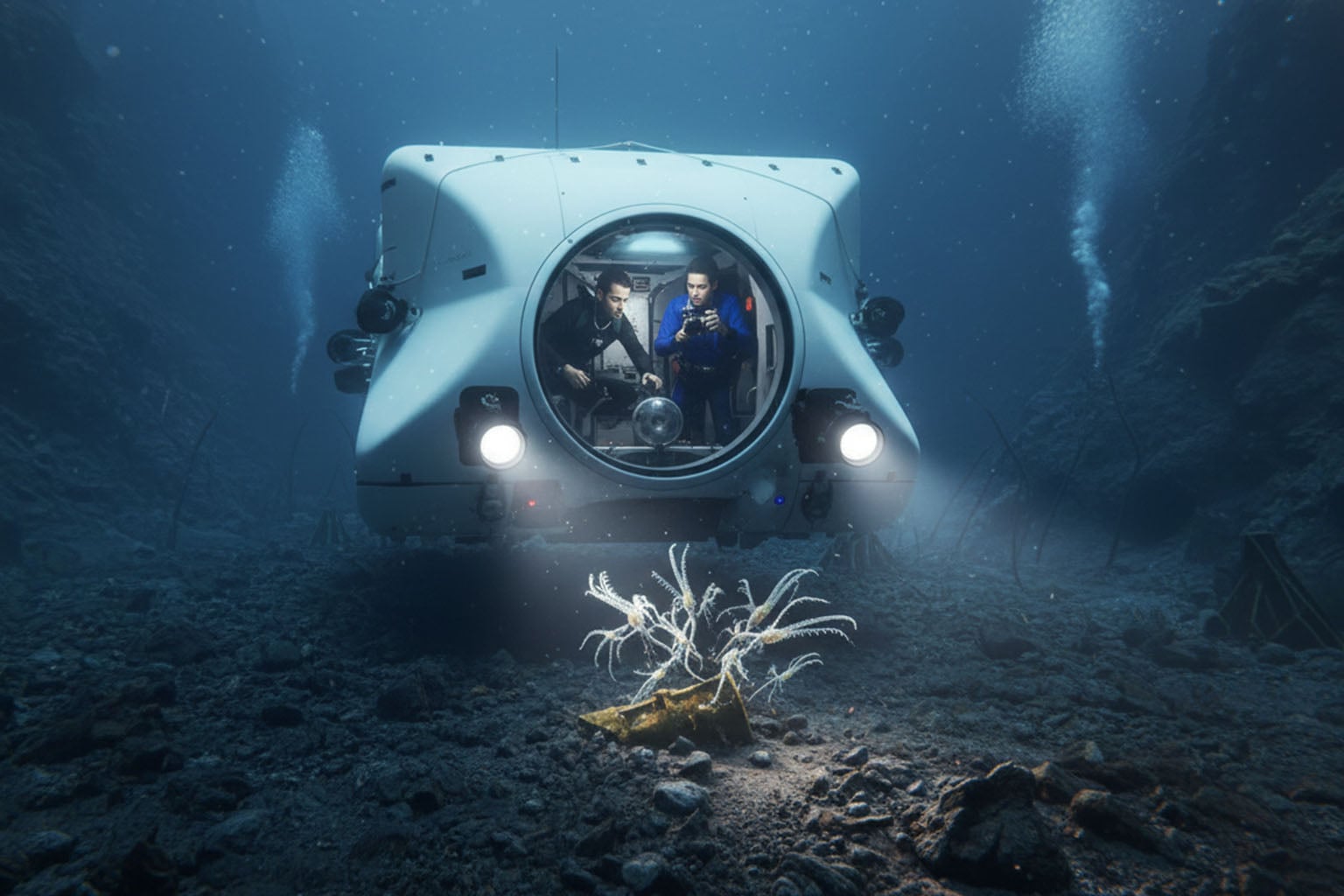
It’s a sobering moment. Imagine scientists plumbing the depths of one of the Mediterranean’s most mysterious trenches, only to uncover a silent yet staggering menace — human waste. This isn’t your ordinary discovery. It’s a wake-up call, one that echoes with urgency across the globe.
Researchers, employing state-of-the-art technology, have documented a troubling reality: a sea of plastic, metal, glass, and paper waste littering the bottom of the Mediterranean’s deepest point, the Calypso Deep. It’s an environmental warning — a haunting testament to how far-reaching our impact on marine ecosystems has become.
The Unseen Graveyard
The Calypso Deep, this hidden valley beneath the sea, is now a graveyard for ocean debris. Located approximately 60 kilometers west of Greece’s Peloponnese coast, this trench plunges an astonishing 16,772 feet into the Ionian Sea. A recent study led by a team from the University of Barcelona laid bare a chilling fact: the depths are overwhelmed by one of the highest concentrations of marine litter in the world.
One can envision a scene almost akin to a sci-fi dystopia — but it’s real. The study found 148 pieces of this litter, out of 167 objects documented, were confirmed as marine debris. And what’s more alarming is that a significant portion of these weren’t naturally occurring but rather were discarded items from human hands.
Journey of Waste
How did all this garbage land here? The story may surprise you. Some of this waste began its journey on land, drifting on ocean currents until it plummeted to its final resting place in the deep. Lightweight plastics, for instance, hover and eventually settle in the sediment, sometimes traveling remarkable distances.
The discovery has not only illuminated the pollution problem but has put forth a pressing need to address global waste management strategies. As strange as it might sound, human activities like tourism and maritime transport have their fingerprints all over this environmental crisis. So numerous and persistent are these pollutants that not a corner of the Mediterranean is devoid of them, as experts like Miquel Canals would assert.
A Broader Ecological Impact
Why should we care about what happens at such isolated depths? The answer lies in the potential ripple effect on marine ecosystems. Though the Calypso Deep itself may lack rich biodiversity, the implications of debris reaching more lively corners of the Mediterranean are alarming.
In places bustling with marine life, interactions with debris spell disaster. Marine animals engage with waste by ingesting it, using it as unwitting traps, or even as substrates for growth. Each piece of floating debris is a potential threat, transforming habitable waters into hotbeds of disrupted ecosystems.
As highlighted by a recent UN report, pollution poses a dire threat not just to marine life but to the entire food chain. Birds, fish, even humans feel the effects in ways we’re still beginning to understand — often too late.
Technological Ventures into the Deep
Taking a plunge into these murky depths isn’t straightforward. Cutting-edge technology, like the Limiting Factor submersible, makes such exploration possible. Designed for extreme depth, it provides researchers with invaluable insights into the underworld of the Mediterranean.
Each dive is a meticulous operation, often with more time spent descending and resurfacing than observing the bottom itself. And yet, these painstaking efforts uncover the harsh truths of vagrant plastics and other debris. It’s this technology-driven vigilance that underscores the severity of the issue and demands change.
Time to Act: Reducing Ocean Waste
Urgent action now could forestall irreversible damage. The Mediterranean isn’t just any sea; it’s a critical zone, central to economic activity and biodiversity. As global citizens, the onus is on us to reduce our oceanic footprint. The effects of neglecting this responsibility are far-reaching, a truth staring back at us from the depths.
Engagement with international treaties like the UN Global Plastics Treaty becomes paramount. Such instruments promise hope in reducing plastic pollution. However, implementation must be rigorous and inclusive of input from all stakeholders — from policymakers to consumers.
In conclusion, the debris that sits at the bottom of the Calypso Deep is more than forgotten litter; it’s a vivid reminder of our collective responsibility. Let’s turn tides towards a cleaner future. Share this story, talk about it. Together, our voices can make a sea change.