


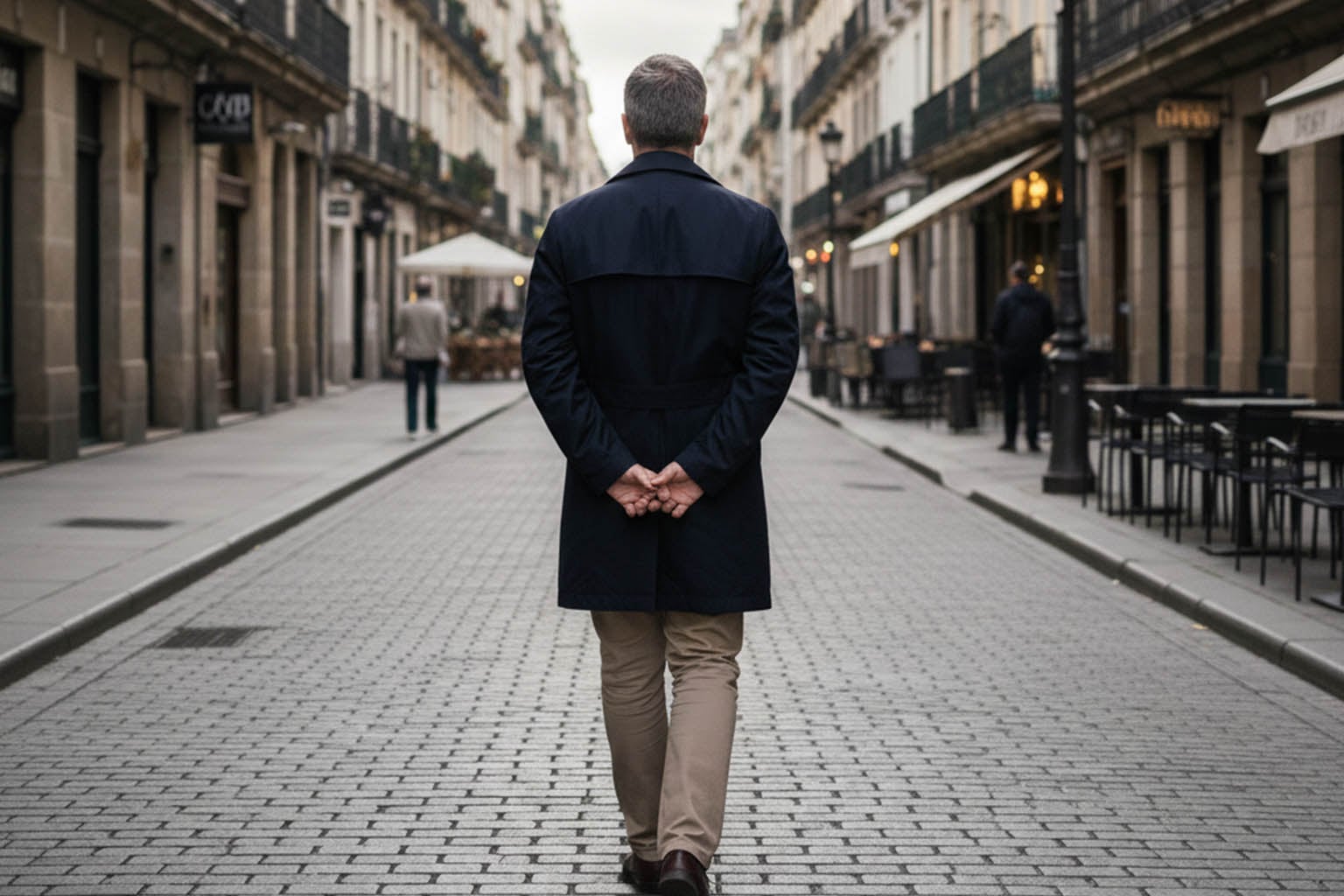
It often feels like a scene from a play. Picture this: someone walking, hands clasped behind the back, eyes scanning the horizon, step by step. Is it a sign of tranquility? Perhaps control? Or maybe just convenience. The gesture is more familiar than we realize, yet it carries an air of mystery. There’s a reason why we do a double-take.
An elderly gentleman wanders by the lake, hands joined behind him, as if wearing an invisible cloak of calm. Then there are two teenagers, both in hoodies. At first, they mimic the gesture playfully, then they transition into seriousness, like they’d discovered a newfound sense of self. I paused to observe how their posture changed the tone of the moment. Shoulders lowered, foreheads smoothed, pace slowed. It’s astonishing, isn’t it, how much a simple gesture can communicate without uttering a word?
Unlocking the Mystery of the Gesture
So, what’s the secret behind walking with hands behind your back? This gesture can reveal more than it seems at first glance. Keeping hands behind the back takes the focus away from the palms, with arms resting along the torso, hinting at an open chest — a signal of calm and self-control. More often than not, this posture whispers a subtle, “I have all the time in the world.” For executives, it serves as a quiet anchor; for those strolling, it’s like having an inner dialogue. It can steer away spontaneous gestures, letting thoughts rise to the surface. In meetings, it might seem confident, while in a hallway, almost regal. Sometimes, it’s just an easy way to relieve the upper body’s tension. Yet, there’s something that resonates with a message you simply cannot ignore.
On a Saturday morning at a bustling market square in Bremen, I spotted ten individuals walking this way. Among them, three were unmistakably tourists, two wore service uniforms, the rest mingling among the wanderers. A woman, probably in her forties, halted by a bakery, her hands gracefully folded behind her knuckles, as if internally tapping to a quiet rhythm. Her gaze swept across the offerings, not with longing, but with a calculated scrutiny. Nearby, a young man stood similarly, yet his head bowed, shoulders tense. Same stance, different story. Context adds color, almost like light and shadow. It’s intriguing how swiftly our eyes craft narratives from such simple scenes.
Psychological Insights and Culture
From a psychological perspective, holding arms fixed can slow down spontaneous motions. Fewer gestures often mean more cognitive processing inside: a sign of concentration, deliberation, self-regulation. The open chest suggests broadness — read as self-mastery. Conversely, hidden palms might mark distance: a sign of introspection rather than interaction. In formal cultures like the military (‘at ease’), the stance symbolizes discipline; elsewhere, like in parks, it’s more about relaxation. And yes, individuals dealing with shoulder pain sometimes use this gesture as a form of relief. One could say serenity and self-protection coexist along the same line. The discerning eye must learn whether it sees proximity or boundaries. Truly, both are possible.
The fastest way to decode this signal? Focus on three key elements: pace, gaze, and shoulders. A slower pace often indicates deep thought, while a brisk walk suggests authority. An open gaze speaks of curiosity, a narrowed one hints at control. Shoulders that drop indicate calm; if they’re tense, stress might be lurking under the surface. Add to this the setting: corridor, street, garden, or stage. Outdoors, the gesture softens; in enclosed spaces, it appears more formal. A mere minute of observation can often reveal the underlying narrative. And then, it’s about listening, not judging.
A Broader Interpretation
Mistakes happen when interpreting a single signal as the absolute truth. Someone struggling with back tension might carry their hands behind them for purely physical reasons. In chilly nights, it’s simply warmer. Cultural nuances play a role too: In places like the UK or Singapore, the stance is more common, especially among the older generation. And let’s be real: No one adheres to a rigid catalogue of body language rules. Humans are complex and, let’s face it, a bit messy. Context is key — walk, voice, pauses, gaze — and consider: does this project outward connection or inward reflection?
When unsure, work with hypotheses instead of judgments. Form thoughts like, “maybe she’s weighing her options,” or “perhaps he needs space to think.” This approach opens dialogue rather than closing it.
As the behavioral experts at Psychology Today often highlight, “Body language is not a dictionary but more like weather: you read tendencies, not laws.”
Reflectiveness often shows in a slower pace, gentle gaze, and relaxed fingers. Boundary-setting is signaled through tightened necks, fixed gazes, and shorter strides. Uniforms, museum spaces, and corridors often signal formality. Physical reasons like back stretching or habit show another dimension.
Ultimately, walking with hands clasped behind the back alters our pace, and with it, the internal tone. Those who complete the arm circle temper their impulses, giving thoughts room to breathe. From personal experience, during walks home, the city’s noise dims, decisions feel more rounded. Finding peace isn’t in the hands alone — sometimes it’s in the tempo. It aids in organizing, filtering, allowing non-reaction. Whether this appears poised or distant is determined by body language as a whole — and how close we allow others to get.
The Everyday Takeaway
The core takeaway? Less gesturing can signify a stronger inner focus and more open posture. Recognizing when someone is pondering instead of blocking can be incredibly valuable. Contextual cues, like a park versus a meeting, help avoid common misinterpretations. A quick, three-second check combining pace, gaze, and shoulder movement can provide a sharper assessment during interactions.
So what do you think? Next time you see someone strolling with hands behind their back, you might find yourself wondering about the symphony of stories in that simple gesture. Let’s chat about it. What’s your take?