


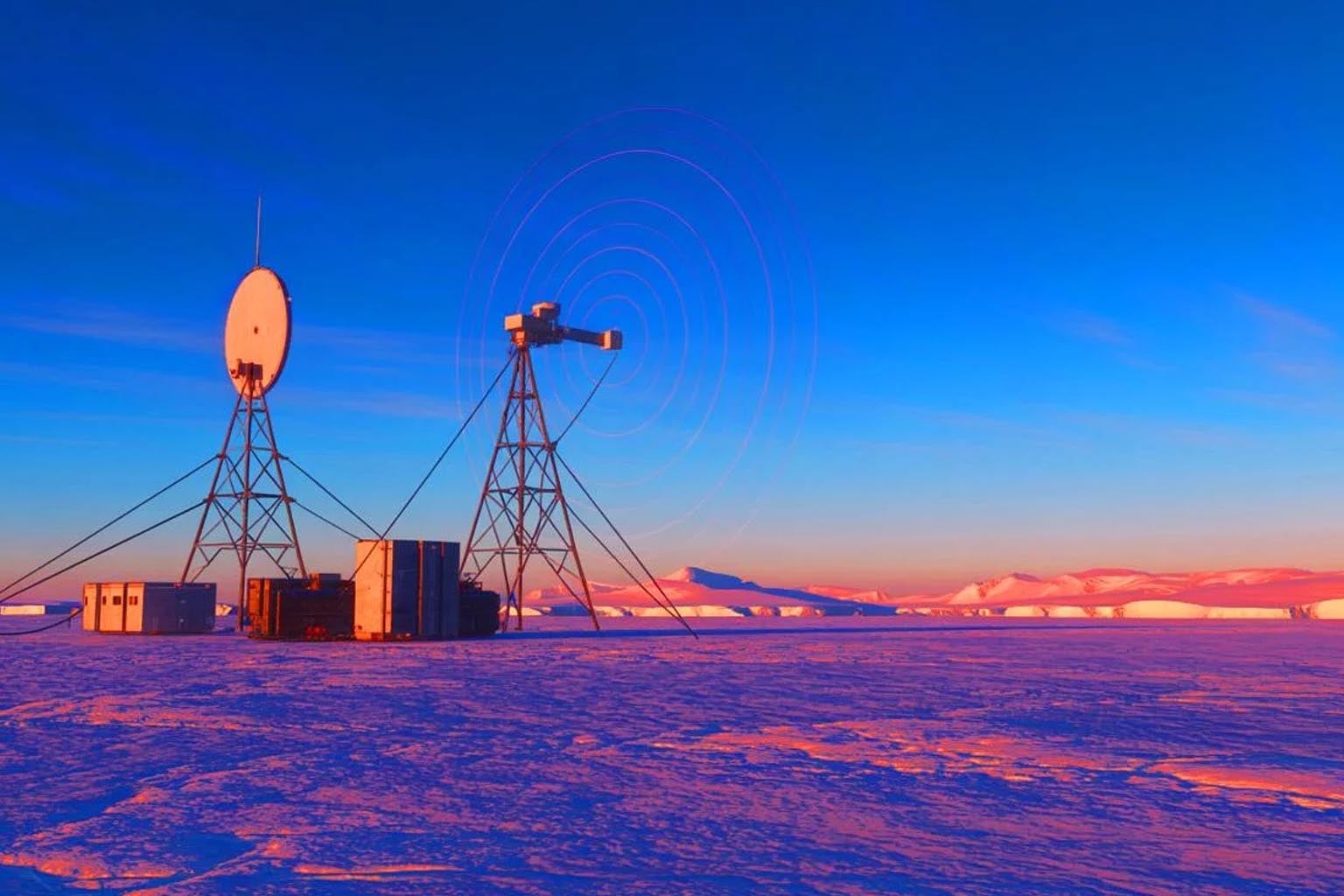
Curiosity is piqued and eyebrows are raising across the scientific community. **Mysterious signals**, whispering enigmas from beneath the ice of Antarctica, have scientists scratching their heads. NASA, no less, finds itself in the intriguing position of the great unknown, as they track down the source—or lack thereof—of these icy messages.
Strange Signals and Their Misbehaving Origins
Between 2016 and 2018, a rather curious phenomenon unfolded high above Antarctica. The **Antarctic Impulsive Transient Antenna (ANITA)**, a sophisticated set of instruments lofted by high-altitude balloons, began detecting radio wave impulses that were, well, perplexing. Not your run-of-the-mill signals, these—rather, they were strange, sharp, and quite unlike anything seen (or heard) before. ANITA was designed to eavesdrop on cosmic whispers, listening to radio waves born of cosmic rays brushing the Earth’s atmosphere. What it picked up, though, was more of a cosmic shout—from below.
The direction of these signals—upward, not down as expected—baffled researchers. According to physics as we know it, these signals shouldn’t exist. It’s as if ANITA stumbled upon a new dialogue of particles, an undiscovered chatter, teasing us from beneath the horizon.
A New Kind of Particle Adventure?
The curiosity is contagious. **Stephanie Wissel**, associate professor specializing in physics, astronomy, and astrophysics, was one of those drawn into the mystery. “The radio waves detected almost a decade ago had a very sharp angle, about **30 degrees under** the ice surface,” Wissel explained. “They might point to particles or interactions completely outside our current understanding.” Her words carry weight, though—as heavy as cosmic rays themselves—resonating with those who dream of unveiling the close-held secrets of neutrinos, those elusive cosmic particles.
Neutrinos, commonplace yet elusive, are usually products of high-energy bursts from phenomena as bright as the sun, or as grand as cosmic events. They flit about almost nondescriptly, whispering secrets through the cosmos, barely hinting at their presence.
The Silence of Other Observatories
As the data from ANITA’s intrepid flights were scrutinized, it begged the question—why are these signals missing from other observatories and their lists of cosmic anomalies? By filtering through the amassed data to silence the background noise, the researchers eliminated other known particles as potential culprits. However, no other detector has caught the same peculiar cosmic whisper ANITA has. It led science to term these signals “anomal,” suggesting something beyond our catalog, particles beyond neutrinos.
**Could it be an undiscovered phenomenon?** Is some uncharted particle or interaction hiding—somewhere in the icy embrace of Antarctica—waiting for us to understand? Wissel noted, “I suspect an interesting effect near the ice and horizon that eludes full comprehension. We’ve chased down similar phenomena before, with no clear answers yet.” A familiar story to those who dig into the mysteries of the cosmos.
Deepening the Mystery with Each Look
With each new analysis, the **enigmatic signals** become an even greater puzzle. Every layer of ice peeled back in the search for the origin adds another layer of intrigue. Scientists are left to wonder if these whispers of another reality are mere flukes or the unveiling of something profound lying beneath our feet.
For those interested in the majestic dance of our universe, you can delve further into this cosmic puzzle through a recent interview with Wissel, which can offer more in-depth views and updates on **ANITA’s findings** and their implications. You can watch it here.
So, where does that leave us, really? Staring into the unknown, armed with curiosity and a sense of wonder, ready for surprises and discoveries, both bitter and sweet.
If mysteries intrigue you—or if like so many, you’ve been captivated by the bewildering beauty of the universe—keep your eyes, ears, and minds open. Follow the trail these mysterious signals offer and uncovering more of the cosmic enigma may be closer than we think.