


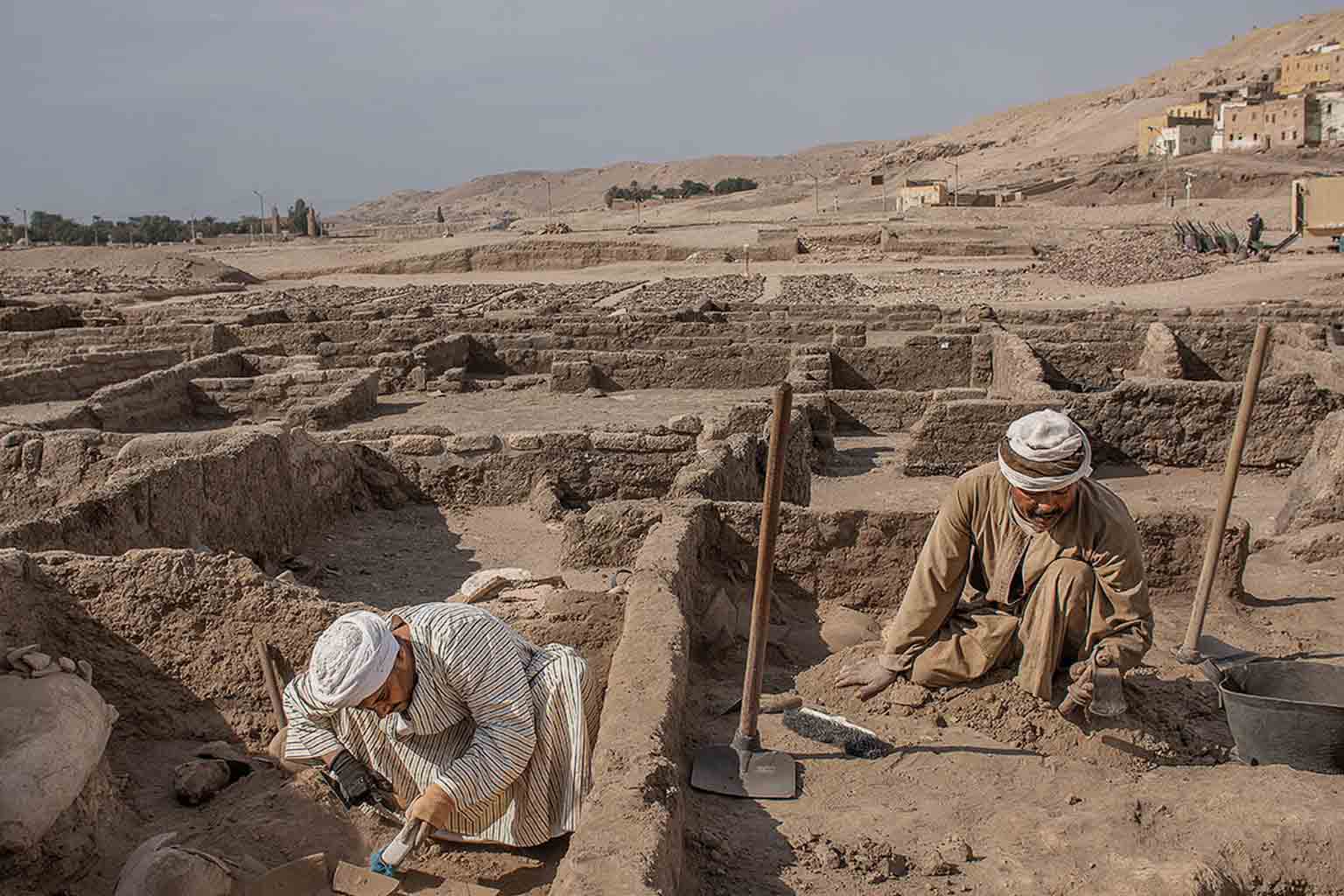
Imagine stumbling upon something ancient, something so steeped in mystery and time it seems to transport you to another era. That sense of bewilderment fills the air in Tanis, Egypt, where archaeologists have unearthed an almost mind-boggling bounty — nearly a quarter of a million tiny statuettes. These figurines were discovered alongside a peculiar 3,000-year-old sarcophagus, prompting a tantalizing question: Could they belong to a forgotten pharaoh?
Digging through the Sands of Time
The fabled sand of Egypt holds stories untold, and Tanis is certainly no exception. Often overshadowed by the grand tales of the Pyramids, the significance of this site can’t be overstated. This recent find by a French archaeological team led by the esteemed Professor Frédéric Payraudeau of Sorbonne Université isn’t just about the numbers. It’s about unlocking a chapter of history—one framed within the early first millennium B.C., during a time when Libyan kings held Egypt under their sway.
The treasure of Tanis includes 225 ushebti statuettes. What are ushebtis, you ask? These are tiny figurines crafted to accompany the departed into the afterlife, believed to spring to life at the god Osiris’s command to serve the deceased. Wealth dictated how many figurines could accompany an individual, so it’s no surprise these hundreds of statuettes are tied to Pharaoh Sheshonq III, a prominent ruler of the 22nd dynasty. With many to serve him in death as in life, Sheshonq aimed to maintain his majesty across eternity.
The Sarcophagus Enigma
Now, let’s turn to the enigmatic sarcophagus—unadorned, granite, buried beneath layers of mud. The question everyone is asking is: To whom did it belong? The grave puzzle seemed ready to uncoil with the engraved ushebtis acting as our historical guide, yet they opened a new chapter of mystery. Remarkably, they were unearthed in the northern chamber of Osorkon II’s tomb, an earlier pharaoh from the same dynasty.
Professor Payraudeau expressed a scholar’s blend of excitement and puzzlement about whether Sheshonq III rests directly within Osorkon’s burial site or if his funerary treasures were later relocated. Reflecting the intricate politics of ancient Egypt, this conundrum forms part of the many layers of the Tanis mystery yet to be unraveled by eager minds and meticulous hands.
A Beacon for Archaeological Advances
The unwrapping of these mysteries could redefine perceptions of Egypt’s storied past. As noted by Mohamed Ismail Khaled, the Secretary-General of Egypt’s Supreme Council of Antiquities, this represents a breakthrough for Tanis excavations, a staggering find not seen since the mid-20th century. According to a BBC report, the archaeological site at Tanis holds insights akin to the celebrated treasures of Tutankhamun’s tomb, yet these haven’t captured the world’s imagination in quite the same way.
Nonetheless, the ongoing detailed study of newfound inscriptions and careful cleaning of Osorkon II’s northern chamber keep hope alive that more stunning revelations await. What fresh narratives will these discoveries tell? What curtain of history will lift next?
Hollywood’s Imprint: Fact Meets Fiction
For many, Tanis is a place more myth than reality, thanks to its cinematic depiction in “Raiders of the Lost Ark,” where Indiana Jones famously found the Ark of the Covenant—a discovery most archaeologists would tell you remains a work of fiction. Despite not having breathtaking finds of such mythical proportions, the site is critical in the Egyptian narrative. It was here during World War II where pristine Pharaonic tombs were uncovered, tombs which quietly rivalled the grandeur of those in the Valley of the Kings.
Despite their opulence, the treasures of Tanis haven’t echoed through time with the legendary notoriety of Tutankhamun’s artifacts. Yet, what they lack in fame, they make up for in historical richness. Visitors can witness these wonders up close at the Egyptian Museum in Cairo—it’s an experience worth savoring, much like the tales and trinkets of a lost world.
Peering into the sands of Tanis isn’t merely about the allure of glittering artifacts; it’s about connecting dots across millennia, painting a picture that feels both distant and inexplicably personal. If you’re drawn to stories as much as discoveries, stay tuned: history might be ancient, but in places like Tanis, it’s also alive.
What do you think of this unfolding mystery? Could Tanis or another similar site hold the next big archaeological find? Let us know your thoughts and join the conversation about this sun-drenched chapter of history waiting to be uncovered.