


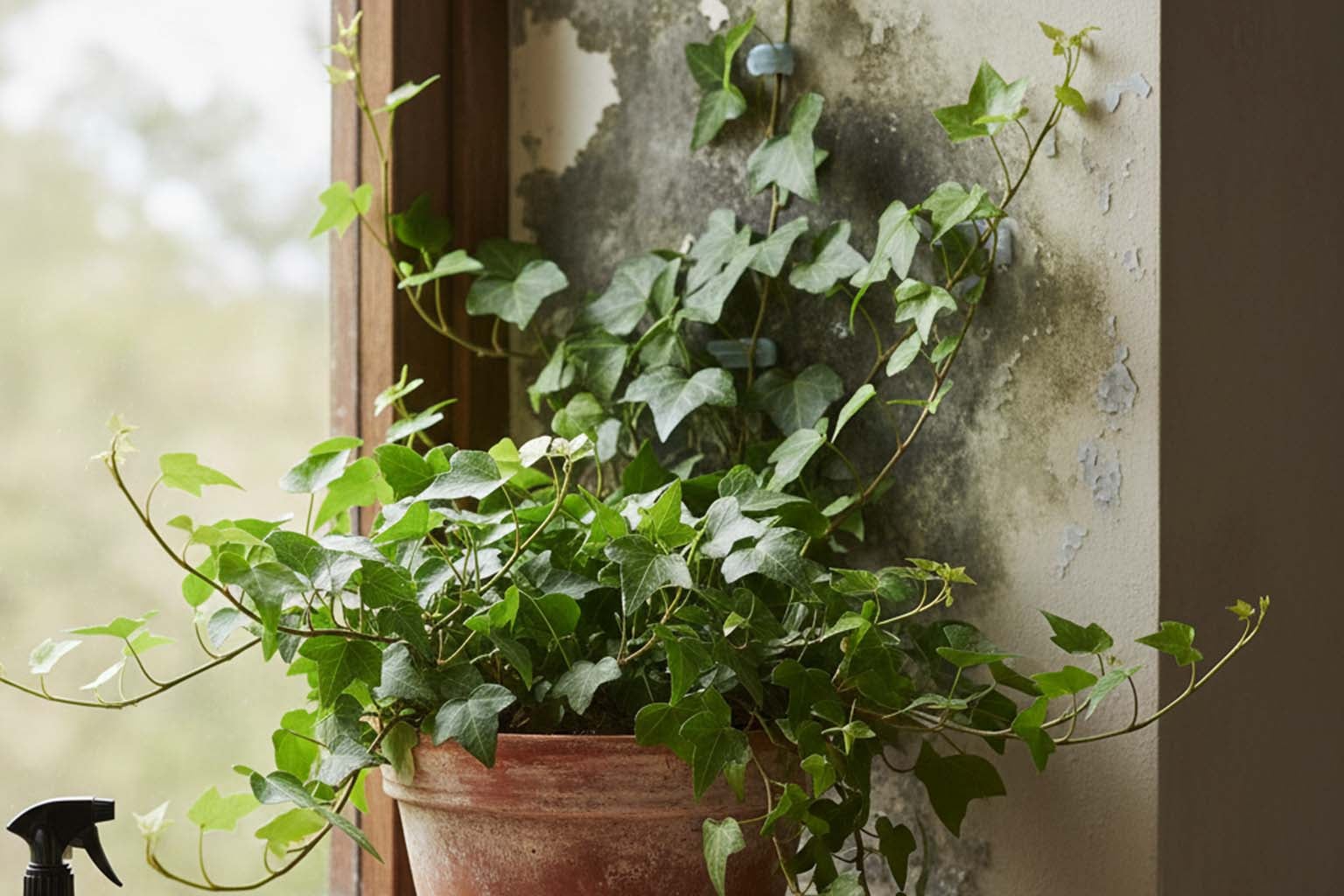
Seeped into the cracks of daily life, mold in the house is more than just an unsightly blotch on the wall. Its musty presence and potential health risks are real concerns that many of us face. But imagine if a simple plant could quietly, yet effectively, combat this nuisance. Enter the humble ivy, a silent warrior perched atop a mirror, with leaves weaving gracefully along a hook — doing its job without the buzz of gadgets or the spray of chemicals.
In a home I visited, the resident swore that the dank smell disappeared once this ivy took its place. No more film of mold coating the window seals. This isn’t just a tale from a commercial; the evidence was as clear as the air had become.
The Magic of Ivy in Daily Life
Ivy, scientifically known as Hedera helix, is often underestimated. Find *a reputable source for the claim that ivy purifies air*. With its delicate leaves, ivy doesn’t only trap fine dust and absorb moisture, it also reduces airborne mold spores when positioned strategically near damp areas. And its preference for semi-shaded, cooler spots makes it perfectly suited for those musty corners mold is all too fond of.
Remember that moment when you step into your shower, and the smell greets you like an old nemesis? In one old kitchen I visited, an ivy plant perched above the cabinets transformed the room. Just a few weeks in, odors were faint remembrances, and the window fogged up less. It acts differently than sprays — ivy takes its time. But all the while, it’s tirelessly filtering the air.
How Ivy Works Its Wonders
So, how exactly does this leafy miracle work? **It’s simple, yet fascinating**. Ivy transpires, circulating water through itself and releasing it via leaf pores, effectively creating an air movement right around its foliage. In this microscopic layer, particles settle, and moisture moves away from cold surfaces, helping to maintain dryness. Additionally, ivy can break down volatile compounds, further purifying the air around it. It’s like having a leafy air purifier. According to a study detailed by the NASA Clean Air Study, plants like the ivy can indeed play a role in air purification.
Before you rush to grab a pot though, here’s the trick: choose a hanging pot with good drainage and place it just above the damp zone. Whether over shower walls, beside window sills or above the kitchen sink, a few vines are enough. Moderate watering does the trick, and don’t forget to gently wipe the leaves weekly to keep their “filter” clear.
Common Mistakes: Overwatering and Lack of Light
Too much water turns the soil into a swamp, suffocating the roots. Equally, a too-dark spot in winter slows down all benefits. Opt for loose soil mixed with a bit of clay or perlite and ensure the pot has a drainage hole. Rotate the plant every few weeks so all sides enjoy the light. Let’s be honest, nobody polishes leaves daily — a gentle weekend wipe is enough.
Some enthusiasts also add a handful of charcoal to the soil to soak up odors. It helps but never substitutes for fresh leaves.
A gardener once told me, “Ivy isn’t magic — it’s a habit that works when you give it time.”
Boosting Ivy’s Effectiveness
Position matters. Placed 12 to 24 inches above the moist source takes advantage of air currents. Brief ventilation post-shower complements the plant’s work. Keep those leaves clean – dust is the enemy. Occasionally, trim the plant to focus energy on young, active leaves.
Starting small with an ivy pot, placed over a problem spot, teamed with a smartphone reminder for leaf wiping, can lead to noticeable improvements. Compare photos of your bathroom tiles over weeks — it visualizes success and adds motivation. A second ivy might find a home where clothes dry or saucepan lids are hardly in use.
For pet owners, a word of caution: ivy is toxic to cats and dogs, so keep it out of reach.
If mold reappears despite the green ally? It’s time to re-evaluate: structural issues, constant dampness, or poor ventilation could be the culprits. Ivy helps but won’t replace necessary fixes. It’s the team player alongside ventilation, heating, and drying. When these four are in harmony, rooms feel lighter and smell fresher.
Why an Ivy Pot Is More Than Decor
Ivy is an invitation to see air as something living. The small routines it inspires — ones you can see and smell — build trust in your space. It’s contagious: guests inquire about the “trick,” neighbors borrow cuttings, bathrooms lose their gloomy corners.
Perhaps the greatest impact is learning not only to fight mold but to collaborate with the space. Plants infuse patience into life, silently performing their role. Share your experience; maybe all it takes is a photo of a verdant pot above the shower or just one breath to spark an idea.
Trying out an ivy plant in your home could be the start of your own air-purifying journey. Why not give it a go and see how your space transforms?