


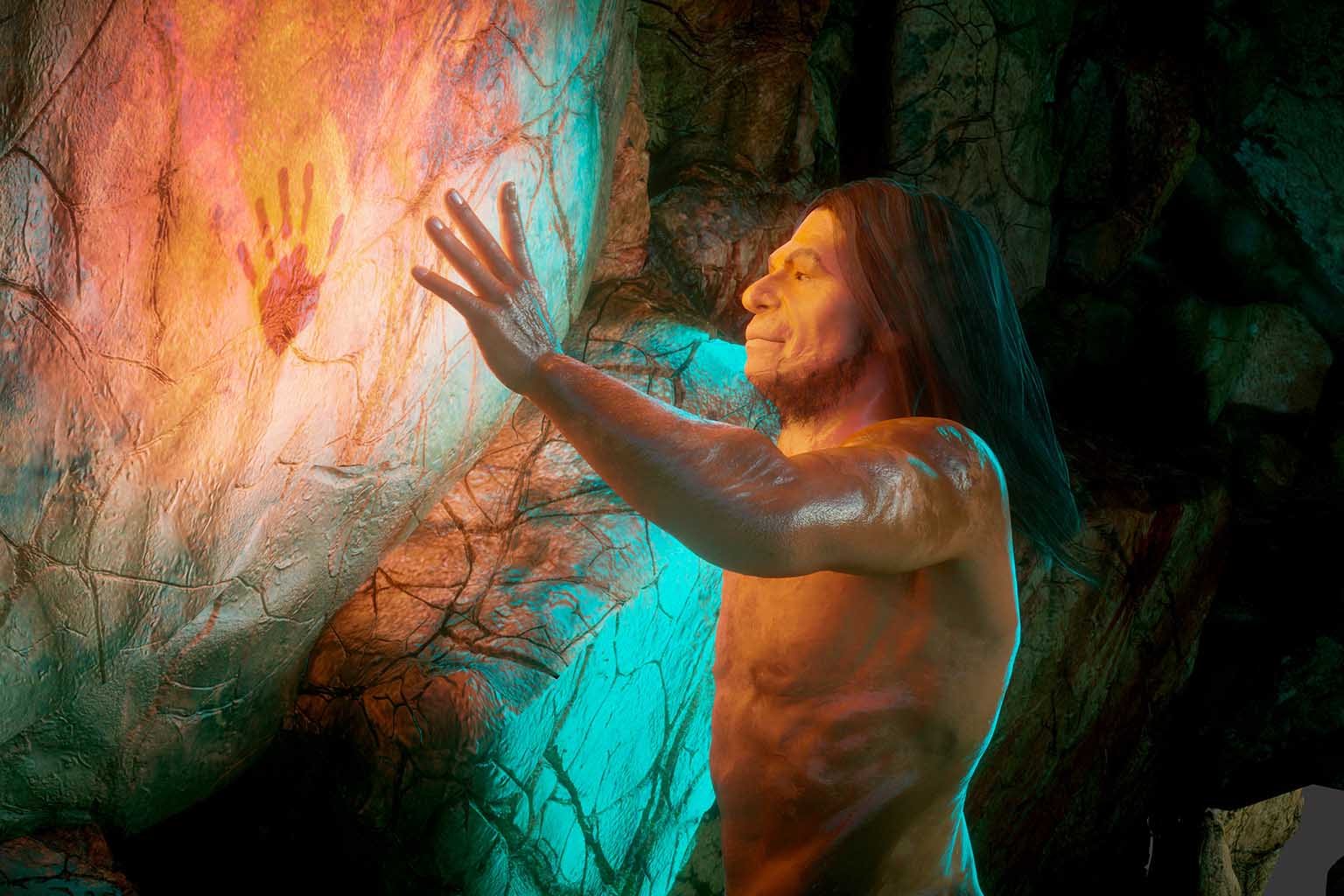
A fascinating enigma in human history is the mystery of what really happened to the Neanderthals. Were they simply wiped off the face of the Earth, or is their legacy still kicking around in our very DNA? Let’s uncover the story that’s rewriting our understanding of human evolution.
A Popular Misconception
For decades, the image was simple: Neanderthals blinked out like a forgotten candle. Maybe they couldn’t cope with our ancestors’ superior minds, or perhaps the climate turned its back on them—a harsh winter too long. But then came a twist. Recent findings hint at an unexpected narrative, challenging our ideas about extinction and human ancestry.
According to scientists, Neanderthals may not have vanished abruptly. Instead, they might have been gradually assimilated into the human gene pool through continuous interbreeding with larger groups of Homo sapiens. It’s a bold concept and one that nudges us to rethink not just extinction, but who we truly are.
Old Theories, New Revelations
Before, the story leaned on two scenarios. Either there was a head-to-head conflict, human intelligence clashing with Neanderthal brawn, or Mother Nature herself turned the tide. Yet, a fresh scientific gaze presents a third path. Researchers suggest that the ebb and flow of two populations, merging over eras, could itself explain what traditional theories couldn’t.
The truth is, Neanderthals and Homo sapiens weren’t at constant war. According to a study published on PLOS ONE, small scale interactions might have been enough. It’s all about numbers and time—a demographic dance more than a climatic or survival saga.
Interbreeding Over Erasure
The data paints a rather vivid picture: Homo sapiens emerged from Africa in large numbers, encountering the Neanderthals inhabiting European and Asian landscapes. With each crossing of paths—a genetic exchange, subtle but enduring. Think of it as pouring tiny streams into a massive reservoir.
And, it’s not a single dramatic event we’re talking about. Experts describe it as a “sustained genetic flow,” a quiet mixing over thousands of years. Imagine slowly pouring a glass of water into the sea until, at last, it’s all part of the ocean.
Intriguingly, even our genes reflect this quiet history. Modern Eurasians carry about 1% to 2% of Neanderthal DNA, a living reminder of those long-past exchanges.
Redefining Extinction
Here’s where things get interesting: Neanderthals didn’t “go” extinct in the way we word it so starkly. Their exit was more an interlude than a finale, a blending rather than a hard stop. While they disappeared as a distinct group, as researchers say, their biological essence subtly influenced—and continues to influence—the human lineage.
This understanding reshapes our evolutionary story—less a tale of vanquishing victors, more a gradual melding, a *fusion* if you will. And when we delve into our genetic makeup, we might just find those Neanderthal fragments staring right back at us.
In an evolving narrative of our past, could it really be that some of the features we pride ourselves on—or are puzzled by—are echoes of Neanderthal traits? That jawline, those cheekbones… well, you never know.
As we continue to explore the intricacies of our genetic past, let’s keep curiosity alive. Have a question about what makes us human, or a theory about the past that bends your mind? Dig deeper; share your thoughts and discoveries. After all, it’s your story too, written in the oldest language—DNA.