


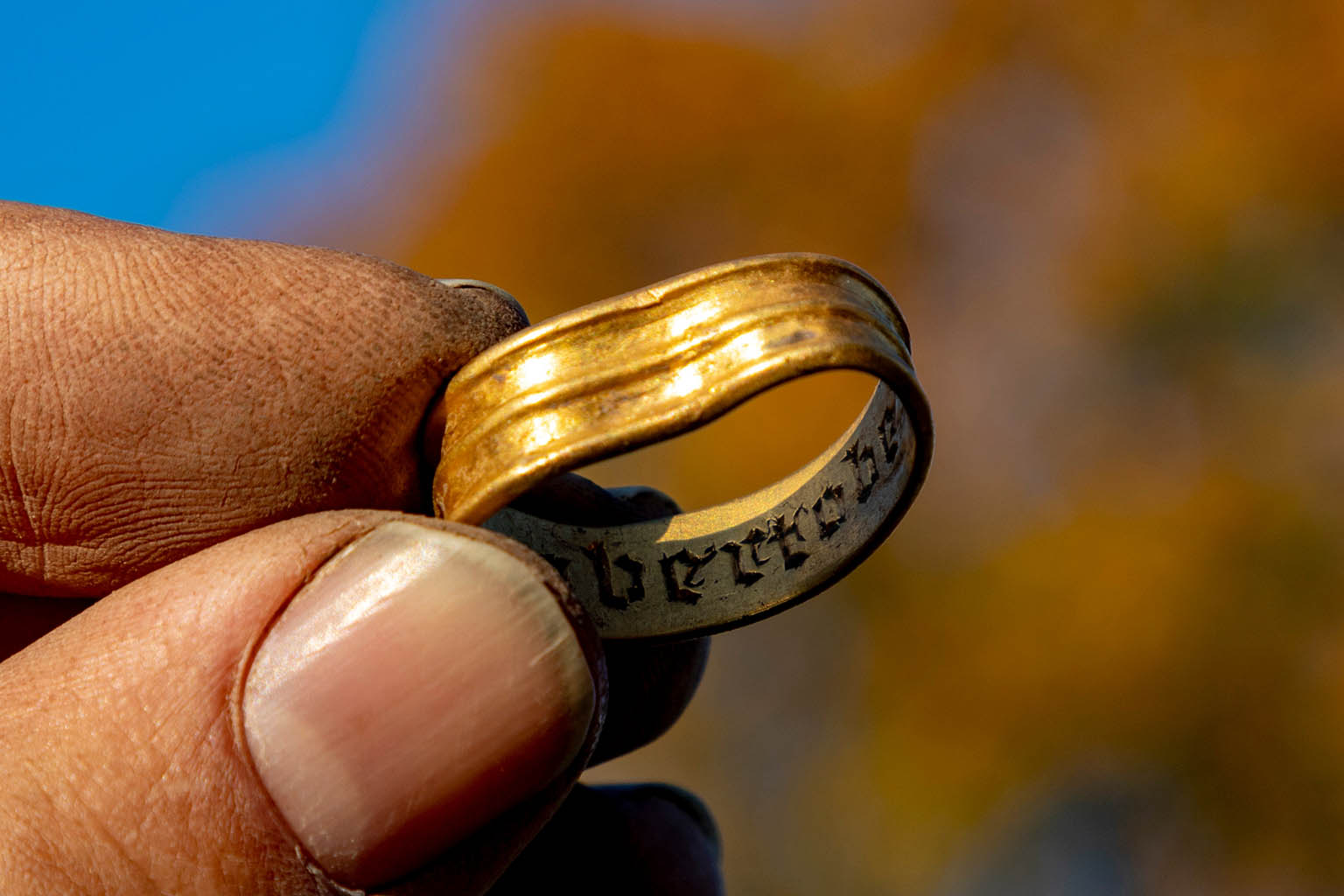
Imagine walking through an ancient forest in Romania, your metal detector suddenly beeping frantically. You dig with anticipation and uncover not just gold, but a window into Europe’s distant past. It’s a moment that would make anyone’s heart race. In 2014, this was the reality for a hobbyist treasure hunter, who stumbled upon four golden rings in a wooded area near Brașov, central Romania — rings that could potentially rewrite the history of cash in Europe. Could it be that these rings signify more than mere adornments? Could they represent the earliest form of currency on the continent?
The Charm of the 10th Century B.C.
Unearthed at the foot of the Carpathians, these rings are more than just shiny artifacts. They hail from the 10th century B.C., embodying the sophistication of jewelry craftsmanship of the time. Designated as the Brăduț type, according to the La Brújula Verde, they belonged to the Hallstatt-B1 communities — a period at the dawn of complex metal cultures in Europe. Meticulously crafted from high-purity gold, almost ninety percent pure, these objects feature intricate parallel motifs requiring specialized tools. It’s a testament to the technical prowess of ancient artisans.
Rings that Could Speak of Wealth
So, what exactly were these enigmatic golden rings? At first, you might assume they were part of a lavish necklace or bracelet, but historical whispers suggest something else. Theories about their purpose abound. Vasile Pârvan, the noted archaeologist, hinted over a hundred years ago that these could be “money rings” — essentially a primitive form of currency eliminating the need for metal coins. The existence of similar sets throughout Transylvania and western Romania further suggests a systematized form of valuation. In essence, these rings might have worn two hats: as eye-catching jewelry and symbols of wealth.
Crafting Mysteries in Gold
You can imagine the methodical process behind each ring. These dazzling objects were likely cast in open molds, possibly sand or stone, before being forged and shaped while hot. Mixed with small amounts of silver and copper, the gold retained its luster yet gained strength. This wasn’t just ornamentation; they were works of precision, their decorations almost mathematical in their exactness — something you might shrug off until realizing the skill involved, and the blooming metallurgical knowledge flourishing long before the classical age.
The Legacy Woven in Gold
In examining these golden treasures, we find traces of a societal tapestry stretching back thousands of years. Across Romania, six finds of the Brăduț rings — from the 18-ring set at Apoldu de Sus to a chance discovery by a child in Tăuteu in 1934 — all weave together a story centered in the heart of Transylvania. These aren’t merely objects; they’re vestiges of a network of trade and prestige, intricacies binding villages, clans, and local leaders into a tapestry of trust and ancient economic power.
So, why were these rings so significant beyond their golden sheen? For Florin Motei, the Brașov Historical Museum archaeologist, and his peers, they unravel a far greater map — an invisible web of exchange networks dating back millennia. Gold, in this context, was more than a precious metal; it was a language of communication, trust, and influence. These rings speak volumes about early European economies, where power was projected through the gleam of gold.
It’s a compelling thought — these rings, once buried in the earth now whisper secrets of a distant civilization, a tangible link to the dawn of European commerce. Isn’t it fascinating to think how closely tied our past and present financial systems might be? If you’re intrigued, take a deeper dive into the hidden histories around us, for every artifact like these rings tells a story waiting to be heard.