


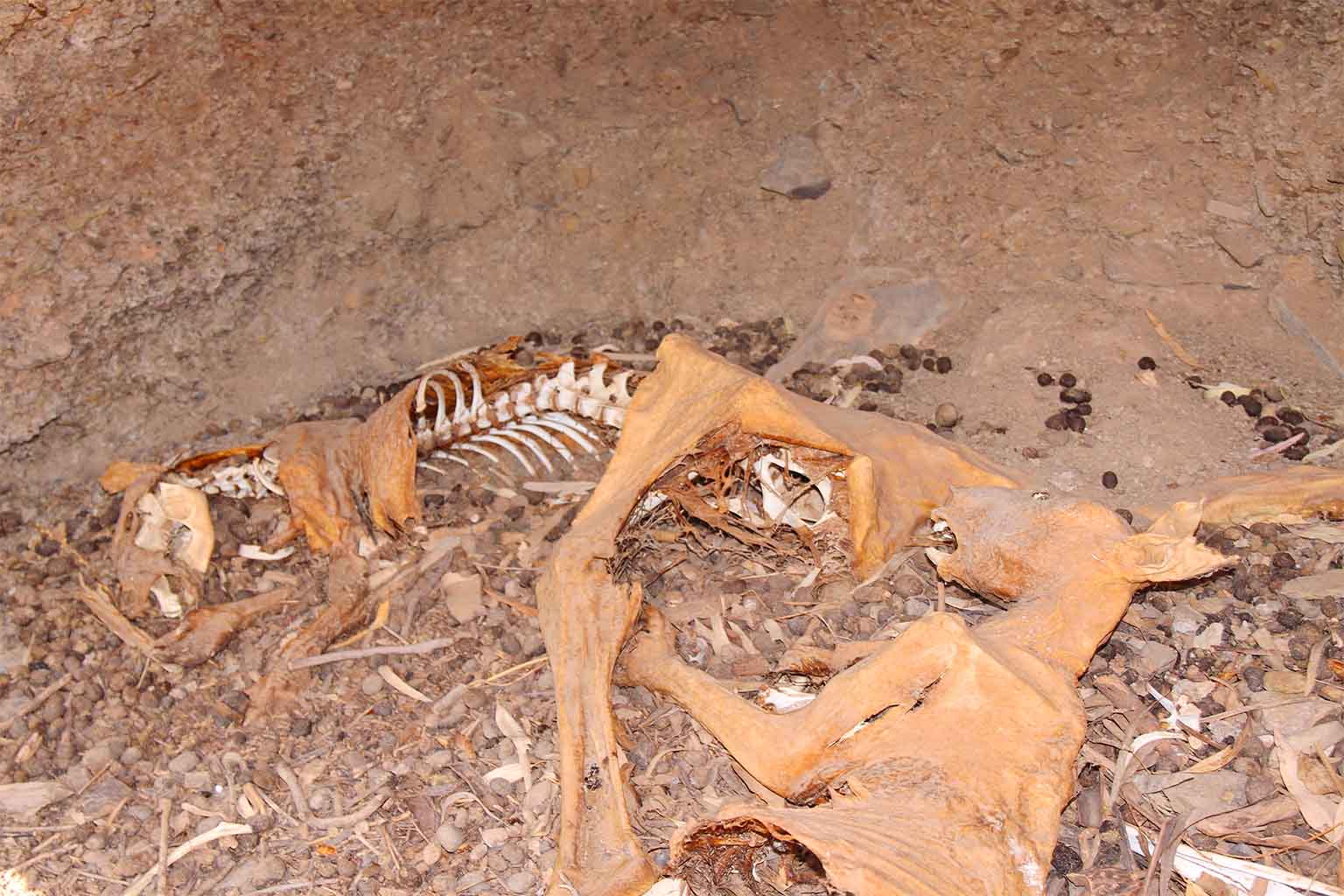
Peering back 50,000 years might seem like science fiction, but thanks to a stunning fossil find in Victoria, Australia, we’re getting a clearer picture of a truly giant kangaroo that once roamed the continent. This isn’t your everyday kangaroo hopping across the outback — it’s a prehistoric marvel, frozen in time, revealing secrets about a lost world.
A remarkable discovery in Nightshade Cave
In the shadowy depths of Nightshade Cave, tucked away in eastern Victoria, paleontologists have unearthed an incredibly well-preserved fossil of Simosthenurus occidentalis, a giant short-faced kangaroo. This remarkable skeleton dates back nearly 50,000 years and paints a vivid portrait of Australia’s Pleistocene megafauna, beings that once dominated the landscape but have long since vanished.
The find is the result of a decade-long project by the team at Museums Victoria Research Institute. What started out as a casual discovery by a local caving group in 2011 blossomed into a full-blown excavation and research initiative. The fossil’s completeness, especially an intact skull and nearly perfect anatomical alignment of the spine, limbs, and pelvis, is unprecedented in Australian fossil history. As Dr. Tim Ziegler, collection manager at Museums Victoria, mentioned, it was like stepping back into a time capsule where every bone had a story to tell.
The rise and fall of short-faced kangaroos
Simosthenurus occidentalis belonged to the now-extinct group known as sthenurine kangaroos, or short-faced kangaroos, which are quite different from the modern bouncy icons we’re used to. These ancient marsupials had broad, deep muzzles and powerful jaws—features that set them apart.
These kangaroos thrived as Australia’s landscape transformed over millions of years. According to Dr. Ziegler, they first appeared in the fossil record around 10 to 15 million years ago during the transition from lush rainforests to drier habitats. This evolutionary journey peaked during the late Pleistocene epoch, roughly 500,000 years ago, as Australia’s climate grew increasingly arid.
However, around 45,000 years ago, a devastating extinction pulse wiped out these giants alongside as much as 85% of Australia’s megafauna. This rapid disappearance marked a sharp turning point, reshaping ecosystems and dramatically thinning the ranks of Australia’s prehistoric fauna.
Exceptional fossil preservation unlocks new insights
What sets this discovery apart is not just the age, but the astonishing preservation of the skeleton. Unlike typical fossil finds that are usually fragmentary, this specimen includes the skull, vertebrae, shoulders, hips, limbs, and ribcage, all nearly in their original positions.
Dr. Ziegler recalls, “Seeing the skull with its deep muzzle and robust jaws, and then unraveling the rest of the skeleton, was a spectacle. Many bones were undisturbed, an extraordinary window into the past.” This completeness offers paleontologists a unique chance to reconnect with the creature’s physical form and even speculate on its lifestyle and movements.
To truly appreciate this, one can watch Museums Victoria’s detailed excavation video on their YouTube channel, where experts explain the painstaking process of unearthing and preserving the fossil. It’s a fascinating glimpse into real-world science unfolding.
Did giant kangaroos walk instead of hop?
One of the most intriguing questions sparked by this find revolves around how these ancient kangaroos moved. We’re familiar with modern kangaroos’ signature hopping, but the structure of the Simosthenurus occidentalis skeleton — especially the spine and hips — suggests it was probably walking upright in a long-stride manner.
The evidence lies in the vertebral column from the juvenile specimen, which hints at an upright posture quite unlike today’s kangaroos. This invites a fresh perspective on marsupial mobility and raises questions about how environmental pressures shaped their evolution.
Experts from Museums Victoria are continuing this line of research to decode the mystery, hypothesizing that these kangaroos might have shared locomotion traits more akin to early humans than their bounding relatives—quite a captivating twist on our image of kangaroos.
Scientific context and wider significance
This discovery adds a vital piece to our understanding of Pleistocene fauna and extinction patterns. According to a 2023 study published by the Australian National University, rapid climate shifts combined with human activity likely drove the extinction of megafauna like Simosthenurus occidentalis across the continent. This fossil find, therefore, is more than just a skeletal curiosity; it’s a marker of environmental change and ecological loss.
Given the rarity of such fossils, the find also advances paleontological methods and underscores the importance of meticulous caving and excavation work. It serves as a reminder that beneath our feet, in places like Nightshade Cave, lie stories that can reshape what we know about Earth’s deep past.
If you’re eager to dive deeper into the details of this discovery, Museums Victoria has a comprehensive breakdown on their website: https://museumsvictoria.com.au.
Discoveries like this remind us of the rich and complex history of life on our planet and the ever-evolving story of survival, adaptation, and extinction. What do you think about the idea of giant kangaroos walking instead of hopping? Would love to hear your thoughts—feel free to share this story or leave a comment below!