


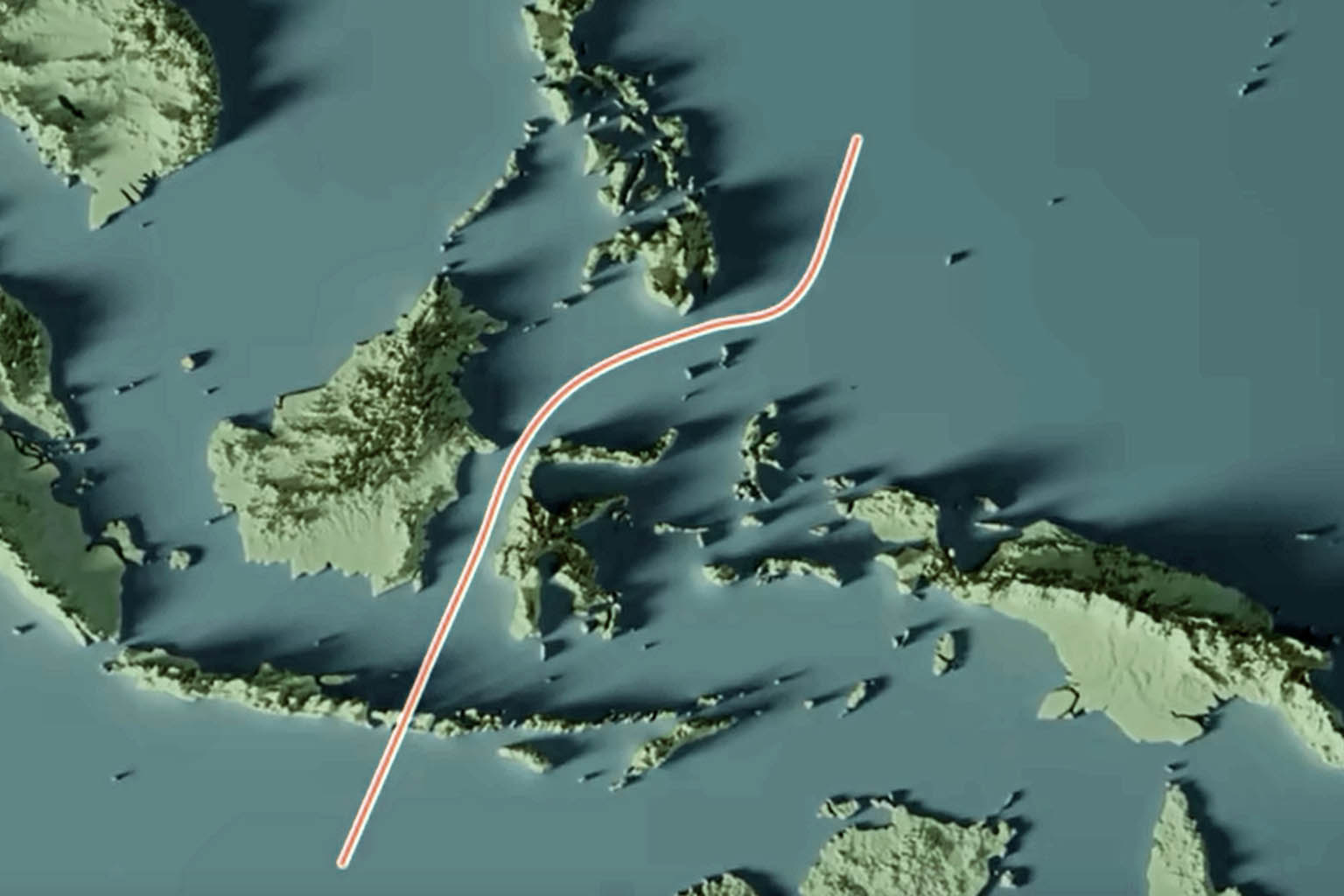
The Wallace Line has puzzled scientists for over a century—why can’t species from Asia and Australia cross this invisible boundary? Despite being separated by just narrow waterways, it remains a steadfast barrier, shaping the natural world in surprising ways.
Scientists have long been intrigued by this mysterious divide, which cleaves the ecosystems of Southeast Asia from those of Australia and New Guinea. Recent research is now peeling back layers of this enigma, offering fresh insights into why no species seems able to traverse the line. This fascinating story unfolds from deep geological history to the challenges of climate adaptation.
Decoding the Wallace Line’s enduring mystery
The Wallace Line runs through the sea channels of the Malay Archipelago, splitting two remarkably different biological worlds. On one side, realms of Asian forests teem with diverse tropical species; on the other, Australian fauna thrive, uniquely adapted to drier and cooler conditions. Despite their proximity, these species seldom cross paths, sparking curiosity and debate among biologists and ecologists.
Alfred Russel Wallace, a pioneer of evolutionary biology, first mapped this boundary in 1863, noticing the stark contrast — but scientists still struggle to fully explain why it remains such a formidable barrier. According to recent studies published in Science, the answers lie in a mix of historical geography, evolutionary pathways, and climate shifts.
Dr. Alex Skeels, an evolutionary biologist at the Australian National University, who led the latest research, explains that the Wallace Line is more than just a separator of landmasses—it represents a deep ecological divide shaped by millions of years of evolutionary history.
Ancient shifts that shaped Australia’s unique fauna
To understand the Wallace Line, you have to go back tens of millions of years, to a time when Australia was part of the ancient supercontinent Gondwana. As Australia drifted away from Antarctica, it caused profound changes to Earth’s climate. This separation allowed the development of the Antarctic Circumpolar Current (ACC), a powerful ocean current that drastically cooled global temperatures.
“This shift created a distinctly cooler and drier environment in Australia, which shaped the evolution of its native species,” Skeels remarks. In contrast, the tropical islands to the northwest remained warm and humid, providing a different evolutionary playground for Asian species.
As a result, animals from Asia evolved to thrive in tropical climates, making them better suited to the islands near the Wallace Line. Australian species, adapted to cooler and arid conditions, found it hard to make the jump. The line isn’t just a boundary — it’s the product of millions of years of climate-driven evolution and isolation.
Wallace Line and the future of biodiversity
Why should we still care about the Wallace Line today, especially as climate change accelerates? This ancient barrier offers vital clues about how species may respond—or fail to respond—to rapid environmental shifts.
As the world warms, ecosystems are pressured to adapt or relocate, and understanding species’ historical adaptability can help predict future movements. “We’re learning which species might thrive and which may struggle as climates change drastically,” says Skeels. This knowledge equips conservationists to better anticipate which ecosystems are vulnerable and need urgent protection.
For example, tropical species adapted to warmer climates might expand their range as temperatures rise, while others adapted to cooler conditions could face shrinking habitats. The Wallace Line reminds us that geographic and climatic barriers are integral to biodiversity—both historically and in our present climate crisis.
The Wallace Line in the spotlight
Scientists continue to study this invisible yet influential boundary, with tools like genetic analysis and climate modeling helping unlock its secrets. It’s a powerful reminder of how geography and climate shape evolutionary destiny.
For those eager to dive deeper, the detailed research papers led by Alex Skeels and colleagues shed light on how past climate events sculpted the distribution of species. Their work emphasizes the interplay between Earth’s shifting climate and the resilience and limits of life.
“This line is more than just a physical divide — it’s a testament to the power of climate and evolution to shape life,” Wallace once hinted, and modern science is proving him right.
Wallace Line’s invisible barrier, biogeographical divide, Southeast Asian species, Australian fauna evolution, Alfred Russel Wallace, Antarctic Circumpolar Current, climate-driven evolution, species adaptability and climate change, geographical and ecological boundary, tropical versus arid ecosystems, species migration limits, biodiversity conservation insights, ecological isolation, evolutionary history, climate impact on fauna, ongoing scientific research, species survival under climate pressure.
If you find the Wallace Line as intriguing as we do, why not share your thoughts or experiences with natural history? Your reactions and conversations help keep the story of Earth’s incredible biodiversity alive. What do you think is the most fascinating aspect of this invisible barrier? Drop a comment below or share this article with friends who love the mysteries of the natural world!