


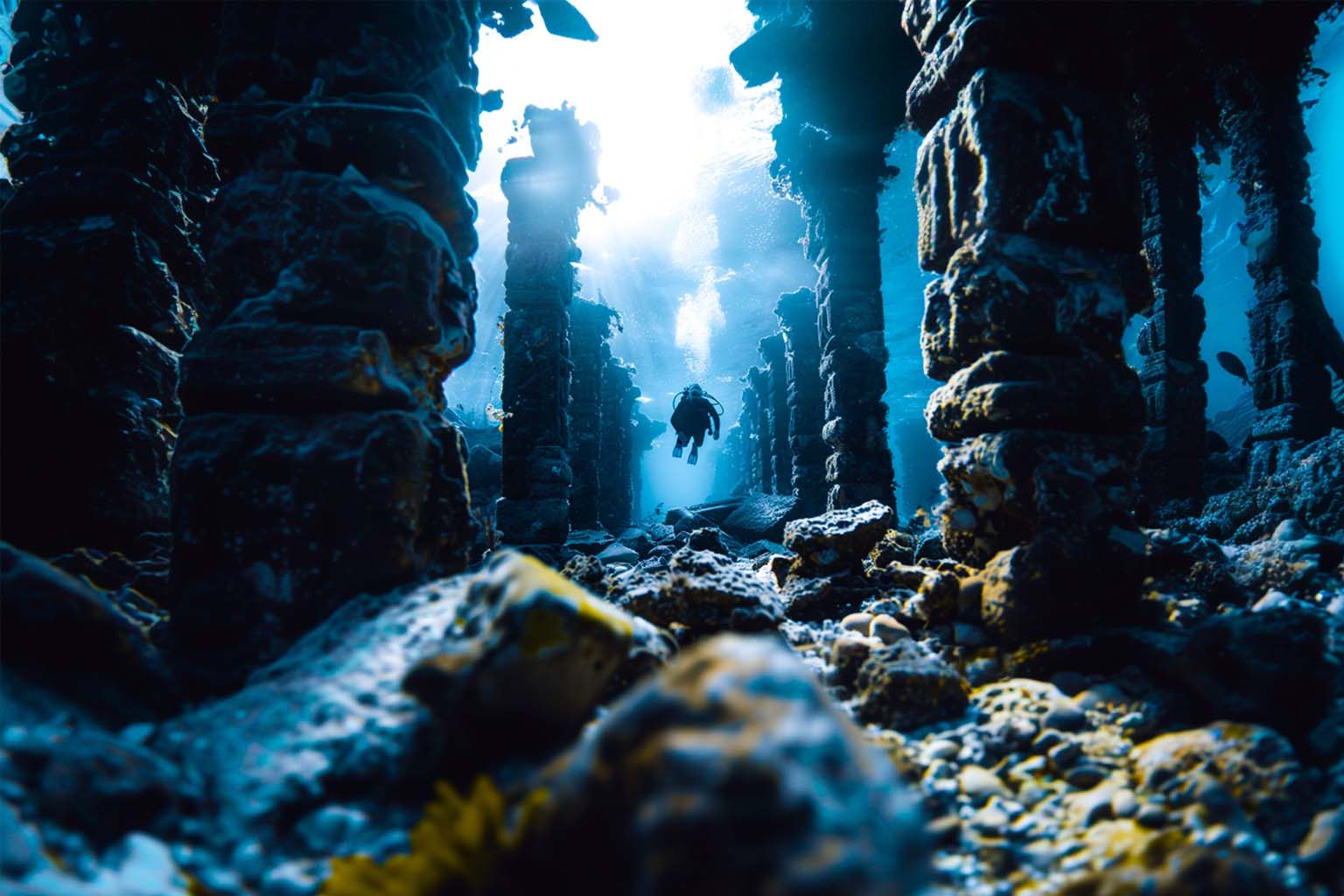
Scientists have uncovered an extraordinary “lost city” deep beneath the ocean’s surface—an extraordinary place unlike anything ever encountered before. This mysterious underwater landscape houses towering structures and thriving microbial communities that defy what we know about life surviving in extreme conditions.
Nestled about 2,300 feet below the waves, near the summit of an underwater mountain west of the Mid-Atlantic Ridge, the Lost City Hydrothermal Field is a scientific marvel. Since its discovery in 2000, it has intrigued researchers with its unique geological and biological characteristics. It’s not your typical sunlit ecosystem; here, life flourishes powered by chemical energy rather than sunlight, opening a window into Earth’s ancient past and even the potential for extraterrestrial life.
A Hydrothermal Wonderland Unlike Any Other
The Lost City is a hydrothermal field formed where the Earth’s mantle reacts with seawater, creating towering chimneys of carbonate rock. What makes this place truly special is that it’s been venting hydrogen, methane, and other gases at low temperatures around 104°F (40°C) for over 120,000 years. Such longevity is rare in hydrothermal systems, making it an invaluable natural laboratory for studying long-term geological processes.
This unusual chemical environment feeds diverse microbial communities that thrive without oxygen, relying on hydrocarbons as sources of energy. Small creatures like snails and crustaceans call the area home, proving that life can adapt to thrive in even the harshest places. The Lost City is not just a geological curiosity—it’s a thriving, breathing ecosystem sustained by geochemical energy sources that don’t depend on sunlight.
Clues to Life’s Origins and Otherworldly Ecosystems
William Brazelton, a microbiologist specializing in extreme environments, pointed out in 2018 that the Lost City could be a blueprint for ecosystems beyond Earth. “This is an example of a type of ecosystem that could be active on Enceladus or Europa right this second,” he explained, referring to the icy moons of Saturn and Jupiter. These moons host subsurface oceans that might harbor habitats similar to the Lost City’s vents.
Furthermore, the hydrocarbon-rich chemistry of this environment offers valuable glimpses into how life on Earth may have originated billions of years ago. In 2024, researchers retrieved a 4,160-foot-long core sample of mantle rock from the region, aiming to better understand the chemical reactions that generated organic building blocks essential for life. According to a 2024 study published in Nature Geoscience, such deep-sea hydrothermal processes possibly represent one of the earliest known cradles of life, predating photosynthesis and atmospheric oxygen.
The Lost City’s Scientific Wonders Are Under Threat
Despite its immense scientific value, the Lost City faces serious risks. In 2018, Poland secured mining rights around the deep-sea areas near the Lost City, raising alarms among conservationists. Although the Lost City itself lacks precious minerals, mining activities could disturb the fragile surrounding ecosystem in unpredictable ways. Scientists warn that sediment plumes or chemical discharges caused by mining could easily spread over the habitat, potentially disrupting the delicate microbial and animal communities.
Calls to protect the Lost City are growing louder. Many experts advocate for designating this exceptional site as a World Heritage location to preserve its integrity for future study. Protecting such rare ecosystems is essential—not only because they shed light on Earth’s earliest life forms but also because they may hold the key to understanding where life might exist elsewhere in our solar system.
Unlocking Mysteries of Life, Beneath the Waves
The Lost City Hydrothermal Field stands as a testament to life’s tenacity, an oasis thriving in a seemingly inhospitable undersea desert. It challenges our assumptions about where and how life can exist, with implications spanning from Earth’s deep past to the potential for life on distant moons.
For anyone fascinated by natural wonders, scientific exploration, or the search for life beyond Earth, the Lost City represents a beacon of discovery. Its towering carbonate chimneys, bubbling vents, and microscopic dwellers remind us how much there is still left to uncover beneath the ocean’s depths.
Have you ever wondered what secrets lie hidden on the ocean floor? Share your thoughts and let us know how the story of the Lost City inspires your view of life’s resilience and cosmic possibilities!