


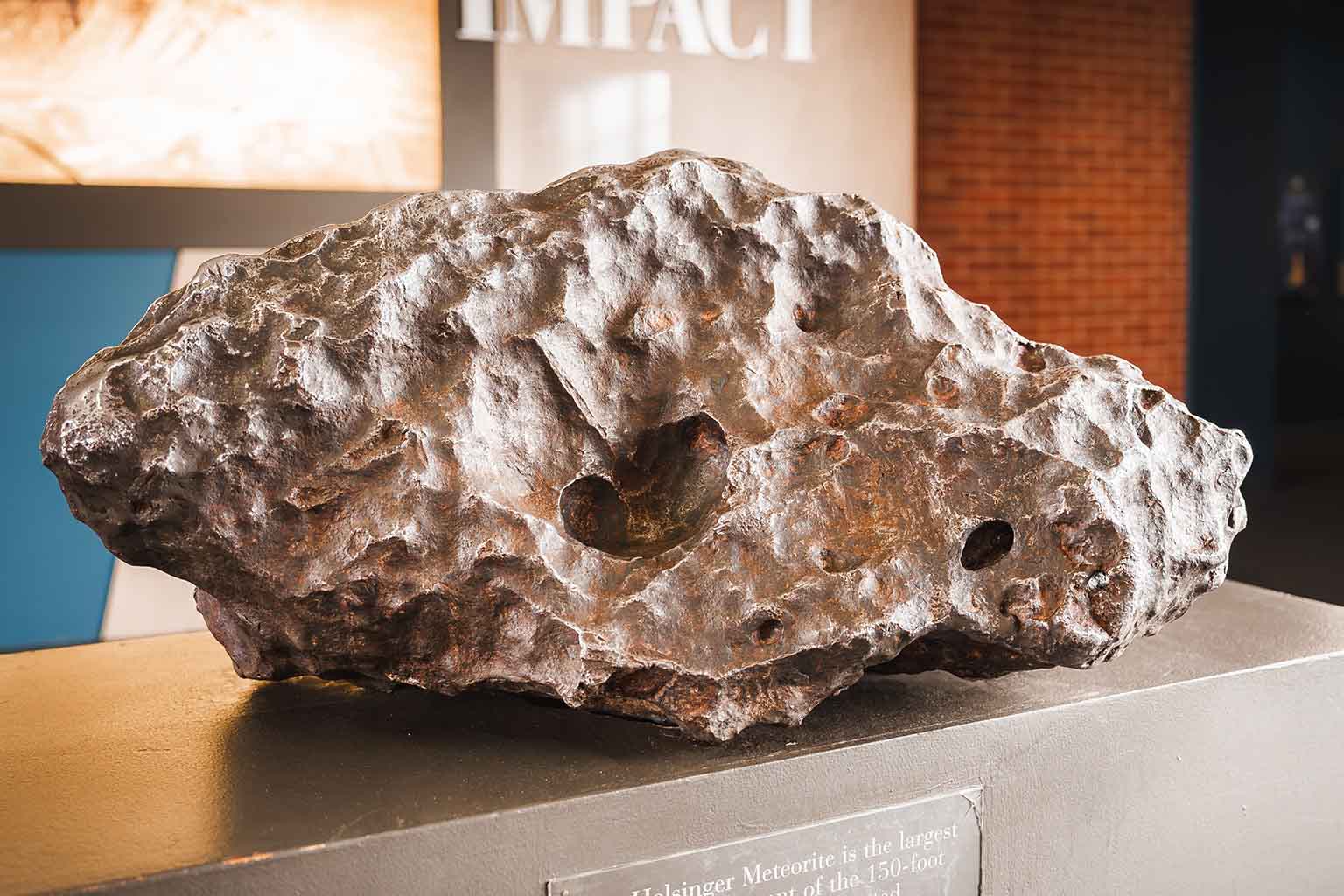
He thought he was buying a simple meteorite fragment, but it reveals proof of water on Mars billions of years ago.
A Meteorite That Changed Everything
It started as an ordinary purchase. A collector in Morocco thought he was buying just another meteorite fragment. But this small, unassuming rock, found in the Sahara Desert in 2011, turned out to be so much more—a time capsule from Mars revealing secrets about the Red Planet’s ancient past, including the undeniable presence of water. Known affectionately as Black Beauty, this meteorite has stunned scientists and rewritten what we know about Mars’s early environment.
The Collector’s Find and Its Unexpected Journey
The story of Black Beauty begins with a group of Sahrawis who discovered the meteorite in the remote stretches of the Western Sahara. Its dark, rough surface caught the attention of collectors who swiftly moved the rock into private hands. Sold to an American buyer, it soon stirred curiosity in the scientific community. Officially labeled Northwest Africa 7034 (NWA 7034), this meteorite is far from ordinary. Its unique combination of ancient and younger minerals suggested it was once part of Mars’s crust—offering a rare peek at the planet’s evolution.
Unlocking Mars’s Ancient History
At just 320 grams (about 11 ounces), the meteorite carries within it a mineral grain that is truly astonishing: zircon. This tiny grain, dating back an incredible 4.45 billion years, is one of the oldest Martian minerals ever discovered. That’s a window into a time when Mars wasn’t the cold, desolate planet we picture today. Instead, it was more dynamic, with geological activity that could sustain liquid water.
What’s even more compelling is what the zircon contained—microscopic traces of magnetite, an iron oxide associated with hot water and oxidizing environments. This tiny clue provides robust evidence that Mars once harbored hydrothermal conditions, places where hot, mineral-rich water circulated beneath the surface.
What This Means for Life on Mars
The presence of magnetite crystals formed through hydrothermal activity paints a vivid picture of Mars billions of years ago. It’s a world where liquid water flowed beneath the surface, actively shaping its geology and potentially creating habitable niches. The implications here are huge—if Mars had hot water moving through its crust, it may have had the essential ingredients for microbial life long before Earth was even fully formed.
For years, scientists have debated Mars’s potential to sustain life. Now, discoveries like Black Beauty lend strong support to the idea that water and possibly life-friendly environments existed from the planet’s earliest days. This not only challenges earlier timelines but also broadens our understanding of where life might thrive in the cosmos.
Expert Insights and Scientific Backing
NASA researchers have affectionately dubbed NWA 7034 “Black Beauty” due to its unusual dark coloration and unique composition. According to a detailed report from Scientific American, studies show how the zircon’s contained magnetite acts as a direct marker of hydrothermal activity. This adds weight to theories that Mars once boasted warm, wet environments.
In fact, a 2024 study led by Dr. Lisa Nguyen, a planetary geologist, highlighted how hydrothermal systems are crucial for early planetary habitability. She explained in a recent interview, “Finding magnetite in such an ancient Martian zircon suggests that the planet had stable, long-lasting water-rock interactions—prime conditions for life’s emergence.”
A Rare Glimpse Into Martian Geology
Unlike most Martian meteorites, which come from younger, volcanic sources, Black Beauty is composed of ancient crustal material. Its diverse mineral makeup lets scientists piece together a more complex history of Mars’s surface and internal dynamics. The meteorite’s study has already inspired new missions and research focused on exploring Mars’s early watery environments.
This expert insight helps contextualize the findings for those curious about the ongoing search for life beyond Earth.
Why Black Beauty Matters Today
Black Beauty is a prime example of how seemingly simple finds can revolutionize scientific understanding. By revealing water’s ancient presence on Mars, it opens doors to new questions: How widespread was water? Did microbial life actually develop? What does this mean for future Mars missions?
As we prepare for human exploration of Mars, these discoveries sharpen our vision of what awaits. They remind us that even a small rock can carry the story of an entire planet’s past, shedding light on our place in the solar system.
—
Have you ever wondered what secrets rocks might hold about other worlds? Share your thoughts on Black Beauty’s astonishing story, or drop your questions below—let’s keep the conversation about Mars and space exploration buzzing!