


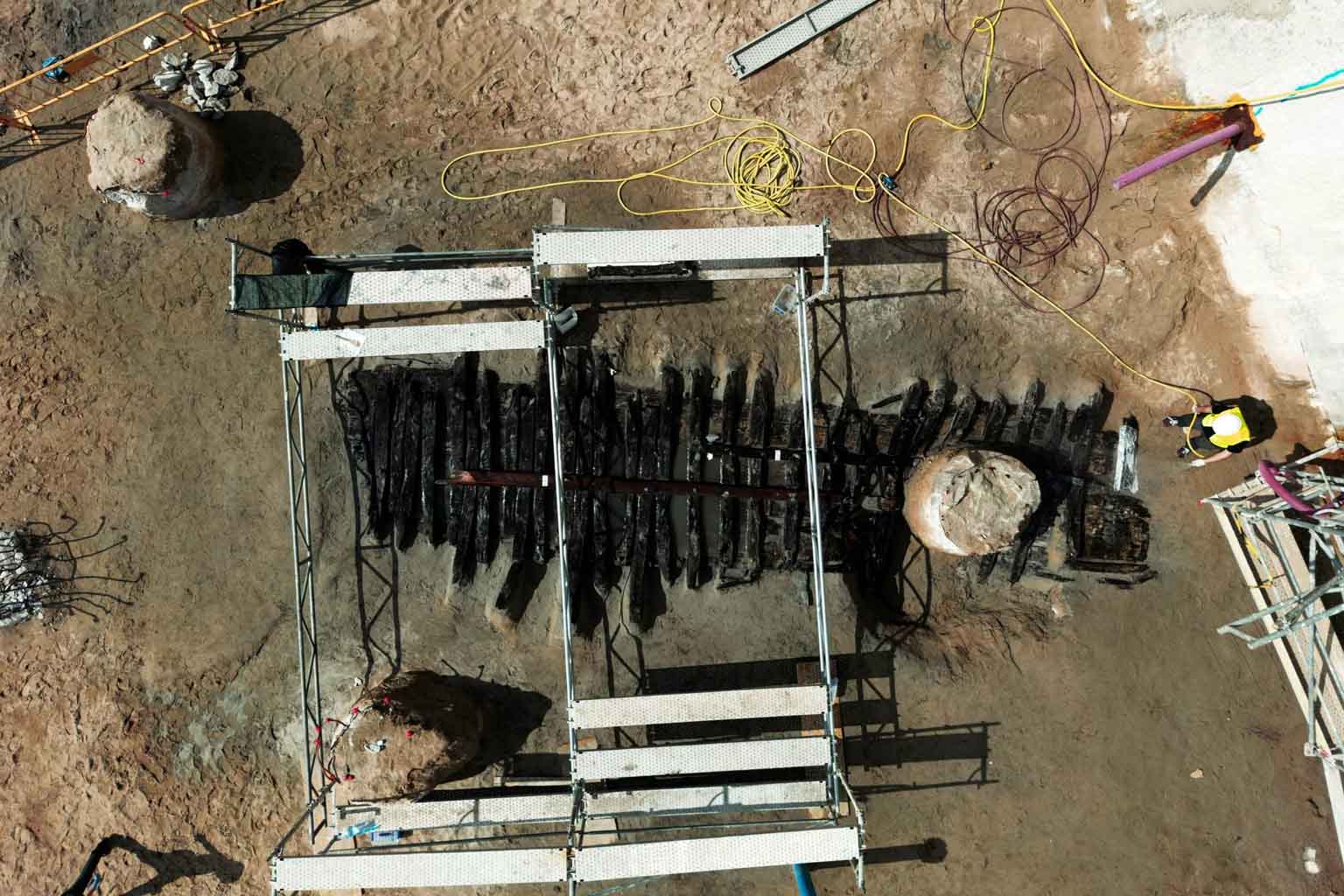
A 500-year-old shipwreck discovered beneath the lively streets of Barcelona is rewriting the city’s maritime story in ways no one expected. Buried nearly 18 feet underground, this medieval vessel, called Ciutadella I, is not just an archaeological gem but a vivid time capsule, offering fresh insights into the bustling seafaring life of the late Middle Ages.
As a senior web editor passionate about history and SEO, I’m excited to share the full story behind this remarkable find and why it matters beyond just the hull and planks.
The Skeleton-Built Marvel of Medieval Barcelona
Ciutadella I dates back to somewhere between the 15th and early 16th centuries, placing it right in the thick of a transformative period for Barcelona’s docks and trade routes. Measuring about 33 feet (10 meters) long and 10 feet (3 meters) wide, the ship showcases skeleton construction — a shipbuilding method where the structural frame is first assembled, later followed by adding the outer hull.
This approach was standard in Mediterranean shipyards at the time, marking a significant era when maritime technology evolved alongside the city’s growing prominence as a trade hub. Notably, the completion of Barcelona’s first artificial docks in 1439 was a monumental shift, and Ciutadella I likely sailed those waters or similar ones, representing the craftsmanship and maritime culture of the era.
How Did It End Up Buried Under the City?
What’s truly fascinating is the ship’s final resting place. Located far from today’s shoreline, the area was submerged centuries ago. Lead archaeologist Santiago Palacios explains that Ciutadella I likely didn’t succumb to a violent storm or sudden sinking. Instead, it was gradually buried by shifting sands and coastal changes over centuries, preserved beneath layers of sediment.
This quiet burial challenges common assumptions about shipwrecks, suggesting that natural geological processes rather than disasters often play a role in such underwater archaeological finds. The preservation conditions have been so favorable that the ship’s remains provide unprecedented details for experts to study.
Delicate Preservation for Future Discovery
Since the discovery, a team of archaeologists has been carefully conserving the fragile remains. Using advanced 3D photogrammetry to document every curve and plank, they are ensuring nothing is lost before painstakingly dismantling the ship for analysis.
Some parts remain sealed under sand to protect them from decay, while others undergo treatment with polyethylene glycol — a waxy substance that replaces water molecules in the wood to prevent shrinkage and cracking. This method is well established in conserving ancient wood and has been used in other maritime finds globally.
By doing this, researchers hope to uncover the types of wood, the resins used, and unique tool marks that could reveal exactly where this vessel was built and what trade routes it navigated.
A Time Capsule Beneath Barcelona’s Streets
This shipwreck is only the latest layer of history uncovered at the site, which also revealed remnants of a Spanish Civil War air raid shelter, 18th-century fortifications of the Ciutadella, and the 19th-century fish market that gave the neighborhood its name. Together, these finds paint a rich tapestry of Barcelona’s urban evolution and changing identity over centuries.
Remarkably, Ciutadella I is only the second known seagoing vessel discovery in Barcelona—the first being Barceloneta I, unearthed in 2008 near Estació de França. Such finds are incredibly rare and provide invaluable clues to the maritime heritage of this region.
What Science Tells Us About the Past
Experts like Palacios are excited about what further scientific analysis will reveal. By studying the wood grain, resin traces, and tool scars, researchers can pinpoint the ship’s origins, the shipyard, and economic networks it served. According to a study in the International Journal of Maritime History, detailed analysis of such construction techniques aids in understanding maritime trade and naval technologies during pivotal historical periods.
This meticulous work opens a window into Barcelona’s past—not just how ships were built but how they sailed commerce, culture, and conquest across the Mediterranean.
Maritime Heritage Lives On Through Innovation
Today, the same ground where Ciutadella I lay forgotten is being reshaped into a hub for scientific innovation. There is something poetic about a *medieval ship* resting quietly under a modern city now dedicated to discovery and progress.
Barcelona’s buried maritime soul isn’t just history. It’s a living story, coming to life through labs, museums, and the imagination of a city reconnecting with its roots beneath layers of earth and time.
For a closer look at this incredible find and its archaeological journey, check out this insightful video
Curious what you think about this captivating window into Barcelona’s maritime past? Share your thoughts below, or pass this story along to fellow history buffs who’d love to sail back in time with Ciutadella I.