


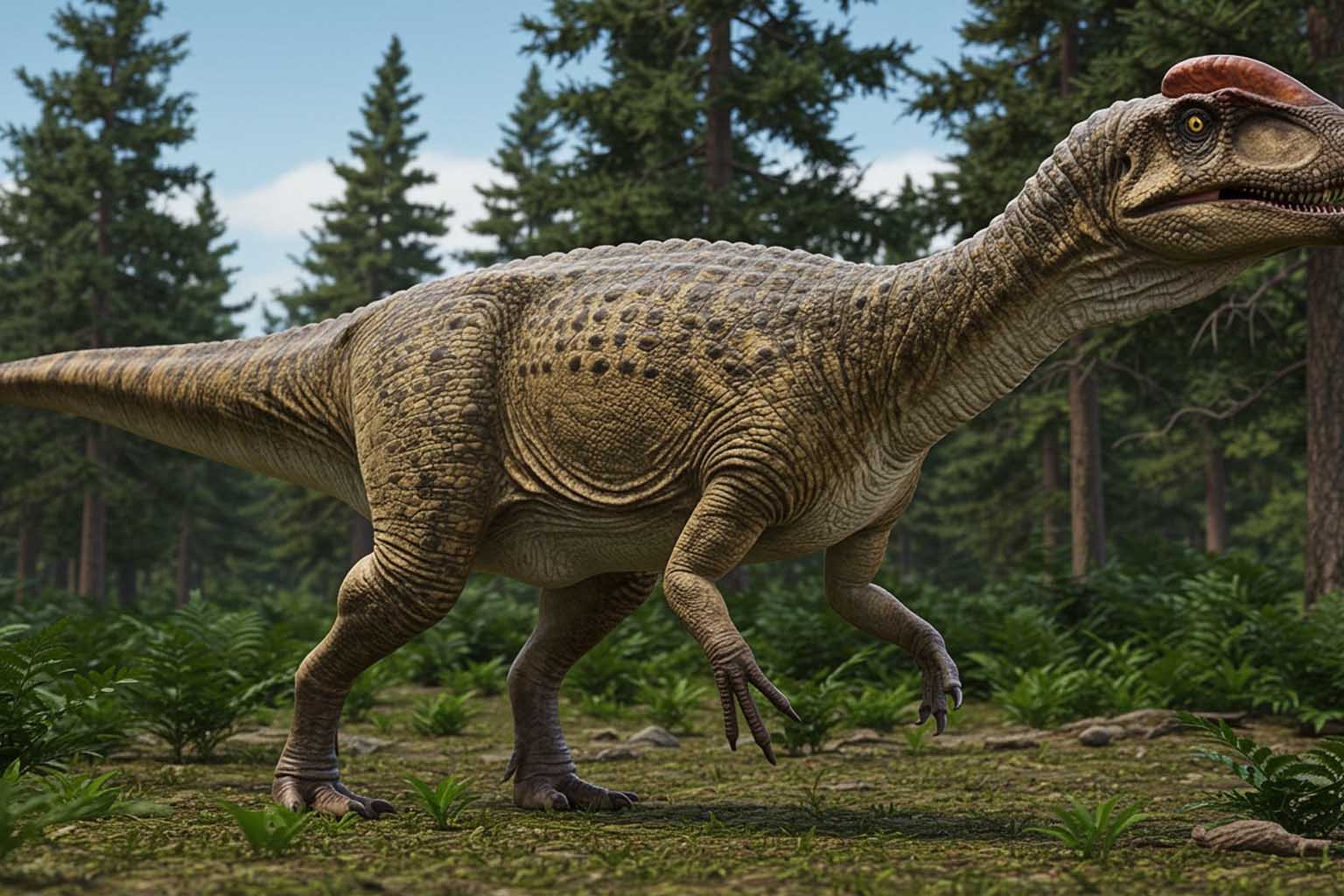
The earth has a way of keeping its oldest secrets tucked away—until the right moment comes along. Imagine uncovering a dinosaur species that’s been quietly lying in wait for 72 million years. That’s exactly what happened with Obelignathus septimanicus, a new dinosaur discovery from southern France that is reshaping how scientists understand dinosaur diversity in Europe’s Late Cretaceous period.
Unveiling a hidden dinosaur star
In the ‘Grès à Reptiles’ Formation, where fossilized mysteries have long collected, the remains of Obelignathus septimanicus have emerged as a fresh chapter in the dinosaur story. While originally thought to be part of the Rhabdodon genus, deeper analysis revealed this species deserves its own spotlight. This discovery was detailed in a recent study published in Nature, which highlights the dinosaur’s unique anatomy and evolutionary place.
What makes Obelignathus septimanicus so intriguing is how it adds layers to our understanding of dinosaur life in Europe’s ancient archipelago. These creatures were smaller, herbivorous dinosaurs with stocky builds, sharp, pointed snouts, and strong hind limbs paired with shorter forelimbs — a body perfectly built for their time and environment.
The diversity of rhabdodontid dinosaurs
Rhabdodontids, including Obelignathus, were a distinct group of ornithischians roaming Europe about 72 million years ago during the Late Cretaceous. Experts believe they were well adapted to their niche — herbivores with a sturdy frame, perfectly suited to browsing low vegetation. According to Dr. Czepiński and Dr. Madzia, over eight species of rhabdodontids have been identified so far, spanning from eastern Austria to southern France and northern Spain.
Yet, the classification and diversity of this group remain a puzzle. New fossils and refined analysis methods continue to challenge earlier assumptions, suggesting that more species might have lived side by side than originally thought. This adds a fascinating complexity to the ecosystems of prehistoric Europe, hinting at dynamic interactions among these dinosaurs.
Why Obelignathus changes the game
What sets Obelignathus apart is its evolutionary uniqueness. The specimen initially lumped under Rhabdodon septimanicus was re-examined using advanced techniques like multivariate and phylogenetic assessments. These analyses exposed traits that mark it as quite different from its previously assumed relatives.
This taxonomic update does more than rename a species; it shines a spotlight on how much there is still to learn about European rhabdodontids. Dr. Czepiński and Dr. Madzia emphasize the importance of further detailed studies, pointing out that many specimens remain poorly understood and that the known diversity could just be the tip of the iceberg.
What this means for dinosaur research
Discoveries like Obelignathus septimanicus are crucial for paleontology, helping to fill gaps in the history of life on Earth. According to a study from the Institute of Paleobiology, these rhabdodontids provide a window into how isolated environments like islands and archipelagos influenced evolution during the Late Cretaceous. This suggests that Europe’s ancient landscape was more biologically diverse and complex than previously recognized.
The broader scientific community sees these findings as a step forward in reconstructing the ecosystems of the past, which in turn helps us understand climate shifts, extinction events, and species adaptation over millions of years.
If you want to peek deeper into dinosaur diversity or learn more about how scientists are decoding the past, the original Nature publication is a great place to start: Nature article on Obelignathus septimanicus.
Have you ever wondered what it feels like to uncover a secret that’s millions of years old? This story is a reminder that the past is never really gone—it just waits patiently for us to discover it. If this sparked your curiosity or if you have your own fossil stories, share your thoughts below or pass this fascinating find along to friends who love a good prehistoric mystery!