


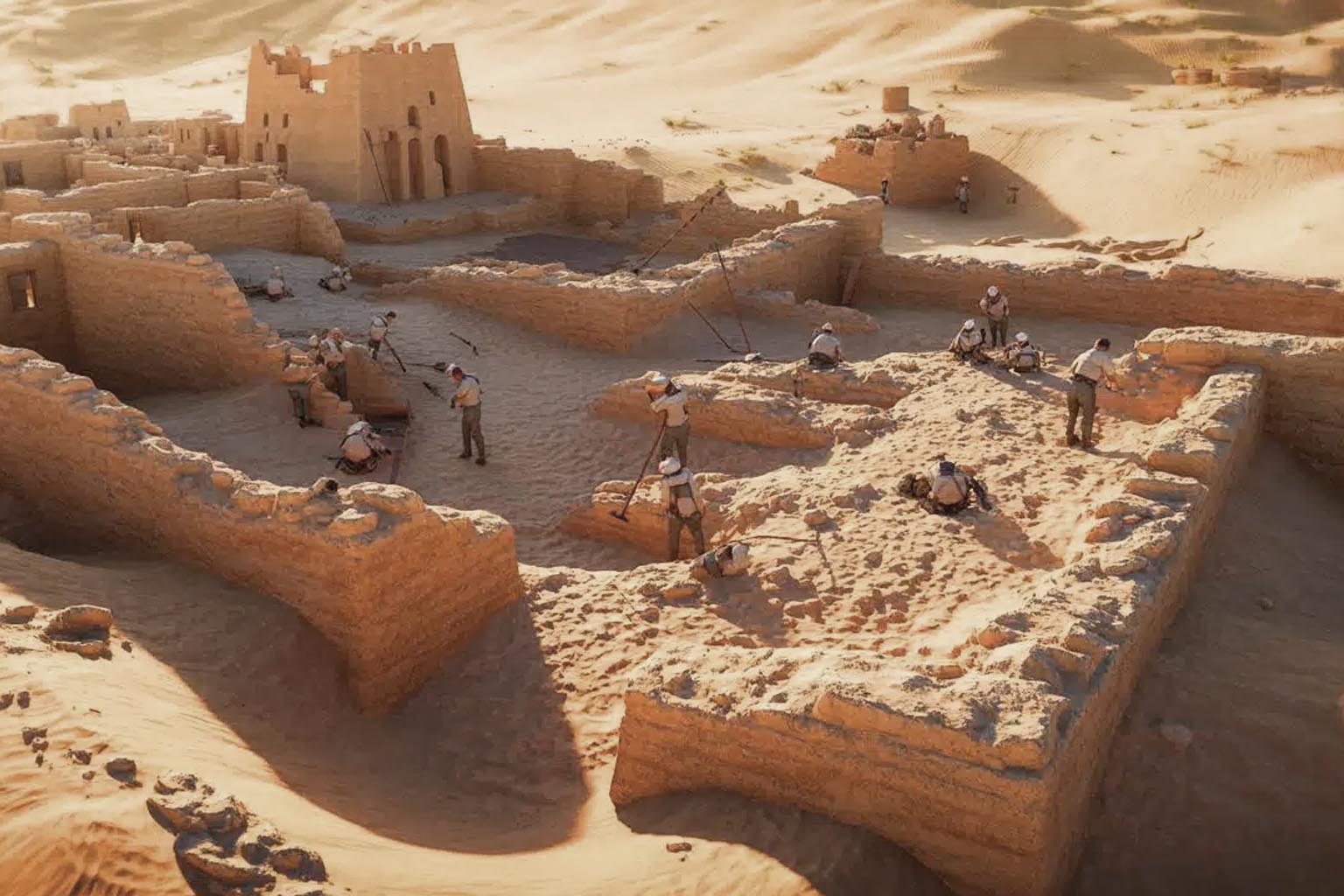
Archaeologists have unveiled a remarkable Roman-era fortress in Sinai, offering fresh insights into Egypt’s ancient military strategies. This fascinating discovery not only reveals the defensive might of ancient Egypt but also sheds light on how vital the Sinai Peninsula was as a strategic gateway.
The excavation at Tell Abu Seifi in Northern Sinai has brought to light well-preserved soldiers’ quarters, monumental fortifications, and defensive trenches dating back to the reigns of Emperors Diocletian and Maximian. These findings are transforming our understanding of Roman military presence in Egypt and the region’s historical role in defense and trade.
The Roman Military Footprint in Sinai
At the heart of the discovery are the Roman soldiers’ quarters and military structures, which demonstrate the stronghold’s role as part of an integrated defense system. The fortress was essential in protecting Egypt’s eastern borders against invasions and controlling vital trade routes. Mohamed Abdel Badi, Head of the Egyptian Antiquities Sector, explained that the fortress was part of a larger strategic vision that combined military readiness with industrial production.
One key aspect of this vision is an impressive 36-foot-wide road paved with large limestone slabs running over 328 feet across the site. This road connected the fortress’s eastern gate to the heart of the settlement, facilitating rapid troop movements and logistics. The quality and scale of this road underscore the importance the Romans placed on maintaining control over the Sinai region.
Transition from Fortress to Industrial Center
Interestingly, the Tell Abu Seifi site also reveals how its military function evolved over time. Archaeologists discovered four large ancient kilns used for producing quicklime, a material crucial for construction and industrial activities. This marks a shift from purely military purposes to an industrial hub by the later stages of the Roman era.
The presence of these kilns indicates that the fortress was not simply a defensive installation but also a vibrant economic center. This dual purpose reflects the Romans’ sophisticated approach to territorial control, blending defense with economic sustainability—a practice seen in other Roman frontier zones.
Unearthing Older Fortifications Beneath Roman Walls
Adding a new layer of intrigue, the archaeological mission led by Dr. Hisham Hussein uncovered the foundations of an even older fortress beneath the Roman structure. The preliminary findings suggest this predecessor may date back to periods before the Ptolemaic or Roman presence.
Dr. Hussein emphasized the importance of this discovery, saying, “Uncovering the four corners of an older fortress opens a new chapter in understanding Sinai’s military history.” The older fortress may reveal unique architectural styles and defense tactics from an earlier era, highlighting Sinai’s continued strategic significance over millennia.
Sinai: Egypt’s Ancient Frontline Defense
Experts agree that Sinai’s fortresses played a crucial role in Egypt’s defense strategy throughout many historical periods. Dr. Mohamed Abdel Maqsoud noted that “the kings of Egypt were always committed to building or restoring fortresses in Sinai because the region was Egypt’s eastern gateway.” This insistence on maintaining strongholds ensured control over vital trade routes and protected Egypt from external threats.
Beyond military functions, these fortresses served as centers for planning and economic activity, securing Egypt’s influence across the Mediterranean and linking African, Asian, and European worlds. The Tell Abu Seifi site offers a rare glimpse into how Egypt’s military and economic policies intertwined, with Sinai as a critical fulcrum.
“Cities of Sinai were fortified throughout different historical eras.” – Dr. Mohamed Abdel Maqsoud
Contextualizing the Discovery
This excavation adds a significant piece to the puzzle of ancient Egyptian and Roman military history. According to a 2019 study by Live Science, Roman fortresses in strategic border regions often evolved into centers of both military and economic power. The Sinai discovery fits this pattern and highlights the long-standing military legacy of the peninsula.
A Living History Waiting to Be Fully Told
The continued excavations at Tell Abu Seifi demonstrate how much more there is to uncover about Sinai’s role in the broader history of Egypt. Every new shard, wall, or pathway unearthed enriches our understanding of how military, economic, and cultural forces shaped this vital region.
As Egypt’s eastern gateway, Sinai’s fortresses stand as silent witnesses to the empire’s resilience and strategic planning. The site’s mix of military quarters, roads, and industrial facilities reflects the complexity and adaptability of ancient civilizations surviving at the crossroads of continents.
If you find these revelations about Egypt’s military heritage as fascinating as we do, share your thoughts and insights below. What do you think these discoveries tell us about the ancient world’s approach to defense and survival? Your ideas help keep history alive and engaging for everyone.