


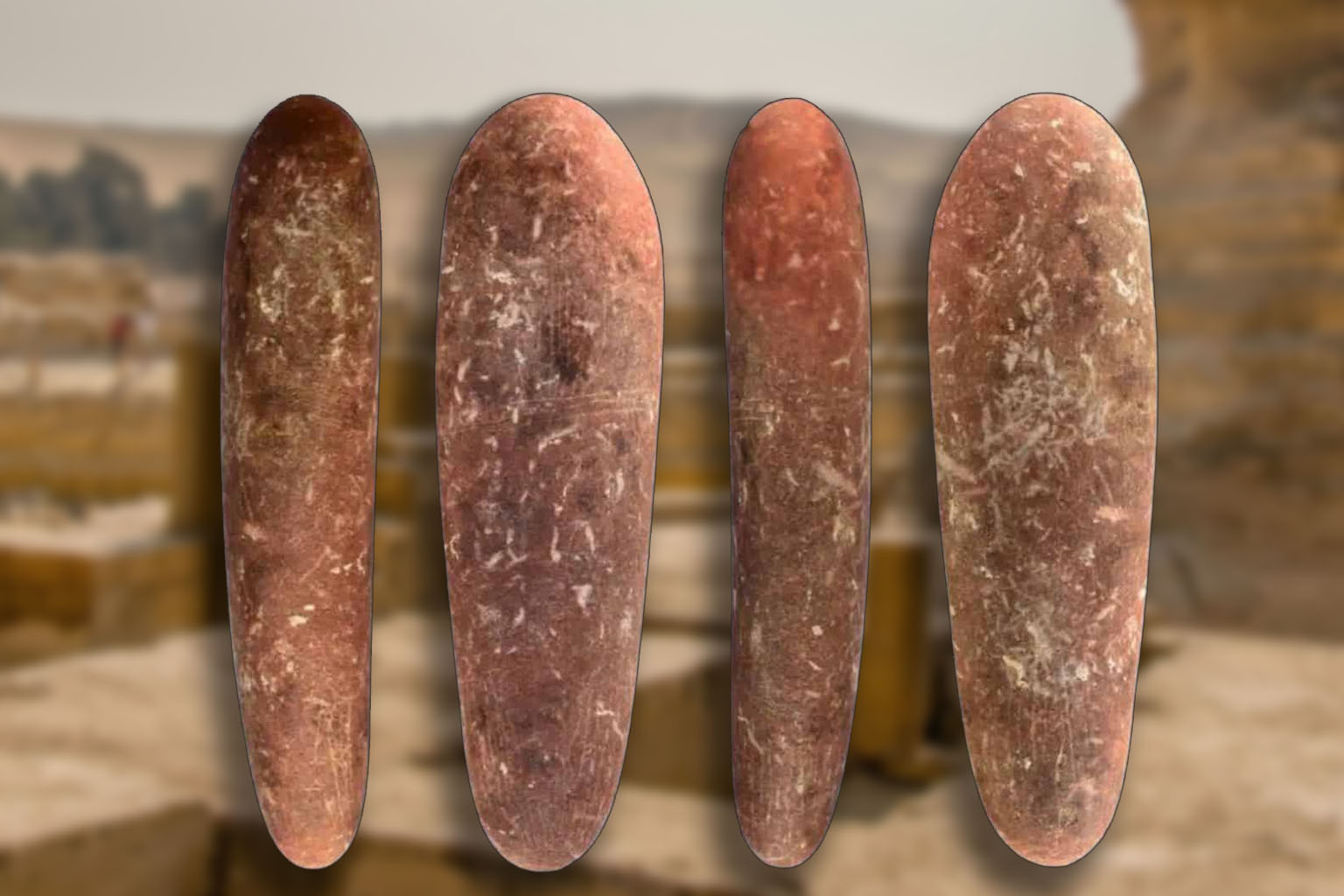
In the dark recesses of a cave in Azerbaijan, an extraordinary 8,000-year-old sandstone figurine has emerged, reshaping our understanding of early human culture. This faceless artifact offers a rare and poignant glimpse into the artistic expression and symbolic life of our Mesolithic ancestors. As archaeologists piece together its story, the discovery opens a compelling chapter on the transition from nomadic hunter-gatherers to settled agricultural communities in the ancient South Caucasus.
Unearthing a Mysterious Mesolithic Figurine
In the Damjili Cave of Azerbaijan, researcher Ulviyya Safarova and her team uncovered a unique figurine dating back to between 6,400 and 6,100 B.C. This small sandstone human figurine stands out because it remarkably lacks any facial features, an uncommon trait that puzzles archaeologists. Despite its simplicity, the artifact is meticulously detailed, showing a clearly defined hairstyle and a distinctive belt. Such features suggest deliberate artistic choices rather than crude craftsmanship.
Its precise function remains a subject of debate, but the absence of a face combined with the gender-neutral form leads experts to believe it may have had symbolic or ritualistic importance. Found beneath layers of ash and soil, the figurine has been exceptionally well preserved. Traces of reddish pigmentation hint at possible decorative paint, though further analysis found no conclusive evidence that it was ever painted.
Scientific Techniques Reveal Cultural Transitions
To unlock the mysteries locked in this artifact, the research team applied advanced computed tomography, X-ray fluorescence, and scanning electron microscopy—methods that reveal its material composition and intricate details invisible to the naked eye. These analyses showed clear distinctions from Neolithic figurines found nearby, signaling a unique artistic tradition during a time of sweeping cultural change.
The figurine’s uniqueness suggests it belongs to a distinct cultural phase marking the transitional period between the Mesolithic and Neolithic eras. This transition was pivotal: human societies were shifting from foraging lifestyles toward agriculture, pottery making, and permanent settlements. The artifact thus embodies a crucial moment when cultural expressions evolved alongside social transformations.
Shedding Light on the Neolithic Shift in the South Caucasus
Archaeologists studying the Damjili site view this figurine as a lens into the slow and complex process of Neolithization—the gradual adoption of farming and new technologies influenced by the Fertile Crescent region. Unlike sudden revolutions, this transformation unfolded over several millennia, as communities in the South Caucasus absorbed external influences while maintaining traditional practices.
Interestingly, while pottery was flourishing in neighboring Fertile Crescent villages by the 7th millennium B.C., Damjili inhabitants clung to an aceramic lifestyle (without pottery) well into the early Neolithic. This highlights the nuanced paths societies took during the Neolithic, affirming that cultural shifts were neither uniform nor linear.
“The discovery at Damjili Cave provides an unprecedented window into the social and ideological fabric of Mesolithic communities facing the dawn of Neolithic life,” Dr. Ulviyya Safarova explained during a 2024 Archaeological Research in Asia symposium.
Symbolism Without a Face: What Does It Mean?
The figurine’s facelessness has invited many questions about its purpose and meaning. Without a defined identity, the figure might symbolize a universal archetype, perhaps a deity, ancestor, or cultural hero. Some scholars speculate that its lack of facial details could represent an early form of abstraction in art, reflecting collective identity over individuality.
The careful attention to hairstyle and adornment hints that these features carried social or spiritual significance. Given that no other similar human figurines have appeared in the region, this artifact possibly played an important role in religious ceremonies or community rituals, embodying shared beliefs and values.
The Damjili Cave: A Cultural Time Capsule
Excavations reveal that the cave was continuously inhabited from the late Mesolithic through the early Neolithic, making it a rare archive of human history and cultural evolution. The stratigraphic layers help archaeologists understand how early societies navigated external influences and internal innovation during a transitional era.
According to recent scientific literature, such as the Archaeological Research in Asia, the Damjili Cave findings illustrate how indigenous communities in the South Caucasus actively shaped their own path during early human civilization, rather than merely adopting technologies wholesale from neighboring regions.
Experts at the Max Planck Institute for the Science of Human History have noted that figurines like Damjili’s offer “direct insights into memory, identity, and spiritual life during critical cultural transitions.” This framing enhances our appreciation of how material culture reflects evolving human consciousness.
The discovery of this faceless, 8,000-year-old figurine is not merely an archaeological curiosity but a powerful testament to humanity’s earliest attempts to express complex social and spiritual ideas. Its story enriches our understanding of cultural evolution and invites us to reflect on the deep roots of art and symbolism in human history.
What are your thoughts on how our ancestors expressed community and spirituality through art? Share your reactions and join the conversation below!