


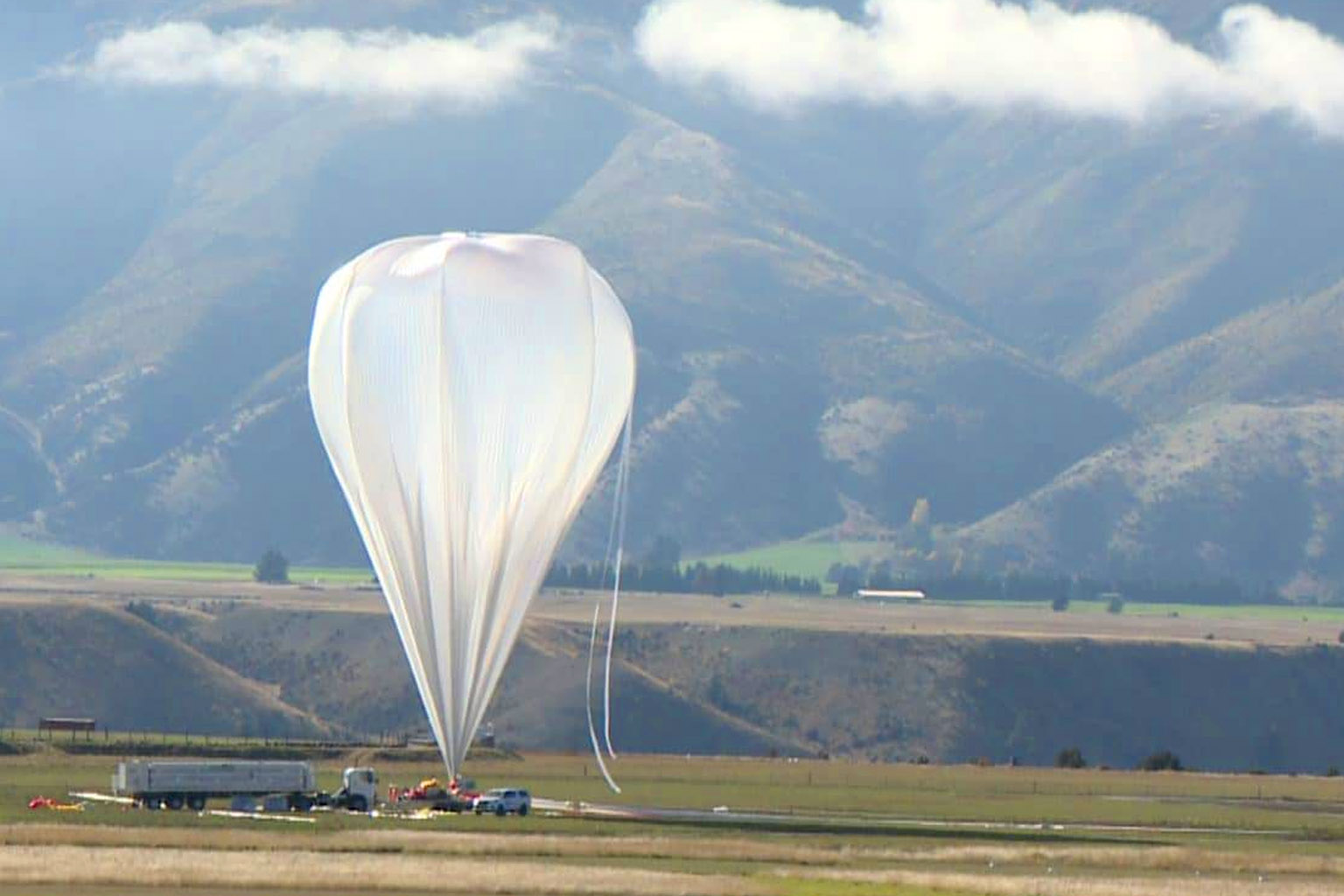
NASA’s groundbreaking super-pressure balloon just soared through the Southern Hemisphere for 16 days—a feat that could revolutionize atmospheric research. Imagine a balloon the size of a football stadium, drifting steadily at 21 miles high, collecting data without the hefty price tag of a rocket launch. This isn’t science fiction; it’s the future of long-term scientific exploration taking flight.
A giant leap in atmospheric science
NASA’s recent mission launched a massive super-pressure balloon from Wānaka, New Zealand, in mid-April 2025, marking a significant milestone in the study of Earth’s atmosphere. Unlike traditional high-cost missions using rockets, this balloon operates on a new technology that maintains stable altitude over extended periods. At roughly stadium-size when inflated, it ascended rapidly to 21 miles (33 kilometers), cruising steadily above the Southern Hemisphere for 16 days.
This flight was not just an impressive technical feat, but an ambitious test of new balloon technology designed to support future scientific tools in ways satellites cannot. Its ability to remain at a constant altitude under varying atmospheric conditions could transform how researchers gather long-term data on atmospheric dynamics.
Testing technology for extended missions
The core purpose behind this mission was to validate the super-pressure technology, a major advancement in balloon design. Traditional balloons often struggle with altitude control due to pressure changes, but this new design can withstand high pressure internally, allowing it to remain in a near-constant position for long durations.
According to Gabriel Garde, chief of NASA’s Balloon Program Office, “The mission’s early conclusion, prompted by a minor leak, did not overshadow its success in proving payload and flight system reliability.” Despite having to end the mission earlier than planned, the balloon’s steady performance showed strong promise for future months- or even years-long missions.
The onboard High-altitude Interferometer WIND experiment (HIWIND) played a crucial role during the flight, gathering detailed measurements of atmospheric winds. These insights contribute to a better understanding of the ionosphere—the electrically charged layer of Earth’s atmosphere important in GPS and radio signal propagation.
Environmental mindfulness in space exploration
NASA was intentional about minimizing environmental impacts. When the minor leak necessitated mission termination, NASA remotely directed the balloon to safely descend into a designated area of the Pacific Ocean. This planned “splash zone” ensured that the balloon’s payload, acting as an anchor, prevented it from drifting uncontrolled.
Even though hardware recovery was not possible, the team successfully transmitted integral data back to Earth, preserving the mission’s core scientific value. This thoughtful approach reflects NASA’s ongoing commitment to responsible research, balancing innovation with environmental respect.
Why the future looks bright for balloon-based science
This mission exemplifies a giant shift from traditional costly research ventures toward more sustainable, cost-effective alternatives. According to a 2023 report by the National Academies of Sciences, Engineering, and Medicine, long-duration balloon platforms have unique advantages in sustained atmospheric monitoring that complement satellite technologies (National Academies report).
This video from NASA vividly illustrates how the balloon achieves long-duration flight and why it matters for science and technology.
As we watch technology like NASA’s super-pressure balloon evolve, the potential to unlock new frontiers in atmospheric research becomes clearer. These advances not only deepen our understanding of Earth’s atmosphere but also pave the way for affordable, sustainable space science missions.
How do you think innovations like NASA’s super-pressure balloon will change our approach to exploring Earth and beyond? Share your thoughts, questions, or insights in the comments below—and don’t forget to share this story with fellow science enthusiasts!