


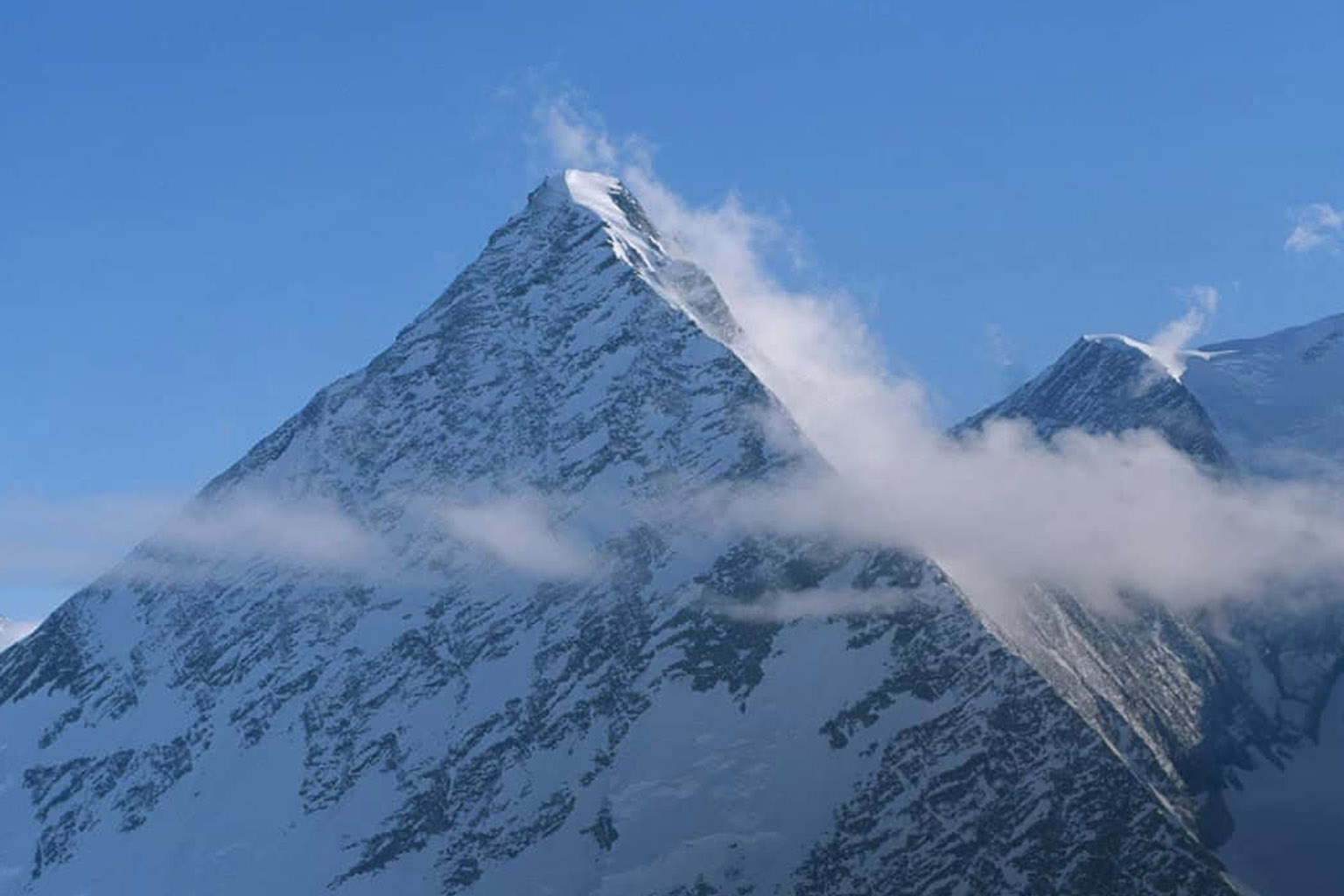
Hidden deep within Antarctica’s frozen expanse lies a mountain unlike any other—its razor-sharp, pyramid-like shape has sparked intrigue, awe, and even wild speculation. Is this formation a geological marvel crafted by nature itself, or could it be evidence of something more mysterious, like ancient civilizations or alien activity? The truth, grounded in scientific research, reveals a fascinating story of natural forces sculpting one of the most symmetrical peaks on Earth.
A Stunning Pyramid in the Ice
The pyramid-shaped mountain in Antarctica, nestled within the Ellsworth Mountains, towers over 4,150 feet (1,265 meters) high. Captured by satellite images that went viral in 2016, the peak’s near-perfect symmetry immediately reminded viewers of famous pyramids, stirring imaginations worldwide. Despite the sudden media spotlight, this formation has been known to scientists for years, with detailed research by the U.S. Geological Survey (USGS) as far back as 2007.
The Ellsworth Mountains stand as a record of geological history, home to many uniquely shaped peaks, but none quite as symmetrical as this pyramid. It’s the mountain’s four steep, equally sloping faces that make it a remarkable natural wonder, sparking both excitement and conspiracy theories about its origins.
Natural Forces Behind the Pyramid Shape
What creates such an astonishingly regular shape in a remote and harsh environment? The answer lies in geology and the relentless power of freeze-thaw erosion. Dr. Mauri Pelto, a respected environmental science professor at Nichols College, explains the process: water seeps into cracks in the rock during warmer parts of the day and freezes overnight. The ice expands, widening these fissures over time and eventually breaking off chunks of rock.
This natural erosion sculpts the rock faces into sharp, almost unnatural-looking slopes. While three sides of the peak erode similarly, the fourth — the eastern ridge — formed through slightly different geological forces, adding complexity to this captivating structure. Dr. Pelto’s insight helps us appreciate the patient art of nature crafting this pyramid-like peak over countless millennia.
“Pyramid shapes are not impossible — many peaks partially look like pyramids, but they only have one to two faces like that, rarely four.” — Eric Rignot, NASA Jet Propulsion Laboratory
Why Pyramid Shapes Fascinate Us
The fascination with pyramid forms isn’t just about appearances; it taps into something deeply embedded in human culture and perception. From the iconic pyramids of Egypt to other natural pyramid-shaped mountains worldwide, these geometric figures evoke mystery and awe.
The Antarctic pyramid’s rare feature of having four nearly equal faces sets it apart. According to Eric Rignot, a NASA research scientist and professor at the University of California, Irvine, few natural peaks form perfect pyramidal shapes; many mimic only parts of that form. This symmetry has fueled endless debates, ranging from scientific curiosity to wildly imaginative theories involving alien civilizations, despite clear geological explanations.
The Ellsworth Mountains: Antarctica’s Geological Archive
The Ellsworth Mountains are far more than just a backdrop for this striking peak. They offer a window into Earth’s history, preserving ancient fossils from the Cambrian period, over 500 million years ago, including trilobites—creatures that no longer exist. This geological richness underscores Antarctica’s role as a living laboratory for understanding the planet’s evolutionary and geological past.
The pyramid-shaped peak belongs to this long history of transformation. As erosion and tectonic movements shaped the range, they gradually carved peaks into forms that seem almost designed—testaments to the power of natural forces in creating awe-inspiring landscapes over immense time spans. The USGS has noted the area’s significance, making it a crucial site for ongoing geoscience research.
Dispelling the Alien Artifact Myth
The viral fame of this Antarctic pyramid ignited speculation about an alien artifact or lost civilization buried beneath the ice. However, experts like Eric Rignot swiftly dismissed these claims, emphasizing the peak’s entirely natural origins. This mountain’s resemblance to a human-constructed pyramid is purely coincidental and the product of well-understood earth processes.
Other natural pyramidal peaks exist, such as the famed Matterhorn in the Swiss Alps, similarly shaped through erosion. These examples prove that nature can and does sculpt striking geometric shapes without any human or extraterrestrial intervention. Geological education thus plays an invaluable role in helping the public separate fact from fiction.
The Worldwide Hunt for Natural Pyramids
The Antarctic discovery has sparked a renewed interest in finding pyramid-like natural formations on other continents. From the rugged Alps to the deserts of Central Asia, geologists and enthusiasts are eager to explore how different environmental forces shape uniquely geometric mountains.
While some formations result from erosion like Antarctica’s peak, others may arise from tectonic shifts or volcanic activity. Continuous advancements in remote sensing and satellite imagery have opened exciting new frontiers in exploring these geological oddities.
Understanding these natural wonders requires a blend of curiosity, scientific rigor, and respect for Earth’s geologic forces. As Dr. Pelto noted, the patient work of nature’s sculpting over eons has given rise to some of our planet’s most mesmerizing landscapes.
Have you encountered or heard about other natural pyramids? Share your thoughts, theories, or experiences in the comments below! Let’s celebrate the beauty of nature’s craftsmanship together.