


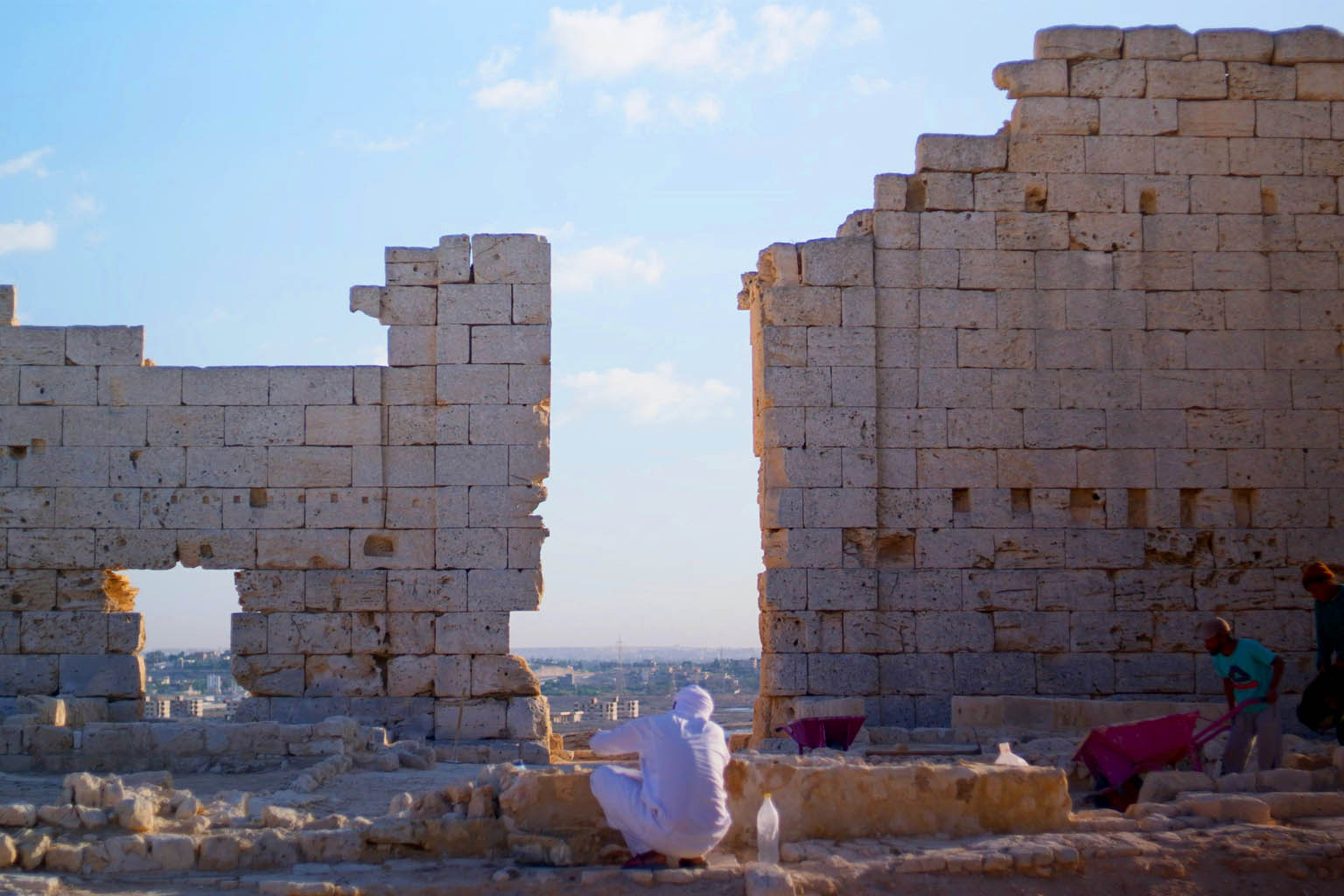
A mysterious ancient tomb in Greece, long believed to hold the remains of Alexander the Great’s father, Philip II, has just revealed surprising new secrets that could reshape our understanding of Macedonian history. What was once considered an undisputed royal burial is now shrouded in fresh intrigue—a story of mistaken identity, royal mysteries, and a touch of Roman-era burial customs.
Archaeologist Yannis Maniatis and his team from the National Center of Scientific Research Demokritos have challenged decades of assumptions with their recent study published in the Journal of Archaeological Science. Their findings reveal that the tomb’s occupants are far from who historians had expected, prompting new questions about who these ancient figures really were.
A Tomb Once Thought to Be Philip II’s Final Resting Place
Discovered in 1977 at Vergina, Greece, Tomb I had been almost universally accepted as the burial site of Philip II, the powerful Macedonian king and father of Alexander the Great. The lavish burial site sits beneath a tumulus—a large burial mound—known for its grandeur and historic significance.
However, Maniatis’ team conducted rigorous analyses, including radiocarbon dating and strontium isotope testing, that challenged the traditional narrative. The man buried in this tomb was between 25 and 35 years old at death, significantly younger than Philip II, who was assassinated at 46. Moreover, the dating places the burial between 388 and 356 B.C., before Philip II’s time.
This evidence suggests the remains belong to an earlier king—possibly Alexander II or Perdiccas III, who ruled Macedonia during difficult, turbulent times before Philip II consolidated power. Both these rulers died young, making them plausible candidates for the tomb’s mysterious occupant.
Royal Status and Unusual Burial Companions
The tomb is not only home to a man and a woman but also contains the remains of at least six infants. Intriguingly, these infants were buried much later—in the Roman period, between 150 B.C. and 130 A.D. This was uncovered through advanced carbon dating techniques and highlights the tomb’s long, complex history.
Yannis Maniatis explained, “There is evidence that disposing of dead infants in old tombs, wells, or underground voids was practiced in Roman times.” This reveals that the tomb was reused centuries after its original sealing, possibly as a burial site during a period when infant mortality was tragically high. This layering of historical periods adds fascinating complexity to the site and shows how ancient burial practices evolved under different cultural influences across time.
Piecing Together the History of Macedonian Royals
While the exact identities of the man and woman remain unknown, the tomb’s luxurious nature strongly suggests they were people of elite status—probably connected to the royal Macedonian dynasty. The woman’s bones have mostly disappeared, likely due to ancient looting, complicating the effort to learn more about her identity.
Experts believe the man could be one of two kings who ruled Macedonia in turbulent times before Philip II: Alexander II (reigned 368–368 B.C.) or Perdiccas III (reigned 365–359 B.C.). Both rulers had brief reigns under unstable conditions, which might explain the distinctive burial site and why the man’s remains are so significant to Macedonian history.
However, without inscriptions or explicit historical records directly linking the bones to a specific individual, these remain well-informed hypotheses. The enduring mystery invites further research and debate among scholars worldwide.
Where Is Philip II Really Buried?
This study reignites the debate about Philip II’s true burial place. Until now, Tomb I was accepted as his final resting place. However, attention is shifting toward Tomb II, located nearby. Unlike Tomb I, Tomb II contains cremated remains and matches Philip II’s age at death—around 44 years.
Previous research on Tomb II showed that its occupant was likely cremated soon after assassination, which aligns with historical records about Philip II. This makes Tomb II a strong candidate and a site of interest for continuing archaeological investigations.
The ambiguity surrounding these tombs highlights how ancient histories can remain elusive, continuously reshaped by new scientific methods and discoveries.
“Only by questioning past assumptions and applying modern science can we unravel the mysteries of ancient Macedonia,” says Dr. Helena Markos, a historian specializing in Hellenistic Europe.
The National Center of Scientific Research Demokritos emphasized that these revelations emphasize the importance of integrating archaeology with advanced dating technologies to revise historical narratives carefully.
For those fascinated by ancient history, this unfolding story of the Vergina tombs offers a vivid example of how archaeology constantly challenges and refines our understanding of the past.
If you’re intrigued by these ancient secrets and the new light shed on Macedonian royalty, share your thoughts below. What do you think about the possibility that history’s king isn’t resting where we expected? Join the conversation, comment, and spread the word!