


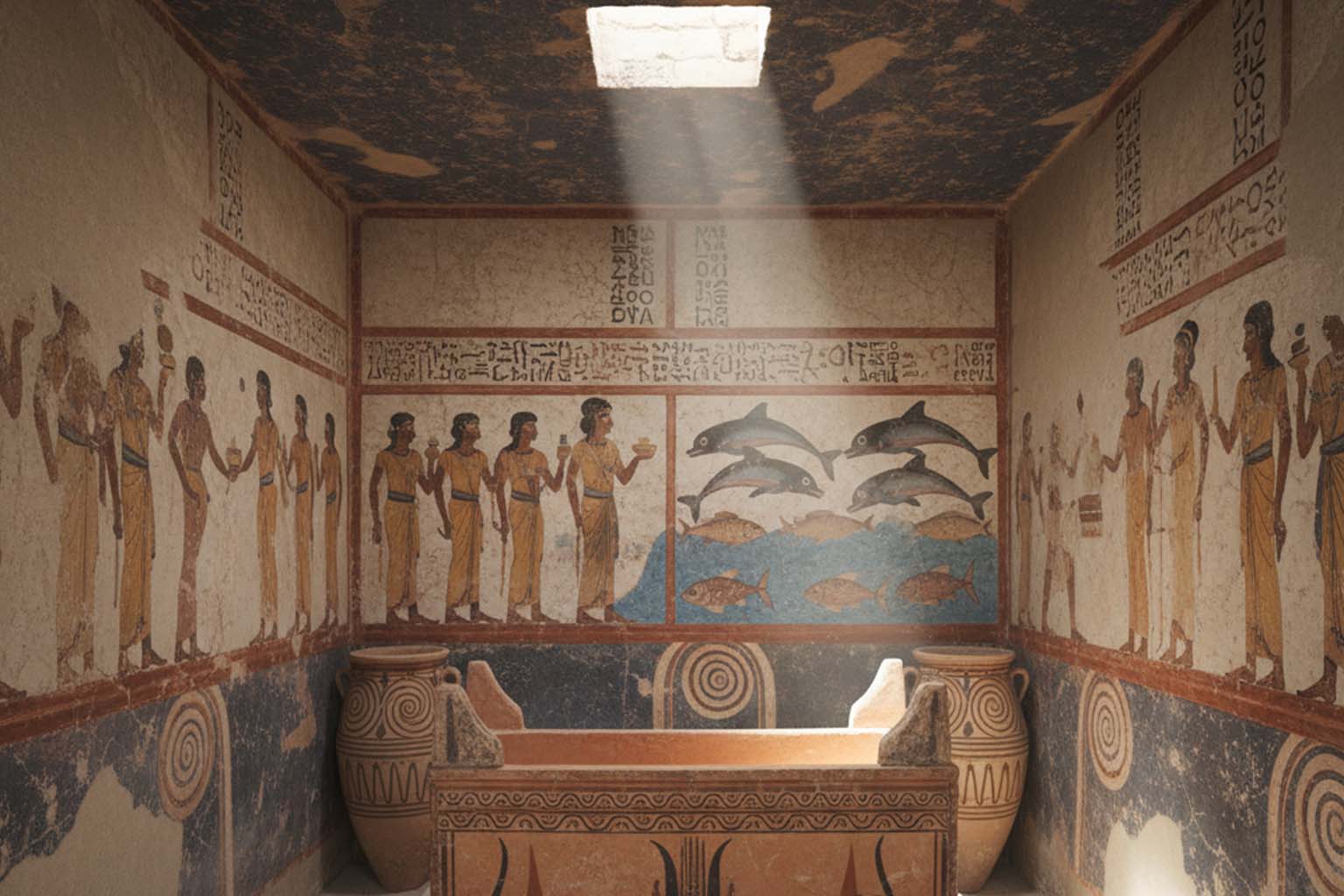
Imagine a community coming together nearly 4,000 years ago to ritually “kill” their tombs, marking the end of centuries-old burial customs with final feasts and symbolic acts. This is the remarkable story unearthed from Bronze Age Crete, where the closing of tombs wasn’t abandonment but a profound social ceremony signaling sweeping changes in culture, identity, and belief.
Archaeologists have uncovered that around 1700 BCE, Cretan communities deliberately closed their communal tombs with final interments, crushed bones, and ceremonial feasts. Far from simply sealing off an old practice, these rituals offer a window into a transformative time on the island, revealing how funerary customs intertwined with evolving social and political structures.
Ritual Closures Unearthed at Sissi Cemetery
Excavations led by the Belgian School at Athens have brought to light an extraordinary pattern of tomb closures in Zone 9 of the Sissi cemetery. Rather than gradual decline or abandonment, researchers found evidence of deliberate, coordinated rites where tomb walls—used for generations—were dismantled, human remains crushed, and the entire area sealed.
Lead archaeologist S. Déderix, who spearheaded the project, explains, “The closure of these tombs marked a profound social ritual, a way for the community to redefine their relationship not only with the dead but with each other.” This ritual “killing” served as a collective farewell, signaling the end of communal burial traditions and the start of new social paradigms.
Final Feasts: The Ceremonial End of an Era
The archaeological team discovered thousands of pottery shards scattered across the tomb complex—evidence of large-scale communal feasts. These shards, including cups and cooking vessels dating back to 1700 BCE, are interpreted as remnants of a ritual meal marking the tombs’ closure. The feast was more than a meal; it was a ceremonial event binding the community in a shared experience of transition.
Once the feast ended, the tomb area was sealed with earth and stones, transforming the site into a sacred space that later generations respected deeply by avoiding disturbance. This ritual closure represents a significant cultural moment, as the community consciously marked the passage from one funerary tradition to another.
Broader Patterns of Burial Transformation in Crete
The practices at Sissi are echoed at other Bronze Age sites across Crete, such as Moni Odigitria and Kephala Petras. These follow a similar theme of ritual closure marked by tomb emptying, filling with rubble, or sealing, often accompanied by evidence of feasting. However, not all cemeteries show the same theatrical closure—some tombs declined more quietly, reflecting varied responses across the island.
These diverse mortuary practices align with wider Middle Bronze Age societal shifts around 2050–1600 BCE, as Cretan culture moved toward political centralization. The rise of palatial centers like Knossos brought new social hierarchies and emphasized individual status, diminishing the communal tomb’s role. Instead, new ceremonial spaces like caves, mountaintop sanctuaries, and palace courtyards became focal points for ritual and power.
Minoan Memory, Identity, and Archaeological Clarity
This research sheds light on how communities used funerary rites not only to honor the dead but to navigate social transformation, reinforcing collective memory and identity. The closing ceremonies constituted moments of cultural renewal, reconfiguring relationships within society as well as with the ancestors.
Crucial to these insights were modern excavation techniques, including stratigraphic sequencing and advanced osteological analysis, which allowed archaeologists to reconstruct detailed sequences of burial use and closure with unprecedented precision. According to the 2025 study in Antiquity, such data reveals a complex and nuanced picture of how Minoan burial customs evolved through these ritual acts.
“The way communities ‘killed’ their tombs stands as a testament to their profound respect for the past even as they embraced new social realities,” noted S. Déderix.
As the archaeological record shows, these final feasts and tomb closures illustrate how deeply interconnected funerary practices were with larger cultural narratives and political transformations in Bronze Age Crete.
Understanding these rituals enriches our grasp of the Minoans’ dynamic society—one that balanced continuity with change through meaningful ceremonial acts.
If this journey into ancient burial rites sparked your curiosity, share your thoughts and questions below! How do you think rituals shape cultural identity across time? Join the conversation and pass this fascinating story forward.