


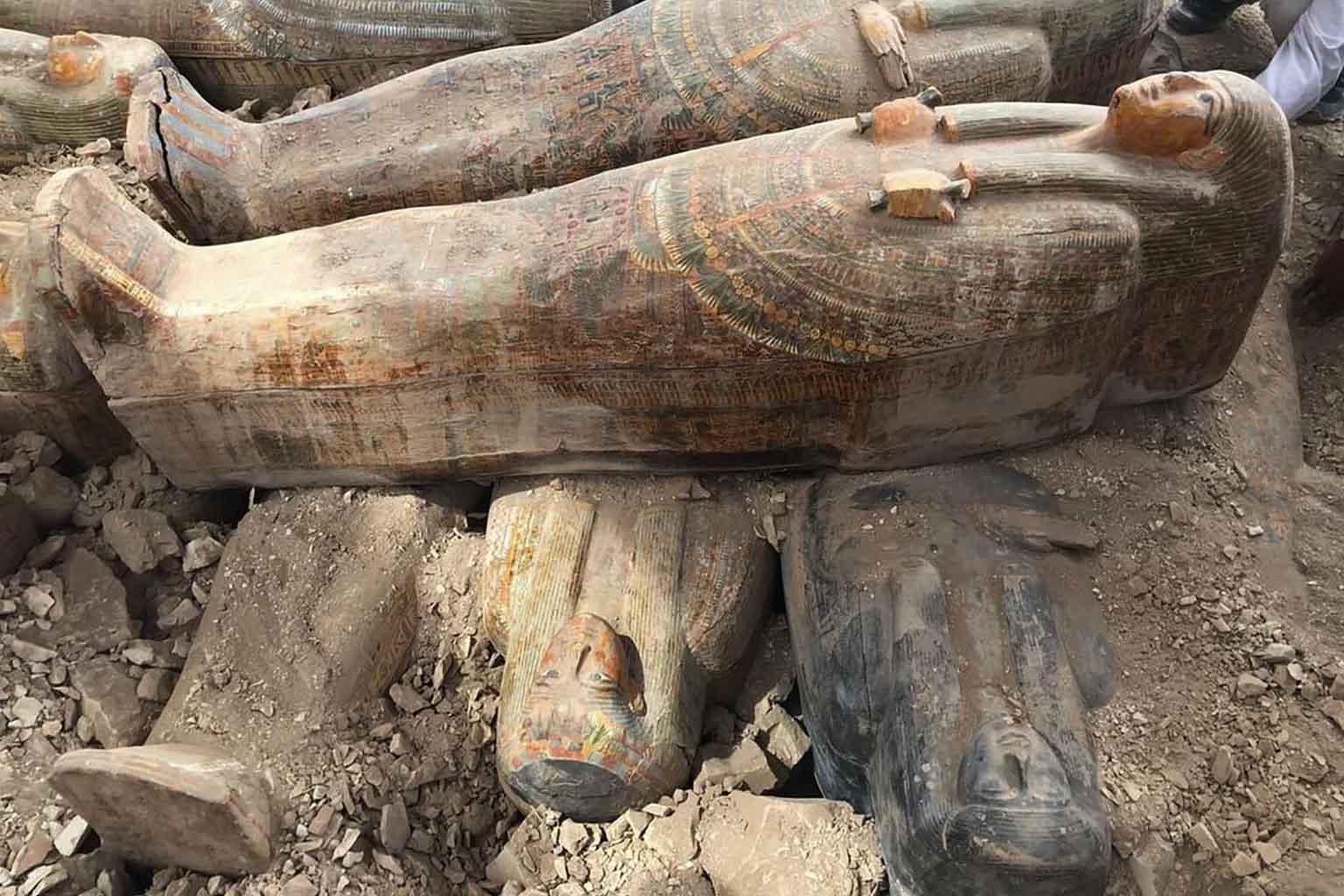
Imagine unlocking a 2,000-year-old sarcophagus and discovering a mummy so well preserved it tells a vivid story of ancient Roman life and death. This is exactly what archaeologists unearthed near Naples, Italy—a find that not only shocks with its state of preservation but also enriches our understanding of ancient funerary customs and provincial Roman society.
A Remarkably Preserved Window into Roman Antiquity
Near Naples, in the town of Giugliano, a sarcophagus dating back two millennia has been opened to reveal a mummy lying face-up, wrapped in a shroud that has mineralized over time due to the unique climate inside the burial chamber. This discovery, located in the so-called Tomb of Cerberus, offers an exceptional glimpse into Roman mortuary practices. Unlike many archaeological finds where remains are fragmented or degraded, this mummy’s near-perfect state allows researchers to explore ancient embalming and preservation techniques with unprecedented clarity.
The body was carefully placed alongside ceremonial items such as ointment jars and cleansing tools. The presence of these artifacts suggests the deceased likely enjoyed high social status and that the sarcophagus was intended as a family mausoleum—hinting at the cultural importance placed on elaborate funerary rites. Scientists are now studying the shroud’s composition, hoping to extract data on ancient weaving methods and textile quality, deepening our knowledge of Roman economic conditions at the time.
Scientific Discoveries Illuminate Ancient Practices
Marian Nuzzo, a superintendent with the Italian Ministry of Culture, highlights that the Tomb of Cerberus continues to “provide valuable information on the Phlegraean territory near Liternum.” According to Dr. Nuzzo, recent laboratory examinations have revealed the use of plant-based preservation creams, incorporating species such as Chenopodium (goosefoot) and Absinthe, to treat the body postmortem.
This sophisticated understanding of natural preservation methods shows an advanced level of biochemical knowledge in ancient societies and underscores the ritualistic and medicinal dimensions of Roman burial customs. The discovery aligns with research indicating that the Romans employed a combination of practical and spiritual methods to prepare the dead, blending care for the physical body with symbolic gestures.
Exploring Broader Cultural and Environmental Contexts
Beyond the physical remains, the research team is conducting extensive DNA analysis and studying pollen residues to reconstruct the environment and social fabric of this ancient necropolis. These interdisciplinary studies aim to uncover how the environment affected burial practices and what health conditions might have prevailed in the community.
According to Marian Nuzzo, these ongoing investigations “considerably enrich the panorama of our knowledge” about daily life, cultural practices, and health conditions in Roman provincial towns like those near Liternum. This approach, combining archaeology, botany, and biochemistry, is helping paint a more dynamic portrait of ancient Roman civilization, far beyond death rituals alone.
Why This Discovery Matters Today
The unearthing of this 2,000-year-old mummy is not just a fascinating archaeological event; it embodies how scientific methods, combined with traditional excavation, can transform our understanding of the past. It challenges assumptions about ancient mortuary care and highlights the depth of cultural sophistication in provincial Roman territories.
As experts analyze the data, this find could reshape how historians view Roman funerary art, health, and social hierarchies. According to a 2020 study published in the Journal of Archaeological Science, similar forensic analyses of ancient burials have revolutionized knowledge about diet, disease, and cultural interactions—suggesting that even modest tombs can yield massive insights.
This discovery near Naples invites us to ponder the lives of those who came before and the care they took in honoring their dead—a legacy of respect and cultural identity preserved through the ages.
What do you think about this incredible find? Share your thoughts or questions below, and if you enjoyed learning about this remarkable journey into the Roman past, don’t hesitate to share this story with friends and fellow history enthusiasts!