


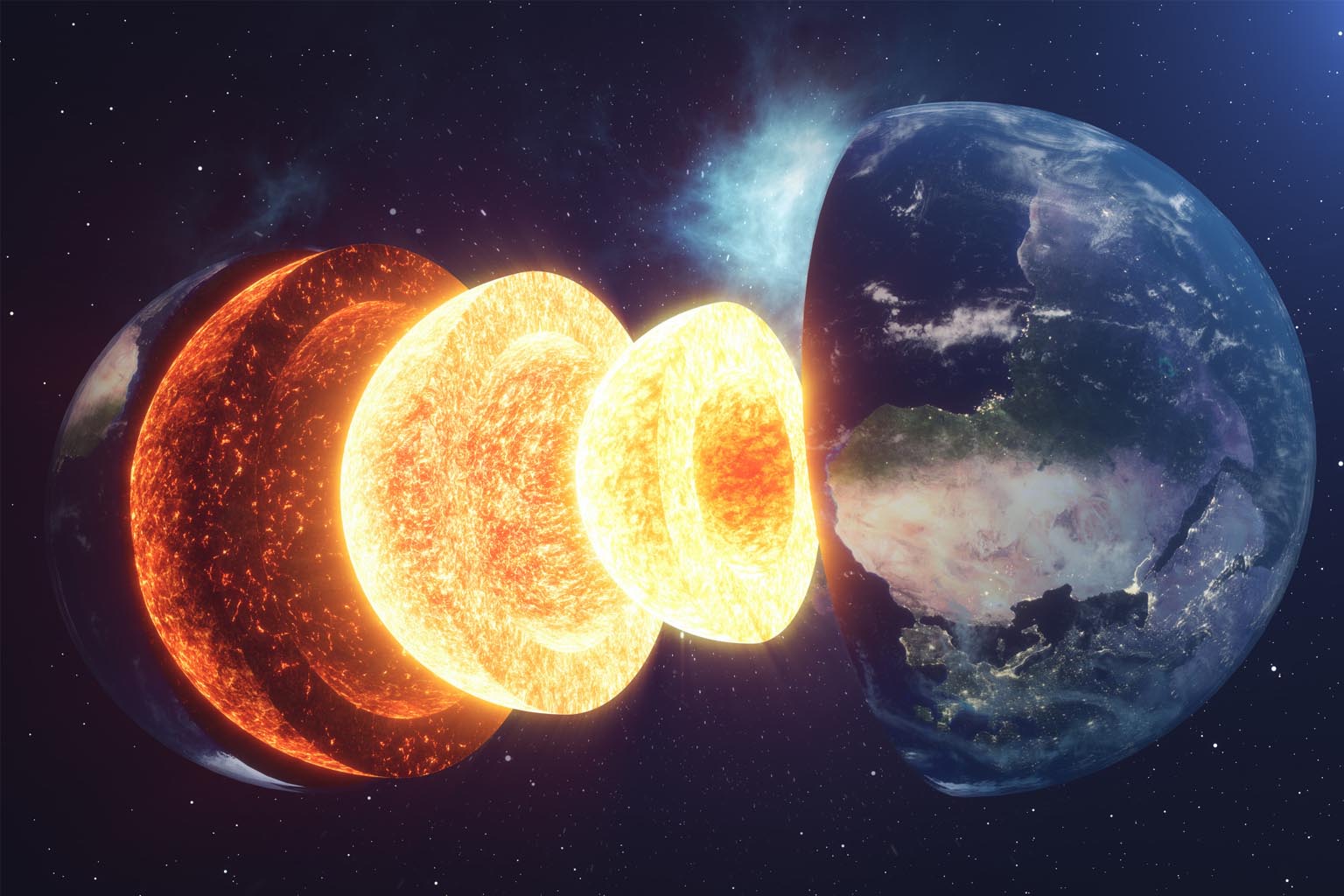
Around 591 million years ago, a dramatic shift in Earth’s magnetic field set off a chain reaction that forever transformed life on our planet. This nearly vanished magnetic shield not only altered the atmosphere but also created the perfect conditions for complex life to emerge and flourish, marking a milestone in Earth’s evolutionary journey.
Scientists have long sought to understand how Earth’s magnetic field influenced our planet’s biological and atmospheric development. Recent research highlighted in a Nature article and published in Communications Earth and Environment sheds new light on this fascinating episode from the Ediacaran period. The magnetic field’s near collapse coincided with a surge in atmospheric oxygen, a key ingredient that allowed multicellular life to thrive.
The magnetic field’s protective role in Earth’s early history
Earth’s magnetic field functions like an invisible force field, shielding the planet from the relentless solar wind—a stream of charged particles radiating from the Sun. According to John Tarduno, a geophysicist at the University of Rochester, “The field is protective. Without it early in Earth’s history, water would have been stripped from the planet by the solar wind.” This magnetic shield was essential in preserving the atmosphere and surface water, both critical for sustaining life.
However, during the Ediacaran period, the processes powering this field became inefficient after billions of years. The magnetic protection weakened to an unprecedented degree, almost disappearing entirely. This unprecedented lull exposed Earth’s atmosphere to much harsher solar effects, fundamentally changing its composition and paving the way for monumental biological shifts.
How a weaker magnetosphere triggered atmospheric transformation
As the magnetosphere thinned, Earth struggled to hold onto lighter atmospheric gases. Virginia Tech’s geobiologist Shuhai Xiao explains, “The magnetosphere shields the Earth from solar wind, thus holding the atmosphere to the Earth. A weaker magnetosphere means lighter gases, such as hydrogen, are lost from the atmosphere.” This hydrogen loss was crucial because it allowed oxygen levels to rise. More oxygen created an environment abundant enough to support energy-demanding, complex multicellular life.
This increase in atmospheric oxygen plays a fundamental role in biology even today. Scientists believe that oxygen allowed organisms to expand their metabolic capabilities, fueling the rise of diverse and mobile life forms during the Ediacaran, setting the stage for further evolutionary milestones.
Multiple forces shaped the oxygenation event
The magnetic field’s near-collapse was fundamental, but not the sole driver behind rising oxygen. Tarduno remarks, “We do not challenge that other processes were occurring concurrently, but the weak field may have allowed oxygenation to cross a threshold, aiding animal radiation.” Photosynthetic microbes, geological factors, and biological processes all contributed to this complex oxygenation puzzle.
This synergy of geological and biological mechanisms created a unique window where oxygenation crossed critical thresholds. It triggered an explosion of life forms hungry for oxygen, helping them flourish on Ediacaran sea floors. This moment is considered pivotal in the trajectory of life—from simple microbes to more complex, mobile animals.
The magnetic field’s comeback and the birth of Earth’s inner core
Following this turbulent episode, Earth’s magnetic field rebounded strongly. Peter Driscoll from the Carnegie Institution for Science explains that the inner core’s formation played a crucial role: “Observations support the claim that the inner core first nucleated soon after this time, pushing the geodynamo from a weak, unstable state to a strong, stable dipolar field.” This revival came from heat released by the solidifying inner core, which reinvigorated convection in the outer core—Earth’s magnetic engine.
This rejuvenated magnetic shield ensured the atmosphere’s stability and reinforced the protective barrier that allowed life’s ongoing evolution. Without this recovery, the delicate balance sustaining Earth’s ecosystems might never have been achieved.
The enigmatic Ediacaran life that thrived in a changing world
Amidst these dramatic shifts, the Ediacaran seas were home to extraordinary life forms unlike those seen before or since. Creatures like Dickinsonia, growing as large as 4.5 feet wide, along with quilted frond-like organisms and slug-shaped Kimberella, thrived on microbial mats. Their complex body structures show that prehistoric life was already responding dynamically to increased oxygen levels and new environmental conditions.
Though these pioneers vanished before the Cambrian explosion, their presence signals the dawn of complex life. Their legacy offers a glimpse into how life adapted to profound planetary transformations—a testament to resilience and evolutionary creativity.
Understanding this chapter of Earth’s history is crucial for appreciating how intertwined the planet’s physical forces and life’s evolution truly are. As Dr. Tarduno’s work illustrates, magnetic fields have been indispensable in protecting and shaping the conditions for life as we know it today.
If this cosmic interplay between Earth’s magnetic heart and its living skin fascinates you, share your thoughts or questions below. How do you think this ancient magnetic crisis has influenced life’s incredible diversity? Join the conversation and spread the wonder of our planet’s deep history!