


Imagine uncovering a piece of history that challenges everything we thought we knew about the first people to walk North America. That’s exactly what recent archaeological discoveries at Idaho’s Cooper’s Ferry site are doing—revealing 16,000-year-old tools that could turn the story of ancient human migration upside down. These findings not only suggest an earlier arrival but also hint at a fascinating journey along the Pacific coast, rewriting the traditional migration narrative.
A groundbreaking discovery at Cooper’s Ferry
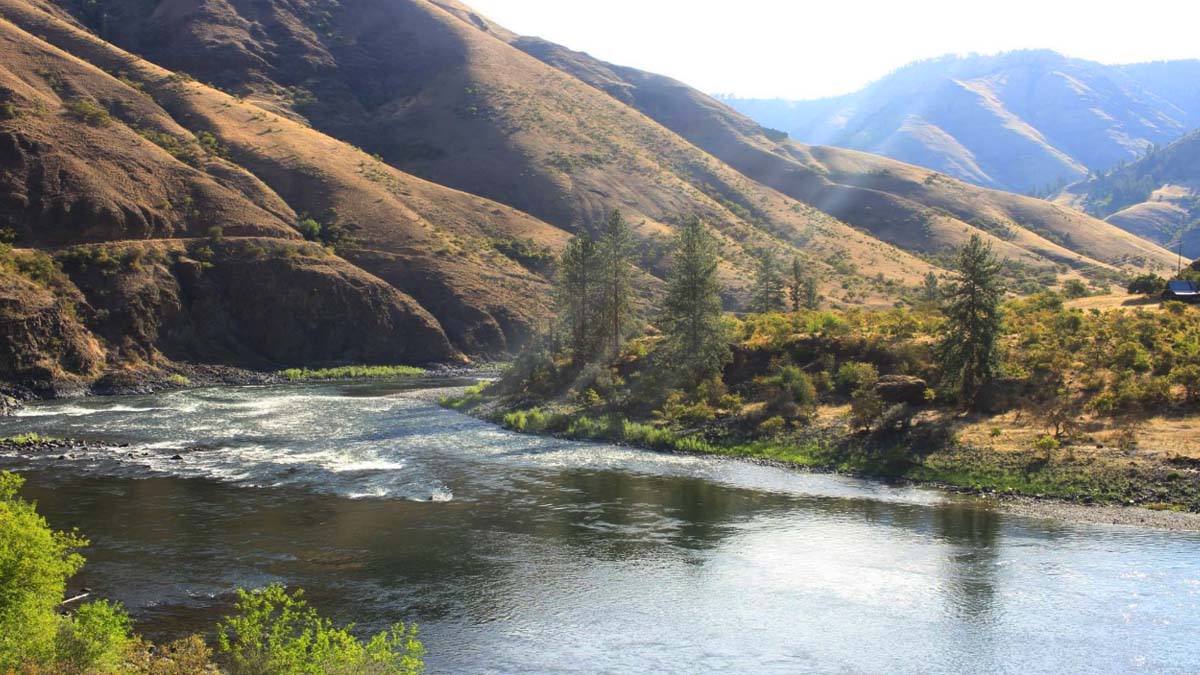
Nestled near the Lower Salmon River in western Idaho, the Cooper’s Ferry site has become a hotbed for evidence that challenges the long-held belief that humans first entered North America around 13,000 years ago via the Bering Land Bridge. Archaeologists unearthed nearly 200 artifacts including stone tools, manufacturing debris, and extinct animal bones. Using radiocarbon dating, researchers established human activity at this location between 16,560 and 15,280 years ago, a full millennium earlier than the so-called Clovis-first model suggested.
This evidence casts serious doubt on the ice-free corridor migration theory, which posited that early settlers traveled through this corridor after glacial retreat. Instead, these new insights lend strong support to the hypothesis that the first Americans came down the Pacific Coast, perhaps traveling by boat—a possibility that opens up exciting new pathways in the story of human migration.
Loren Davis, the lead archaeologist and anthropology professor at Oregon State University, explained that their findings “refute the hypothesis of the ice-free corridor” and strongly suggest a coastal migration route. This shift in perspective has far-reaching implications for understanding how and when people first populated the continent.
Connecting ancient cultures across continents
One of the most intriguing aspects of the Cooper’s Ferry discovery is the striking resemblance of its stone tools to those found in northern Japan dating back to a similar time period. The shape, craftsmanship, and materials suggest a cultural link or shared technological tradition, hinting at a transfer of knowledge that spanned thousands of miles.
Davis and his team propose that this could reflect “the extension culturally of people bringing these ideas with them from northern Japan.” If this connection holds up under further examination, it would not only point to migration routes but also highlight an ancient cultural exchange between Asia and North America—a concept that broadens the understanding of the complexity behind early human movements.
This proposed link is still under investigation, with further comparative studies on tool-making and cultural artifacts underway by the research team. Such findings could reshape how anthropologists view the ancestry of Native American populations and the diversity of their origins.
Scientific debate and skepticism
As in any groundbreaking discovery, not all researchers have embraced the new findings without question. John Hoffecker, a fellow at the Institute of Arctic and Alpine Research, argues that the dates for the Cooper’s Ferry site may be slightly inflated, suggesting a more conservative estimate closer to 15,000 years ago. He also challenges the proposed connection with northern Japan, pointing out that genetic and dental evidence currently do not support a direct lineage from those populations.
Archaeology professor Ben Potter from the University of Alaska Fairbanks called the Cooper’s Ferry findings “superficial and unconvincing.” He noted that the study failed to decisively disprove the ice corridor model or firmly establish the early coastal migration timeline.
Yet, despite these critiques, Hoffecker agrees that the evidence adds valuable depth to the debate over early American migrations, particularly backing the growing recognition of a Pacific coastal migration pathway. This perspective aligns with other recent research that continues to refine our understanding of prehistoric human movements.
Honoring Indigenous histories and blending knowledge
An essential layer to this scientific discovery is its connection to Indigenous history. The Nez Perce people, or Niimíipuu, have long regarded the Cooper’s Ferry area as Nipéhe—an ancient village and sacred site with significant spiritual importance. Oral histories from Native communities have described continuous human presence in this region for generations.
The alignment of new archaeological data with Indigenous knowledge enriches the narrative, offering a more comprehensive view of the deep roots people have in the area. This blending of scientific evidence and oral tradition emphasizes the value of incorporating Native voices into historical and archaeological research.
Together, these perspectives highlight the complexity and longevity of human occupation in North America, demonstrating that the story of the continent’s first peoples is far more intricate than previously understood.
According to a 2023 study published in Science, these findings provide strong archaeological evidence supporting the earlier coastal migration theory, prompting a major reevaluation of how humans first settled the Americas.
What do you think of these revelations about America’s earliest inhabitants? Feel free to share your thoughts, insights, or questions in the comments below, and don’t forget to share this article with anyone fascinated by the mysteries of human history.