


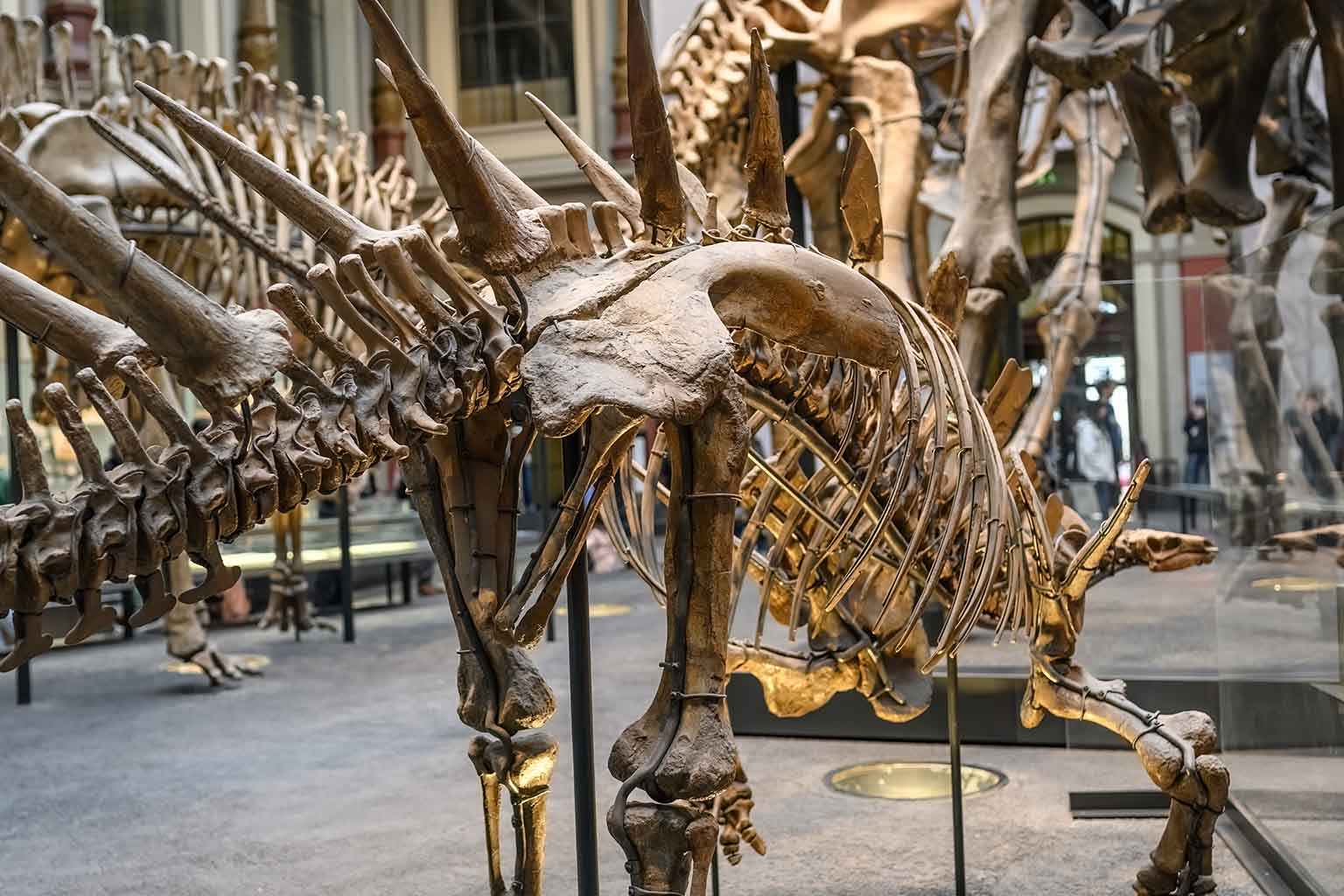
Imagine uncovering a hidden secret in the bones of creatures that roamed the Earth over 65 million years ago—something that changes everything we thought we knew about how dinosaurs lived and evolved. That’s exactly what a team of paleontologists recently achieved, discovering a previously unknown soft tissue feature in dinosaur skulls that challenges long-standing assumptions about their anatomy and feeding behavior.
Unearthing a Lost Dinosaur Feature
In a groundbreaking study published in the Journal of Anatomy, researchers led by Henry Sharpe uncovered a mysterious structure nestled in the cheek region of many dinosaur fossils. Dubbed the exoparia, this feature appears to be a ligament or muscle connecting the cheekbone to the lower jaw. Its presence is unlike anything observed in living reptiles today, including birds and crocodiles, which are the closest living relatives of dinosaurs.
Sharpe explained, “When examining a hadrosaurid skull specimen nicknamed Gary, we spotted unusual flanged bones near the cheeks—these weren’t expected based on known reptilian anatomy.” What started as a curious anomaly led to a series of microscopic examinations and digital modeling techniques to identify this hidden muscle.
Revolutionizing Dinosaur Anatomy Through Modern Techniques
The discovery was the result of a multidisciplinary approach involving histology, digital modeling, and comparative anatomy. By preparing ultra-thin bone slices and analyzing them under polarized light, the team detected patterns of dense collagen fibers—hallmarks of structures that anchor muscles and ligaments to bone. These fossilized traces suggested a once-living attachment point for a soft tissue unknown to science until now.
“It looked like someone had scratched the bone just beneath the surface, evidence of a muscle or ligament connection,” noted Sharpe.
This feature was consistently found across multiple species, removing any doubt that it was a mere fossilization quirk. Instead, the exoparia likely played a meaningful and functional role in dinosaur biology, potentially involved in jaw stabilization or feeding mechanics.
Challenging Established Evolutionary Frameworks
This discovery shakes the foundations of how scientists reconstruct dinosaur anatomy, particularly concerning muscles and soft tissues. Traditionally, researchers have employed the Extant Phylogenetic Bracket method, where features are inferred based on the anatomy of living relatives, like birds and crocodilians. Sharpe highlights a critical limitation: “Every muscle you reconstruct is one found in crocodiles or birds. But what if dinosaurs had their own unique muscles that were lost or transformed in birds?”
The idea that dinosaurs had exclusive anatomical features broadens our understanding of their muscular diversity and raises questions about how we interpret their movement, feeding strategies, and even social interactions. This insight invites researchers to revisit fossil evidence with fresh eyes and an expanded vocabulary of possible dinosaur anatomy.
Implications for Dinosaur Feeding and Behavior
While the exact function of the exoparia remains speculative, evidence suggests it may have been vital for chewing or stabilizing the jaw. Variation in size and attachment angles across species indicates specialized adaptations, possibly linked to diverse diets. This could illuminate how herbivorous or omnivorous dinosaurs tailored their feeding mechanics to thrive in different ecological niches.
According to a detailed analysis by Dr. Lisa Nguyen in a 2024 study on fossilized soft tissues, such muscular specializations often correlate with evolutionary success by enhancing feeding efficiency and energy intake (Nature Scientific Reports).
Rethinking Dinosaur Evolution and Anatomy
The discovery of the exoparia underscores a broader issue in evolutionary biology: the risks of rigidly applying living animal models to extinct species. Sharpe warns, “There’s a ton of diversity in dinosaurs we’re missing because we try to explain the past only in terms of the present.” This new muscle invites a fresh perspective on the evolutionary history of dinosaurs, emphasizing direct anatomical clues over assumptions.
By incorporating these findings, the scientific community can better appreciate the anatomical complexity of dinosaurs and develop more accurate reconstructions of their biology, behavior, and evolution. It’s a reminder that fossils hold surprises waiting for those willing to look beyond established paradigms.
Discovery, after all, is the heartbeat of paleontology.
What do you think about this hidden dinosaur muscle? Share your thoughts, questions, or any cool dinosaur facts in the comments below. Let’s keep the conversation about these incredible ancient creatures alive and buzzing!