


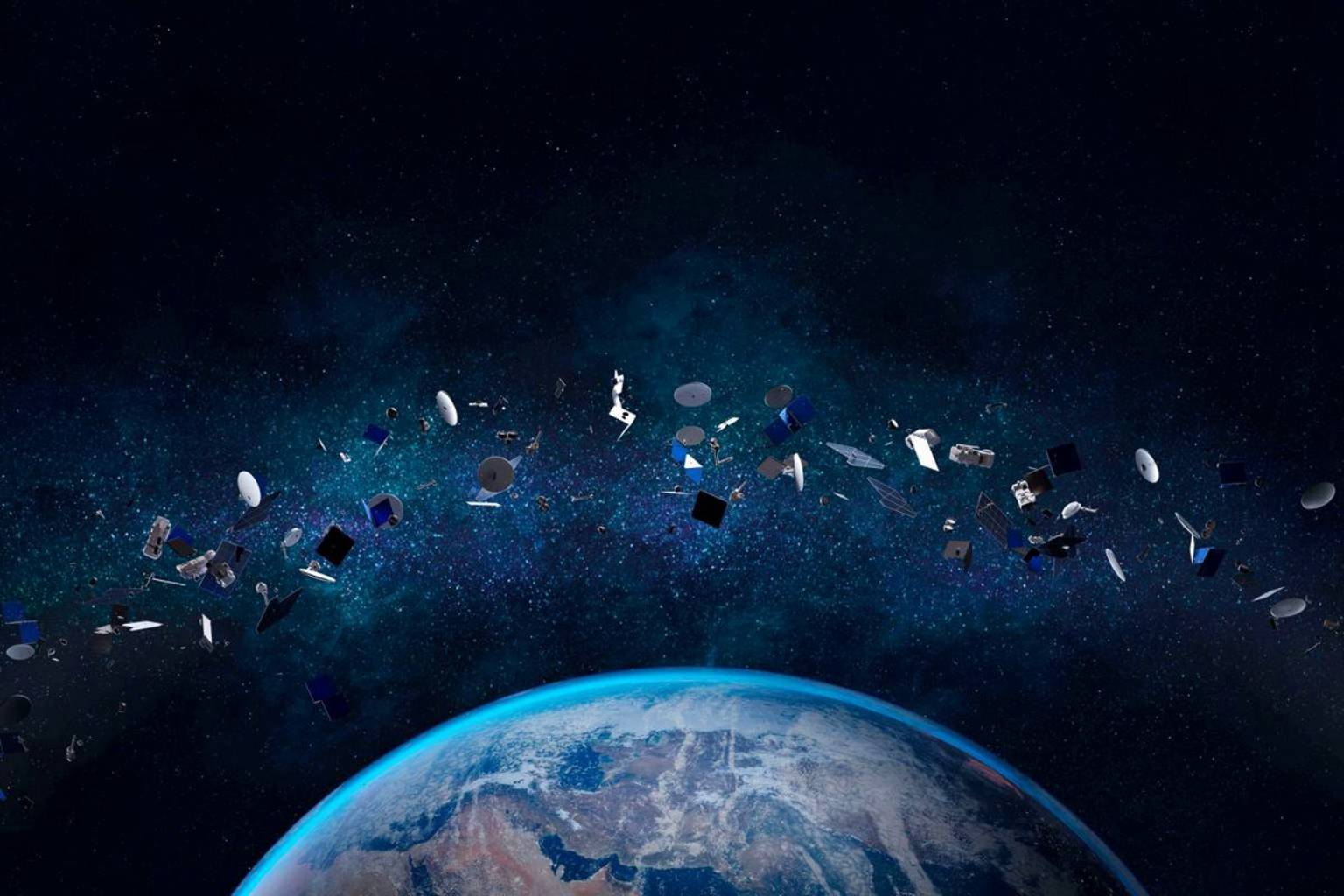
Imagine winning $3 million by tackling one of the most urgent challenges humanity faces beyond Earth—space debris. NASA is calling on innovators worldwide to help clean up the clutter orbiting our planet and on the lunar surface, offering a massive opportunity to make a difference in space exploration’s future.
Since the dawn of space travel, the accumulation of discarded satellites, rocket fragments, and abandoned tools has become a ticking time bomb circling Earth. NASA’s bold LunaRecycle Challenge aims to transform this environmental headache into a sustainable resource, rewarding the brightest minds who can devise effective recycling solutions for space waste.
The escalating threat of space debris
The problem of space debris is not just about pollution—it’s about safety, sustainability, and the future of space missions. Orbiting Earth at speeds often exceeding 17,500 mph, fragments from defunct satellites and spent rocket parts pose serious collision risks. These impacts can unleash thousands of new fragments, escalating into what experts call the Kessler syndrome. This cascade effect could make near-Earth space unsafe and restrict humanity’s access to vital satellite services.
On February 28, 2024, an alarming event underscored this danger. The out-of-control Cosmos 2221 satellite nearly collided with NASA’s Timed satellite, with a potential impact velocity of 10,000 mph. Such a collision could have unleashed a devastating cloud of debris, threatening a cascade of damage to operational satellites. This close call, highlighted in a NASA report, underscores why managing space debris isn’t just necessary—it’s imperative.
Inside the LunaRecycle Challenge: Innovation meets action
NASA’s LunaRecycle Challenge is not a call for abstract ideas but a push for concrete solutions. Participants are tasked with designing physical prototypes to recycle and repurpose waste materials on the Moon. By enabling lunar missions to reuse local resources instead of sending everything from Earth, future expeditions can cut costs, lower their environmental footprint, and enhance mission endurance.
Alongside physical devices, teams must develop digital twins—virtual models simulating how these systems function under lunar conditions. This technology allows innovators to troubleshoot designs and optimize recycling methods efficiently, reducing the high risks and costs associated with space missions.
This integrated approach proves how the challenge turns visionary concepts into tested, practical tools that could revolutionize how humanity manages space waste.
Why your breakthrough matters
The deadline to enter this groundbreaking competition is March 31, 2025. Winners from the first evaluation round will be announced in May, accelerating momentum toward real-world space recycling solutions. Entries are only accepted through the official LunaRecycle Challenge Expression of Interest form, emphasizing the competition’s rigor and focus.
What makes this challenge so compelling is its combination of creative problem-solving and scientific precision. It reflects a vital truth noted by environmental scientists: effective recycling and waste management are fundamental not only on Earth but also in the harsh environment of space, where resources are limited and survival depends on sustainability.
Noted astronaut and advocate Dr. Lisa Nguyen explained in a 2024 study published by the Space Resource Utilization Institute, “Developing closed-loop recycling systems for lunar missions is essential for establishing a sustainable human presence beyond Earth’s orbit.” This insight highlights the broader significance of NASA’s call: innovating in space recycling supports long-term cosmic exploration goals.
Join the conversation and be inspired
What would your recycling solution look like? How would you transform space junk into a valuable commodity on the Moon or in Earth’s orbit? NASA’s challenge invites not just engineers and scientists but anyone driven to solve complex problems and leave a lasting legacy.
Have you tackled formidable challenges that required inventive thinking? Share your stories, ideas, and reactions below. Your voice could spark the next breakthrough in space sustainability—because in this race to clean up the cosmos, every idea counts.