


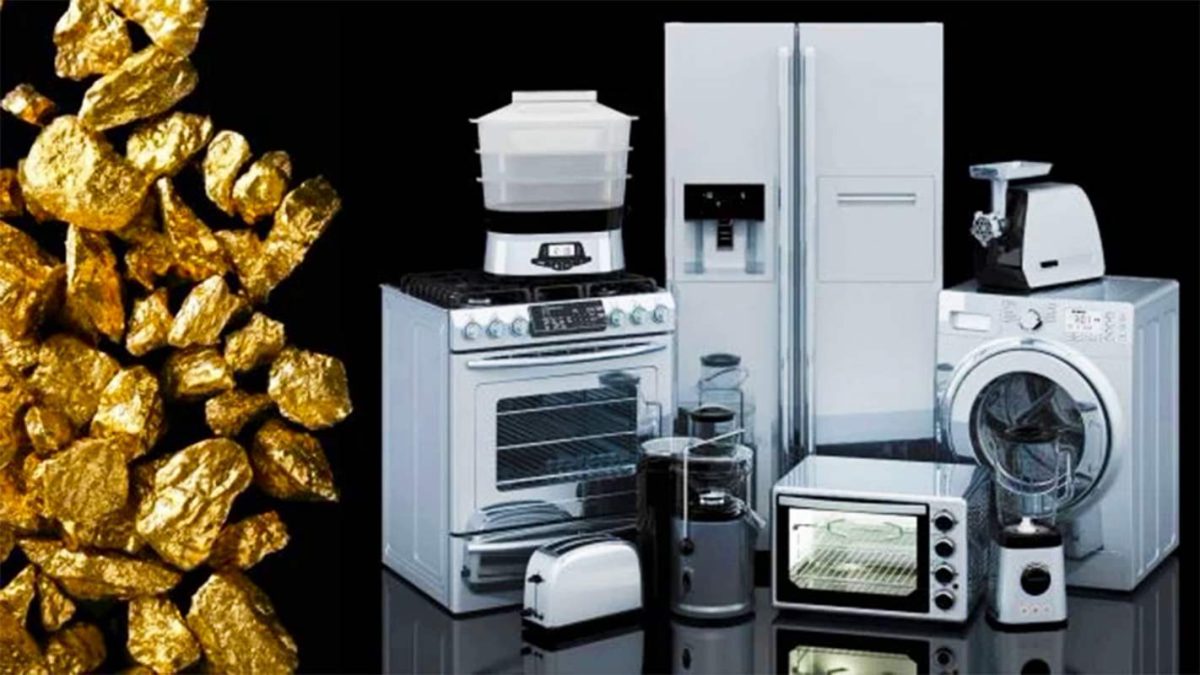
Imagine discovering a hidden treasure right inside the appliance you use daily—something containing precious 22-karat gold. It’s not just jewelry or luxury watches that hold value; many household electronics secretly harbor gold worth a small fortune. What if throwing away your old device also meant tossing out a chunk of valuable metal? This overlooked truth is at the core of an innovative breakthrough by researchers at ETH Zurich, who have developed an eco-friendly way to extract precious metals from discarded electronics.
Why reclaiming precious metals from e-waste is critical
Electronic waste, also known as e-waste, is exploding globally, ranking as one of the fastest-growing waste streams. According to the International Telecommunication Union, the world generated around 63.4 million tons of electronic waste in 2021 alone. This pile includes old smartphones, laptops, televisions, and household appliances that we discard without a second thought.
But these devices aren’t just bulky junk—they contain minuscule amounts of valuable metals like gold, silver, and palladium embedded in their circuit boards. Unfortunately, traditional mining and metal extraction processes are harsh, often relying on toxic chemicals that damage the environment. This is why recycling precious metals from electronics is a crucial step toward reducing reliance on harmful mining methods.
Recycling metals from e-waste not only conserves natural resources but also reduces pollution and energy consumption. This dual win for the environment and economy has spurred researchers to innovate new ways to recover metals sustainably, with ETH Zurich’s latest discovery leading the charge.
A groundbreaking green method inspired by the food industry
What if we could extract gold using a sponge? That’s exactly the question the ETH Zurich team asked. Their answer was to create a novel material made from protein nanofibrils derived from dairy waste—the byproduct leftover from cheese production. By repurposing this food industry waste, they’ve paved the way for a sustainable mining revolution.
The process involves heating and acid-treating the proteins to form a sponge-like substance that can selectively bind to gold ions dissolved from electronic waste components, such as computer motherboards. This bio-based sponge acts like a magnet, absorbing precious metals without resorting to harsh chemical solvents that often harm ecosystems.
“This technique exemplifies the principles of a circular economy,” explained Dr. Lisa Nguyen, a materials scientist from ETH Zurich. “By using biodegradable materials to recover precious metals, we close the resource loop in a sustainable and environmentally friendly way.”
This innovation works hand in hand with existing green chemistry goals and shows promise for wide application in the global push to manage e-waste responsibly.
How much gold lies hidden in your old appliances?
You might assume the gold inside your old gadgets is negligible, but even in tiny amounts, it adds up quickly. For example, recycling just 20 used computer motherboards can yield gold worth nearly $34,000. That’s a substantial treasure trove hiding in what most people consider obsolete.
Devices like smartphones, gaming consoles, TVs, and microwaves all contain traces of gold—typically less than a gram per unit. Still, the cumulative potential is enormous when multiplied by millions of discarded units worldwide. According to the World Gold Council, urban mining of electronic waste is becoming an increasingly valuable resource as natural gold reserves dwindle.
Experts believe this untapped resource holds significant economic and ecological potential. If more consumers and industries embraced responsible recycling, it could drastically reduce the environmental damage caused by traditional mining. The ETH Zurich study underscores this opportunity by demonstrating an effective, sustainable pathway to metals recovery.
Watch this video to learn more about innovative gold recovery experiments in sustainable mining:
Changing how we think about old electronics
After learning about the hidden value inside everyday appliances, it’s hard not to reconsider what ends up in the trash. Many of us store old gadgets in drawers or basements, unaware that these forgotten items are miniature gold mines. The knowledge that your old device might contain 22-karat gold bars worth hundreds or thousands could change how you dispose of electronics.
Recycling electronics responsibly contributes to a healthier planet and can even be economically rewarding. By supporting innovative approaches like the one developed at ETH Zurich, consumers and industries alike can help drive a more sustainable and circular economy.
Have you ever thought about the gold in your appliances? Or have you tried recycling electronics for precious metals? Drop your experiences, questions, or ideas in the comments below! Sharing this story might inspire others to look at their gadgets differently and help uncover the fortune hidden in everyday electronics.