


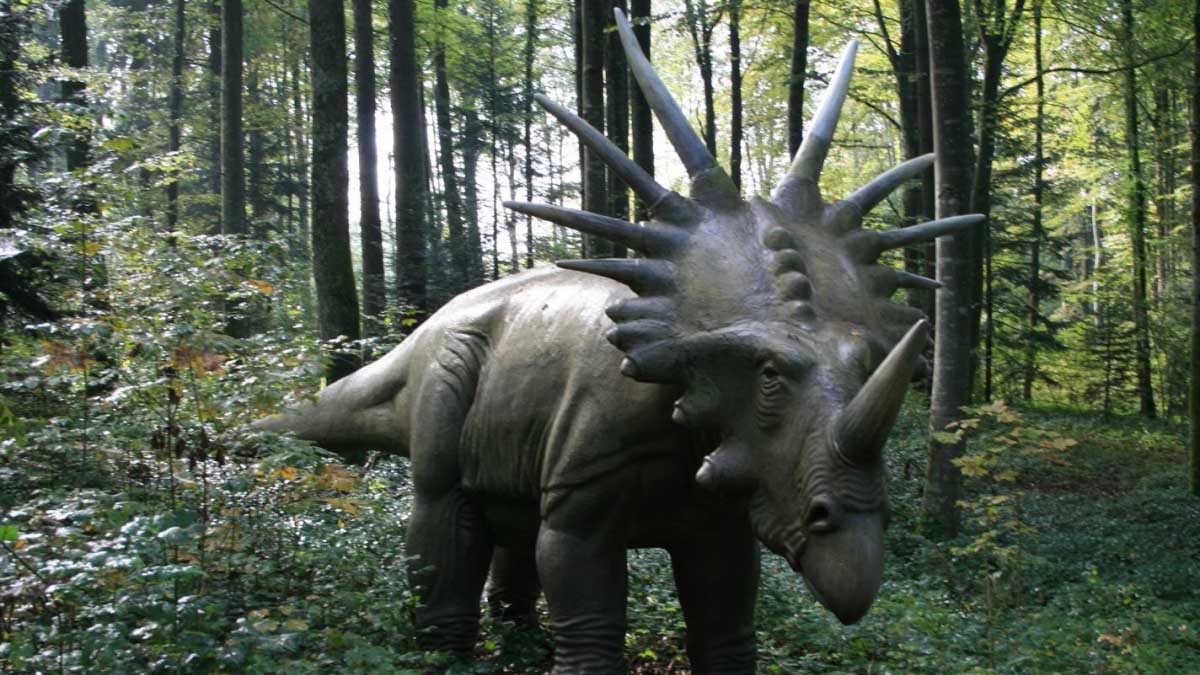
Step into the prehistoric world and meet a dinosaur so spectacular, it looks like it belongs on a Marvel movie set. Imagine a massive horned giant, adorned with twisted, blade-like horns and a frill as flamboyant as a peacock’s tail, roaming the ancient wetlands of North America. This is Lokiceratops rangiformis—the largest and most ornately decorated horned dinosaur ever discovered—now rewriting everything scientists thought they knew about ceratopsians.
A Stunning Discovery from Montana’s Fossil Beds
Unearthed near the U.S.–Canada border in northern Montana, the partial skull of Lokiceratops rangiformis immediately captured the attention of paleontologists Mark Loewen and Joseph Sertich. Though incomplete, the fossil revealed striking features: large, curving horns resembling blades and a sweeping, ornate frill unlike anything seen before in centrosaurine dinosaurs. This massive creature measured about 22 feet long and weighed roughly 11,000 pounds—truly a heavyweight among its horned relatives.
The dinosaur’s name honors the Norse trickster god Loki, reflecting the skull’s mischievously twisted horns that seem almost otherworldly. Its species name, “rangiformis,” meaning “caribou-like,” nods to the antler-like appearance of its frill, emphasizing its unique, display-oriented anatomy. Today, the fossil resides at the Museum of Evolution in Maribo, Denmark, serving as a centerpiece for dinosaur enthusiasts everywhere.
Unlocking Dinosaur Behavior Through Bold Displays
What makes Lokiceratops truly fascinating is less its size and more the story its skull tells about dinosaur behavior and evolution. Unlike many other ceratopsians, this dinosaur featured asymmetrical brow horns and completely lacked a nose horn. Experts believe these features weren’t built for battle. Instead, they served as elaborate visual signals to attract mates or distinguish species from one another—much like modern bird crests and peacock feathers.
During the fossil’s unveiling, paleontologist Joseph Sertich explained, “These skull ornaments are keys to understanding horned dinosaur diversity, showing us that evolutionary pressures for extravagant displays helped drive the incredible richness of Cretaceous ecosystems.” This means that the dazzling horns and frills weren’t just evolutionary ornaments; they shaped how these giants behaved socially and reproduced.
“Like birds today, these dinosaurs used their horns for mate selection and species recognition. It’s an incredible example of sexual selection in the deep past.” — Mark Loewen, paleontologist
Five Horned Giants Sharing One Ancient Habitat
Perhaps the most jaw-dropping revelation is that Lokiceratops shared its home with four other distinct horned dinosaur species—all discovered within the same geological layer called the Kennedy Coulee Assemblage. This fossil-rich zone, straddling northern Montana and southern Alberta, highlights an ecosystem teeming with diversity.
Joseph Sertich remarked, “Finding five ceratopsians living side-by-side is unheard of and reminiscent of how different horned mammals coexist on the African plains today.” This challenges outdated assumptions that large herbivore species were widely dispersed in prehistoric times. Instead, it suggests these dinosaurs adapted to localized habitats, evolving unique horn shapes and frills to stay separate—preventing interbreeding and reducing competition.
The varied horn structures among these five species were essential evolutionary tools, much like how modern antelope species in East Africa use their distinct horns for identification and social boundaries.
Evolution’s Playground: Isolated Habitats Spark Diversity
The discovery of Lokiceratops and its close neighbors reveals how geographic isolation and fragmented environments fueled rapid evolutionary change among horned dinosaurs. Unlike many modern herbivores that roam vast distances, these ceratopsians appear to have remained in relatively small, isolated populations. This geographic “locking” created evolutionary hotspots where different species could develop their own unique visual signals.
Mark Loewen highlighted the broader implications: “This find suggests we’re still just scratching the surface of horned dinosaur diversity. Laramidia—the western landmass where these creatures lived—was a dynamic cradle of ceratopsian evolution, fostering spectacular adaptations over relatively short times.”
These findings uphold what researchers compare to Darwin’s finches in the Galápagos Islands, where isolated groups developed distinctive features through sexual selection and environmental pressures. The study, published in PeerJ, updates our understanding of the centrosaurine family tree and points to the likelihood of many more undiscovered species lying beneath unexcavated fossil beds.
Lokiceratops in the Spotlight of Modern Paleontology
This dinosaur’s journey from ancient Montana wetlands to Danish museum halls brings us closer to understanding the intricate dance of survival, adaptation, and beauty millions of years ago. For a deeper dive, check out the full PeerJ study on Lokiceratops rangiformis, which details this breakthrough species and its evolutionary context.
Experts believe the lavish horn structures tell a story of sexual selection comparable to what we see in the animal kingdom today. According to a 2023 review by the Society of Vertebrate Paleontology, such evolutionary traits offer essential clues about social behavior in extinct species, bridging gaps between fossil records and modern animal biology.
What do you think of this horned giant’s dramatic look and evolutionary story? Have you ever imagined dinosaurs as colorful and socially expressive as birds? Share your thoughts in the comments below or pass this story along to fellow dino lovers who would be amazed by Lokiceratops’ wild flair!